Intentar ORO - Gratis
Ethically Diverse Storytelling, Part II
Writer’s Digest
|November / December 2025
In the last issue, I discussed the importance of understanding the nuance of incorporating diverse characters in your storytelling. Since it’s such a big topic, let’s dive into some more aspects that all writers—especially ones developing secondary worlds—need to consider to ensure that the stories we're telling include meaningful representation.

UNDERSTAND TOKENISM
If you've never heard the term before, Merriam-Webster describes tokenism as “the policy or practice of making only a symbolic effort (as to desegregate).” When looking at it through the lens of literature, this is when a writer will throw in a character of a different race, sexuality, nationality, etc., just so the story seems more diverse. Doing this is harmful. Tokenism generally relies on harmful stereotypes, relegates these characters into two-dimensional roles, and makes these characters into representatives of an entire group of people.
The way to avoid tokenism is to make sure that every single character in your story is a fully realized individual. This means that they should have fears, desires, beliefs, likes, dislikes, family, friends, pets, and everything else that makes a person whole. By doing so, you avoid the pitfalls of misrepresentation.
Diversity for the Sake of Diversity
The biggest misconception these days is that if you don’t have some kind of diversity in your work, you won't be published. This is simply untrue. While we can have an entire discussion about how having a richly diverse world makes for better storytelling (which I wholeheartedly believe), it doesn’t mean that having a homogenous cast of characters will not allow you to be traditionally published.
The plain truth is that when you shoehorn in a character just to make a checkmark on what you think publishers and readers want to see, it becomes disingenuous, leading to poor writing and a higher chance that you won't be published.
While it might be controversial to say, as an editor and a reader, I fully stand by the belief that you should write the story that’s most genuine to you. If you don’t want to write a story that has characters who aren't straight, white, middle-class Christians, then don’t. Having no diversity in your story is better than having harmful and stereotypical misrepresentation.
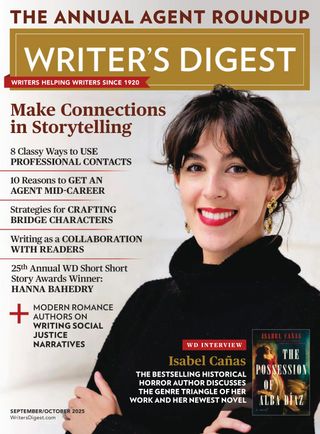

Esta historia es de la edición November / December 2025 de Writer’s Digest.
Suscríbete a Magzter GOLD para acceder a miles de historias premium seleccionadas y a más de 9000 revistas y periódicos.
¿Ya eres suscriptor? Iniciar sesión
MÁS HISTORIAS DE Writer’s Digest
Writer’s Digest
100 Best Markets for Writers
A list of print and online publications looking for freelancers to contribute their knowledge on everything from pet care to finance and beyond.

65 mins
Yearbook 2026

Writer’s Digest
Memoir Plus
Add a bonus to your personal narrative for a marketing boost.
8 mins
Yearbook 2026
Writer’s Digest
Surefire Ways to Sell Your Children's Book
In my 28 years editing children's books, I've learned that publishing exists at the intersection of art and commerce.
5 mins
Yearbook 2026
Writer’s Digest
The ABCs of Freelance Success
Many freelance writers, especially those at the beginning of their careers, tend to place almost all of their professional focus on one specific component: craft.
5 mins
Yearbook 2026
Writer’s Digest
How to Write in Different Genres
Emiko Jean and Yulin Kuang share tips and strategies for how they successfully write in different genres and mediums.
8 mins
Yearbook 2026
Writer’s Digest
Small But Mighty
Why small presses might be the perfect home for your book.
8 mins
Yearbook 2026

Writer’s Digest
The Story Behind the Story
What's backstory, and what's it doing here anyway?
6 mins
Yearbook 2026

Writer’s Digest
2025 Year in Review
Publishing expert Jane Friedman recaps the biggest news in the industry.
8 mins
Yearbook 2026

Writer’s Digest
What Is Your Story Question?
When a story isn't working—when you know it's not quite coming together, when beta readers and critique partners confirm your fears but can't put a finger on why, or you're not getting offers from agents or publishers—savvy authors start trying to diagnose the issue by examining its component parts, like characterization, plot, and stakes.
6 mins
Yearbook 2026
Writer’s Digest
Writer's Digest 27th Annual 101 Best Websites for Writers
For the 27th year, Writer's Digest is shining a light on 101 websites with a goal of helping writers in a variety of ways.
26 mins
Yearbook 2026
Listen
Translate
Change font size