Intentar ORO - Gratis
3D Printing in Textile Production: Weaving the Future, Layer by Layer
Textile Value Chain
|November 2025
What if someone told you that the future of fashion might not rely on scissors, sewing machines, or piles of fabric scraps?
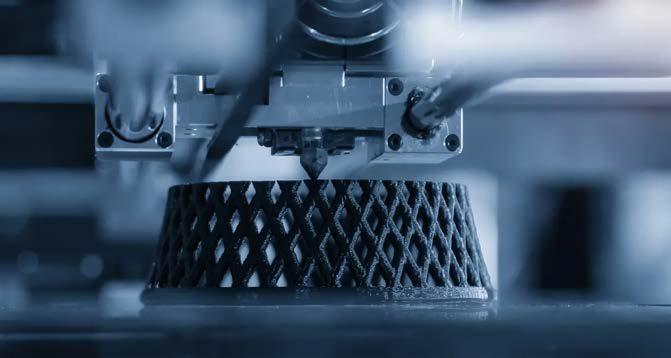
That instead of cutting patterns from rolls of cloth, we could simply print a dress, a shoe, or an entire outfit directly from a digital file? It might sound futuristic, but in many textile innovation labs around the world, it's already happening.
3D printing in textile production isn't a distant dream anymore; it's quietly reshaping how we make the things we wear and use.
From Weaving to Printing: A New Chapter in Textiles
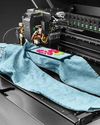
For centuries, textiles have been woven, knitted, dyed, and cut. Now, we're adding a new verb to that list: printed. Not printed with ink or dye, but printed layer by layer to create fabric-like structures themselves.
This transformation, moving from manual or mechanical weaving to digital fabrication, is as significant as the industrial revolution was to handloom weaving. It offers immense potential for efficiency, creativity, and sustainability, but it also raises questions about how it might affect millions who depend on traditional textile manufacturing.
In simple terms, 3D printing in textiles is the process of creating fabric structures, garments, or textile components by depositing materials layer by layer, guided by digital design. Unlike weaving or knitting, which work from rolls of yarn or fabric, 3D printing builds the product from scratch, precise, customisable, and largely waste-free.
How the World Is Embracing 3D-Printed Textiles
Globally, many companies are investing heavily in this technology.
 Adidas is one of the best-known examples. Its Futurecraft 4D shoes feature midsoles made using 3D printing technology developed with the Silicon Valley company Carbon. These shoes aren't just prototypes; they're sold commercially and used by athletes worldwide.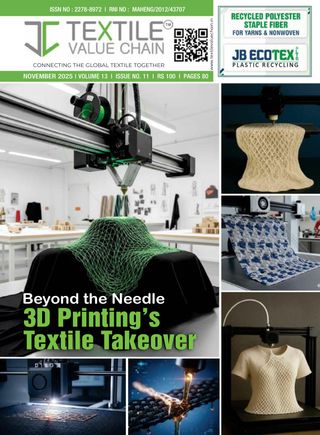

Esta historia es de la edición November 2025 de Textile Value Chain.
Suscríbete a Magzter GOLD para acceder a miles de historias premium seleccionadas y a más de 9000 revistas y periódicos.
¿Ya eres suscriptor? Iniciar sesión
MÁS HISTORIAS DE Textile Value Chain
Textile Value Chain
EPR in Textiles: Turning Compliance into Opportunity
When the EU Comes to Panipat, It Means One Thing — The World Is Watching

3 mins
November 2025

Textile Value Chain
European Parliament Delegation Visits Panipat Recycling Cluster to Strengthen India-EU Collaboration on Circular Textiles
A high-level delegation from the European Parliament's Committee on International Trade (INTA) visited the Panipat Textile Recycling Cluster — India's largest hub for recycled textiles and circular manufacturing — during their official visit to India.
1 mins
November 2025

Textile Value Chain
Paramount Instruments: Where Innovation Turns Testing into Joy
At Paramount Instruments, innovation isn't just a Pursuit- it's in our DNA.
2 mins
November 2025
Textile Value Chain
Crafting the Future: LMW & Hami Weavelon pioneer Compact Spinning in Polyester
Manmade fibres today form the backbone of the global textile industry, driven by their versatility, performance, and ability to meet the rising demand for both everyday and specialised applications.
3 mins
November 2025

Textile Value Chain
Data is the New Thread: Weaving India's Textile Sector into a Circular Powerhouse
On November 13, 2025, at the 12th Edition of the India and Sustainability Standards (ISS) International Dialogue and Conference held at Bharat Mandapam in New Delhi, representatives from the Home Exporters Welfare Association of India (HEWA) joined industry leaders, policymakers, and international organizations to address a pressing question: How can India's textile sector meet emerging global data requirements while supporting its MSME backbone?
3 mins
November 2025

Textile Value Chain
Rieter Winding Suction Nozzle Upgrade: More Yarn, Less Energy Use
After upgrading the suction nozzles on their 32 winding machines, Sanyang Textile Co., Ltd., China, saw an increase in yarn production of 3% and a reduction of 13% in energy use. The flow-optimised, aerodynamically designed suction nozzle enables efficient upper yarn search and pickup from the package. This results in a 55% reduction in red light percentage and a significant reduction in the operator's workload.
1 mins
November 2025
Textile Value Chain
EU's Extended Producer Responsibility (EPR) Law and Its Implications for India's Textile Industry
The European Union (EU) has approved a new Extended Producer Responsibility (EPR) framework for textiles. This is a major regulatory shift that makes fashion brands and producers accountable for their products' entire lifecycle, from design and production through collection, sorting, recycling and disposal.
9 mins
November 2025

Textile Value Chain
GTE Ahmedabad 2025 Concludes Day 3 with a Huge Footfall
The 38th Garment Technology Expo (GTE) Ahmedabad 2025, co-located with the Lace & Trims Show, wrapped up its third day on an impressive note, recording around 9,700 B2B visitors. The strong industry turnout reaffirmed the expo's role as one of the most influential and business-driven platforms for garment and apparel technology in the western region.
2 mins
November 2025

Textile Value Chain
Reinterpreting Korean Street Fashion through Sustainable Design Practices
A Path through Eco-conscious Urban Fashion
7 mins
November 2025
Textile Value Chain
3D Printing in Textiles Manufacturing: A Game-Changer in Design, Sustainability, and Efficiency
The global textile and apparel industry is undergoing a radical transformation due to the convergence of digital design, advanced material technology, and next-generation manufacturing. Of the latter, few have greater potential to change how textiles are made today than additive manufacturing, better known as 3D printing.
5 mins
November 2025
Listen
Translate
Change font size