
Vuélvete ilimitado con Magzter GOLD
Obtenga acceso ilimitado a más de 9000 revistas, periódicos e historias Premium por solo
Intentar ORO - Gratis
Asiatic redwater: The role of vaccination and disease reporting
Stockfarm
|February 2026
Redwater is an important disease in South Africa, and is responsible for significant losses and rapid onset of deaths among cattle. Its continual spread into new regions poses a serious threat to livestock health and productivity.
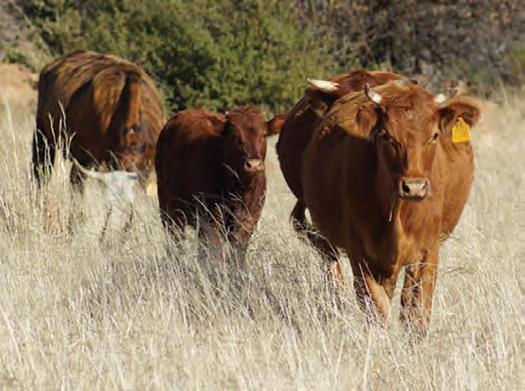
Asiatic redwater is caused by Babesia bovis and is transmitted by the Asian blue tick, Rhipicephalus (Boophilus) microplus. African redwater, on the other hand, is caused by Babesia bigemina and is mainly transmitted by the blue ticks R. (B.) decoloratus and R. (B.) microplus.
African redwater has a slower progression. Infected cattle may develop a high fever (above 40°C), lethargy, loss of appetite, pale mucous membranes (indicative of anaemia), jaundice, and red-coloured urine over several days. With prompt diagnosis, early treatment can be effective.
Asiatic redwater, however, is more aggressive. Animals may die without any obvious signs; however, in some cases, red urine is absent, while in others neurological signs such as aggression are seen. When multiple animals in a herd die suddenly and Asiatic redwater is confirmed, the entire herd should be treated preventively.
Disease trends
According to animal disease reports released in January 2025, December 2024 was an exceptionally dry month. In contrast, January 2025 saw high rainfall figures across large parts of the summer rainfall region, including the northern areas (Limpopo, Gauteng and northern Free State), eastern regions (Mpumalanga and KwaZulu-Natal), and western areas.
Tick populations tend to increase sharply following good rainfall, particularly when these conditions are followed by hot, dry weather. Since November 2025, many areas within the summer rainfall region have received good rains, which is expected to result in high tick numbers as temperatures rise.

Esta historia es de la edición February 2026 de Stockfarm.
Suscríbete a Magzter GOLD para acceder a miles de historias premium seleccionadas y a más de 9000 revistas y periódicos.
¿Ya eres suscriptor? Iniciar sesión
MÁS HISTORIAS DE Stockfarm
Stockfarm
Tackle mastitis in dairy COWS
Mastitis is one of the most significant challenges in the dairy industry, reducing milk yield and overall profitability.

5 mins
February 2026
Stockfarm
Ewe nutrition for a healthy lamb crop
Producers widely acknowledge that the success of any sheep enterprise depends heavily on the potential and management of the farm’s female animals.
4 mins
February 2026
Stockfarm
Does chop length really matter?
Chop length is a critical factor in producing successful silage. Mistakes made during this initial stage can have lasting, irreparable effects.
2 mins
February 2026
Stockfarm
Place these ticks on your autumn watch list
Heavy tick infestations and an increase in the incidence of tickborne diseases such as redwater, gallsickness, and heartwater remain a serious challenge for livestock producers in South Africa, particularly when environmental conditions favour these parasites. Effective control strategies and sound management practices are therefore essential.
2 mins
February 2026
Stockfarm
The grazing paradox: Towards better data
Producers are often under pressure to reassess their grazing strategies and consider dramatic management changes aimed at sustainability.
5 mins
February 2026

Stockfarm
Shearer training for improved performance
Lungani Maqakalana has sheep shearing in his blood. Both his father and uncle were shearers, and from a young age he aspired to follow in their footsteps.
4 mins
February 2026
Stockfarm
Misuse of an employer's property
An employer's property is an integral part of the business infrastructure. Any loss, damage, accidental misuse, intentional misuse, or waste of this property constitutes serious misconduct, placing unnecessary strain on the employer to repair or replace it.
2 mins
February 2026
Stockfarm
The dynamics of the South African lucerne hay industry: Grading and quality
In the January issue of Stockfarm, part one of this series explored the role of lucerne hay in South Africa's animal feed industry.
5 mins
February 2026
Stockfarm
Functional efficiency in small stock
Functional efficiency, the combination of structural soundness, adaptability, mobility, mothering ability, and reproductive capability, is as important as genetic merit for economically important, measurable traits.
3 mins
February 2026
Stockfarm
Managing breeding stock and unsold weaner calves
Persistent outbreaks of foot-and-mouth disease (FMD) have dealt a severe blow to the South African cattle industry.
1 mins
February 2026
Listen
Translate
Change font size