
Vuélvete ilimitado con Magzter GOLD
Obtenga acceso ilimitado a más de 9000 revistas, periódicos e historias Premium por solo
Intentar ORO - Gratis
Pai's Innovation Adds Shine To Hindalco
Fortune India
|October 2024
Leadership in ESG, launch of future-ready products help company take pole position.

SATISH PAI, managing director, Hindalco Industries, wanted to be a writer and a musician as a school kid. But he ended up as a business leader, writing the success story for Hindalco. From tough times of Covid, Pai has made Hindalco a global pioneer in ESG, a resourceful innovator churning out futuristic products and an entity that runs like a well-oiled machinery. Pai has nurtured Hindalco much like the title of his favourite business book, ‘Good to Great’.
Hindalco makes aluminium, copper and speciality alumina across 10 countries and 52 units. It owns four Bauxite mines—two in Jharkhand (Netrahat and Lohardaga) and one each in Chhattisgarh (Samli) and Odisha (Baphlimali). It also owns one coal mine in Chhattisgarh (Gare Palma) and two in Jharkhand (Chakla and Kathautia). It has four refineries and four smelters.
Growth Drivers
India’s per capita aluminium consumption is 3.1 kg compared to the global average of 12.2 kg. Per capita copper consumption is 0.7 kg as against the global average of 3.9 kg. In China, per capita aluminium consumption is 34.9 kg, while copper is at 11.8 kg. The numbers indicate a lot of room for growth in India. India’s urban population, projected to reach 600 million by 2036, from 416 million in 2018, is also expected to drive demand in building/construction, infrastructure and consumer goods sectors that are big users of aluminium, copper and specialty alumina products. For instance, India’s goal to increase non-fossil fuel capacity to 500 GW by 2030, with focus on solar PV systems, is expected to boost demand for aluminium and copper, key inputs in solar modules.
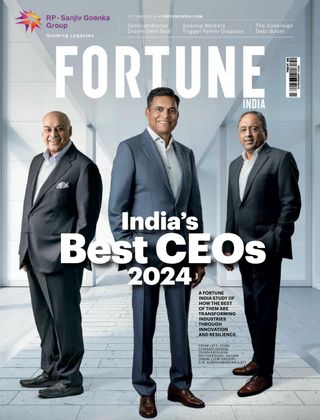

Esta historia es de la edición October 2024 de Fortune India.
Suscríbete a Magzter GOLD para acceder a miles de historias premium seleccionadas y a más de 9000 revistas y periódicos.
¿Ya eres suscriptor? Iniciar sesión
Listen
Translate
Change font size