
Vuélvete ilimitado con Magzter GOLD
Obtenga acceso ilimitado a más de 9000 revistas, periódicos e historias Premium por solo
Intentar ORO - Gratis
The story of South Africa's sugar cane industry
Farmer's Weekly
|October24 -31, 2025
South Africa's sugar industry grew from colonial ambition and Indian labour into a pillar of KwaZulu-Natal's economy, blending science, struggle and resilience to sweeten the nation's history and culture.
-
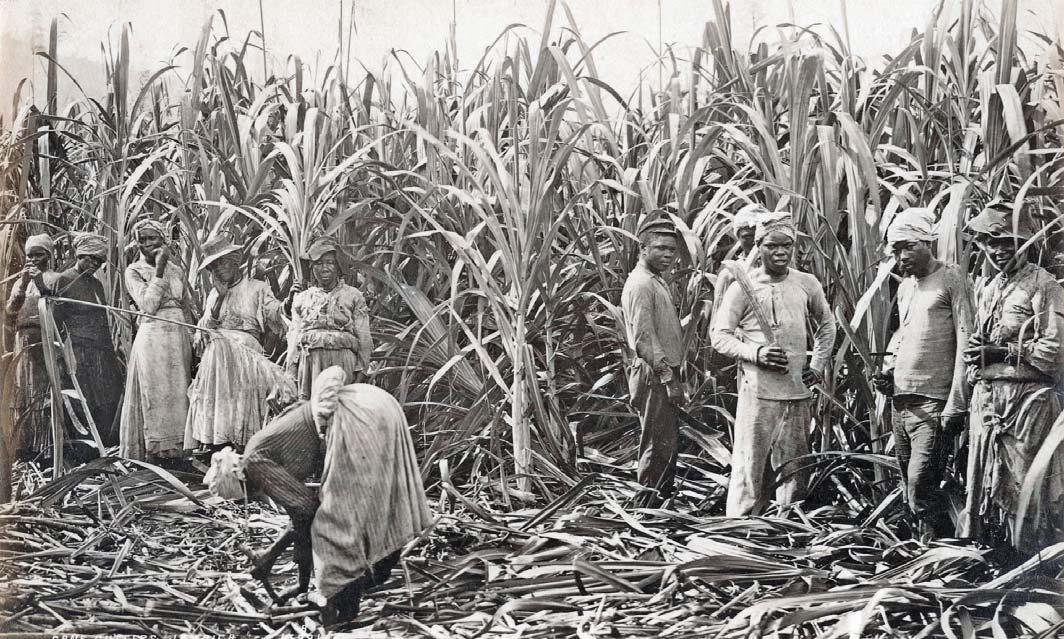
Sugar runs deep in South Africa's soil, and its history is one of resilience, innovation and human endurance.
While sugar cane has ancient origins in India, it found a home along the humid coastal plains of KwaZulu-Natal through colonial trade, migration and industrial ambition.
According to Dr HH Dodds, former director of the South African Sugar Association’s Experiment Station and author of Sugar: The Origin and Development of a Primary Industry (SASA, UKZN Gandhi-Luthuli Documentation Centre), “South Africa's sugar story began in 1847 when Durban merchants Milner & Milner imported the first canes from the island of Réunion.”
Dodds mentions in his book that it was a settler named Edmund Morewood who, in 1851, “built the country’s first sugar mill at Compensation, 56km north of Durban, a small wooden factory powered by oxen and hand labour”.
GLOBAL ORIGINS OF SUGAR
Sugar cane’s story begins thousands of years before it touched South African soil. Historians trace its origins to India, where it was cultivated as early as 500BCE. From India, sugar spread to Persia and the Arab world, reaching the Mediterranean by the 7th century. European colonisation carried sugar further, first to the Canary Islands, then to the Caribbean and the Americas.
In The History of Sugar, Noel Deerr writes, “Sugar is the most widely traded commodity in the colonial world.” (This was up until the 1970s, when Brent crude oil took over this title).
The introduction of sugar to South Africa mirrors this global pattern. Early settlers looked to Mauritius and Réunion, islands with established cane industries, to supply both plant material and labour systems. According to Dodds, “European settlers brought cane, machinery and labour systems from Mauritius and Réunion under British colonial expansion.”
A COLONIAL CROP TAKES ROOT

Esta historia es de la edición October24 -31, 2025 de Farmer's Weekly.
Suscríbete a Magzter GOLD para acceder a miles de historias premium seleccionadas y a más de 9000 revistas y periódicos.
¿Ya eres suscriptor? Iniciar sesión
MÁS HISTORIAS DE Farmer's Weekly

Farmer's Weekly
Egon Zunckel: a lifetime of learning from the soil
The Zunckel name is synonymous with no-till farming in South Africa. Egon Zunckel, a pioneer in the field and a passionate advocate for soil health, shared with Lindi Botha the lessons he has learnt over the years about building resilient soils and sustainable farming systems.

10 mins
March 27 - April 3, 2026
Farmer's Weekly
Researchers explore new tools to combat herbicide resistance
Research by students from Stellenbosch University aimed at combatting herbicide resistance was highlighted during a recent technical trial information day hosted by the Western Cape Department of Agriculture.
6 mins
March 27 - April 3, 2026

Farmer's Weekly
Lepas leaps into South Africa as the latest Chery-owned brand
Lepas has become Chinese carmaker Chery's latest local subbrand with the introduction of the L4 compact SUV. The Citizen's Charl Bosch reports.
2 mins
March 27 - April 3, 2026

Farmer's Weekly
La Rhone Limousins: a small mixed herd turned renowned stud
The Western Cape is not typically known for cattle farming, particularly in its fruit-growing regions. Yet nestled among the orchards below the mountains of Tulbagh is a Limousin stud that has made a name for itself. AJ du Toit of La Rhone Limousins spoke to Henning Naudé about producing high-quality genetics now found on farms in all nine provinces.
6 mins
March 27 - April 3, 2026
Farmer's Weekly
Nitrogen: no easy fix
Products that claim to herald a nitrogen revolution that will boost global food production are nothing more than snake oil, say scientists.
4 mins
March 27 - April 3, 2026

Farmer's Weekly
Potato soup
Rich, creamy, and indulgent, this soup is the ultimate in comfort food.
1 mins
March 27 - April 3, 2026

Farmer's Weekly
Fill your Easter basket with some books
Patricia McCracken has put together a delightful cocktail of titles to tuck into during the April long weekend break that offers the bookworm an appetising alternative to the traditional sweet treats.
3 mins
March 27 - April 3, 2026
Farmer's Weekly
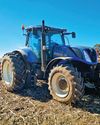
New Holland T7 and T6000 tractor series
In line with the advancement of technology, implements, and systems in the agriculture sector, New Holland is modifying their new-generation tractors to keep pace with farmers' needs in the future, writes Jaco du Preez.
2 mins
March 27 - April 3, 2026

Farmer's Weekly
The kiss of the golden serpent
The Swedish zoologist Carl Linnaeus captured a Cape cobra at the Cape of Good Hope in 1758 and introduced it to science for the first time. Mike Burgess investigates why and how these incredibly well-adapted snakes are often involved in deadly interactions with humans.
3 mins
March 27 - April 3, 2026

Farmer's Weekly
Diamond-back moth remains a key pest to monitor in South African canola
Canola is a cornerstone of South Africa's winter rainfall region, with record yields approaching 300 000t. While it boosts soil health and diversification, the crop remains highly vulnerable to the rapid three-week life cycle of the diamond-back moth. Success depends on early detection of 'windowing' feeding patterns to protect stands and maintain industry momentum.
4 mins
March 27 - April 3, 2026
Listen
Translate
Change font size