Intentar ORO - Gratis
The basics of growing lupins
Farmer's Weekly
|Farmer's Weekly 7 July 2023
Lupins are planted in both the winter and summer rainfall regions of South Africa. They are particularly popular in the coastal areas of the Western Cape, where they are used as a pasture crop for sheep production
-

Lupins (Lupinus spp.) can play an important role in conservation agriculture-based crop-pasture rotations. Most lupins are grown for their high-quality seed, which is used as a protein and energy concentrate in livestock feed rations.
Also commonly known as blue bonnets, and sometimes grown as ornamental plants, these mostly herbaceous perennial plants can be between 0,3m and 1,5m tall, with some growing up to 3m.
They have soft green to grey-green leaves which may be covered in silvery hairs. The leaf blades are usually divided into five to 28 leaflets.
The flowers, each of which is 1cm to 2cm long, are produced in dense or open whorls on an erect spike.
The species of lupins important for agricultural purposes are the yellow lupin (L. luteus), the white lupin (L. albus), also known as the Italian lupin, and the blue lupin (L. angustifolius).
Alkaloids in lupins determine how sweet or bitter the plant is. White lupins are sweet (tasty), and their seeds are used for animal feed. L. angustifolius is planted for grazing. Animals eat only the older leaves and avoid the growth points. This species establishes more readily than other legumes, write Dr Wayne Truter et al in their article on lupins for Grain SA.
Lupins prefer a slightly acidic and poorer soil. Like other legumes, lupines fix nitrogen (N) from the atmosphere into ammonia via a rhizobium-root nodule symbiosis, fertilising the soil for other plants. This makes them extremely valuable to the next crop planted in the land.
L. angustifolius is the most common species planted in the Western Cape, and does well in sandy soils.


Esta historia es de la edición Farmer's Weekly 7 July 2023 de Farmer's Weekly.
Suscríbete a Magzter GOLD para acceder a miles de historias premium seleccionadas y a más de 9000 revistas y periódicos.
¿Ya eres suscriptor? Iniciar sesión
MÁS HISTORIAS DE Farmer's Weekly

Farmer's Weekly
More about growing vegetable seedlings in trays
By considering various factors and tailoring care to specific vegetable needs, you can produce healthy, robust seedlings ready for transplanting into the garden, writes Shane Brody.

2 mins
March 27 - April 3, 2026

Farmer's Weekly
Prodigy of agriculture and land is now a presidential envoy
Wandile Sihlobo will be armed by state powers to accelerate any decision-making that the Presidency deems crucial to grow the sectors of agriculture and land
2 mins
March 27 - April 3, 2026

Farmer's Weekly
Notes from the Western Cape agricultural roadshow
We spent time last week engaging with agribusinesses and farmers in the Western Cape. The primary agricultural focus of the province is various fruits, citrus, table grapes, wine, wheat, barley, livestock, and aquaculture, among many value chains.
3 mins
March 27 - April 3, 2026

Farmer's Weekly
AGOA's promise fades under new US tariffs
Although the African Growth and Opportunity Act has been extended for another year, new US reciprocal tariffs have largely erased its duty-free benefits. Recent modelling shows sharp declines in African exports to the US, particularly in apparel-dependent economies such as Lesotho and Madagascar.
4 mins
March 27 - April 3, 2026

Farmer's Weekly
Egon Zunckel: a lifetime of learning from the soil
The Zunckel name is synonymous with no-till farming in South Africa. Egon Zunckel, a pioneer in the field and a passionate advocate for soil health, shared with Lindi Botha the lessons he has learnt over the years about building resilient soils and sustainable farming systems.
10 mins
March 27 - April 3, 2026
Farmer's Weekly
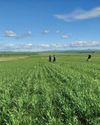
Researchers explore new tools to combat herbicide resistance
Research by students from Stellenbosch University aimed at combatting herbicide resistance was highlighted during a recent technical trial information day hosted by the Western Cape Department of Agriculture.
6 mins
March 27 - April 3, 2026

Farmer's Weekly
Lepas leaps into South Africa as the latest Chery-owned brand
Lepas has become Chinese carmaker Chery's latest local subbrand with the introduction of the L4 compact SUV. The Citizen's Charl Bosch reports.
2 mins
March 27 - April 3, 2026

Farmer's Weekly
La Rhone Limousins: a small mixed herd turned renowned stud
The Western Cape is not typically known for cattle farming, particularly in its fruit-growing regions. Yet nestled among the orchards below the mountains of Tulbagh is a Limousin stud that has made a name for itself. AJ du Toit of La Rhone Limousins spoke to Henning Naudé about producing high-quality genetics now found on farms in all nine provinces.
6 mins
March 27 - April 3, 2026
Farmer's Weekly
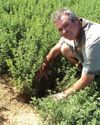
Nitrogen: no easy fix
Products that claim to herald a nitrogen revolution that will boost global food production are nothing more than snake oil, say scientists.
4 mins
March 27 - April 3, 2026

Farmer's Weekly
Potato soup
Rich, creamy, and indulgent, this soup is the ultimate in comfort food.
1 mins
March 27 - April 3, 2026
Translate
Change font size