Intentar ORO - Gratis
Monitor your dairy farm's emission rates online!
Farmer's Weekly
|June 17, 2022
Milk producers face a multitude of challenges, with low profits and strict biosecurity demands high on the list. In addition, the industry is often lambasted for its perceived contribution to greenhouse gas emissions, despite efforts to mitigate these. Researcher Riana Reinecke now offers dairy farmers a tool to help them measure, and demonstrate, the effects of any regenerative conservation methods they introduce. Susan Marais reports.

FAST FACTS
South Africa’s dairy industry compares favourably with the global dairy sector in terms of greenhouse gas emissions.
Through regenerative farming practices, farmers can lower their carbon footprint and replenish the soil.
The more efficient a dairy, the lower its greenhouse gas emissions.
Being a South African milk producer in 2022 is not for the faint-hearted – or the idle. A severe cost-price squeeze is a constant reality, biosecurity needs to be extremely tight, and the daily milking schedule is punishing.
To add insult to injury, dairy production endures more negative press than any livestock industry when it comes to greenhouse gas (GHG) emissions, and that’s saying something. Open many social media platforms and this becomes obvious.
“The industry is an easy target for passionate activists stating their perspective, regardless of whether their opinions can be backed by science or not,” says Riana Reinecke, a doctoral candidate from Stellenbosch University and a sustainability researcher at Asset Research.
Reinecke is exploring ways of improving environmental and economic efficiencies in the dairy sector through sustainable farming. Previously, she worked at Clover and Nestlé, where she gained intimate knowledge about the challenges faced by South Africa’s dairy industry.
AN INDUSTRY UNDER SCRUTINY
Climate activists and scientists alike are pressurising the livestock sector, and the dairy industry in particular, to reduce its contribution to GHG emissions, says Reinecke.


Esta historia es de la edición June 17, 2022 de Farmer's Weekly.
Suscríbete a Magzter GOLD para acceder a miles de historias premium seleccionadas y a más de 9000 revistas y periódicos.
¿Ya eres suscriptor? Iniciar sesión
MÁS HISTORIAS DE Farmer's Weekly

Farmer's Weekly
The foot-and-mouth disease threat is growing
Foot-and-mouth disease poses a growing threat to the livestock industry, especially communal farmers, with devastating economic consequences unless awareness and compliance improve, writes Shane Brody.

3 mins
January 30 - February 06, 2026

Farmer's Weekly
Shipping conditions to ease in 2026, but risk remains high
Early signs suggest a more favourable export season for South African producers, as easing global shipping congestion and improved performance by Transnet point to higher throughput at local ports. Lindi Botha reports.
2 mins
January 30 - February 06, 2026

Farmer's Weekly
A path of accelerating land reform in South Africa
Delivering the ANC's January 8th Statement a few weeks ago, President Cyril Ramaphosa noted, amongst other things, that: “Land reform remains one of the most urgent tasks of the National Democratic Revolution. While progress has been made, much more is required to give effect to the constitutional requirement for redress and equitable access to land.”
2 mins
January 30 - February 06, 2026
Farmer's Weekly
Reflections on 2025 and the policy space for 2026
The year 2025 was a year characterised initially by a wave of misinformation, particularly relating to legislation and tariff issues. This year some big moves are expected in the trade space.
3 mins
January 30 - February 06, 2026
Farmer's Weekly
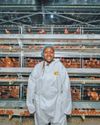
From planning to peak lay: building a profitable egg business
Mpumalanga poultry farmer Lebogang Mashego spoke to Octavia Avesca Spandiel, and shared practical insights on planning, building systems that work, breed choice, feed management, and markets to build a profitable and sustainable egg business.
5 mins
January 30 - February 06, 2026

Farmer's Weekly
Impofu Wind Farm becomes a canvas for community connection through Enel's Blowing Art Initiative
Enel Green Power South Africa has introduced the Blowing Art Initiative at the Impofu Wind Farm in the Eastern Cape, a creative community project that turns renewable energy infrastructure into a living gallery.
2 mins
January 30 - February 06, 2026

Farmer's Weekly
Geely is intent on hanging around
Having fallen off the radar around a decade ago following a short local stint, Chinese manufacturer Geely has announced its proposed return to South Africa towards the end of 2026. The Citizen's Jaco van der Merwe reports.
4 mins
January 30 - February 06, 2026

Farmer's Weekly
Great reads to enjoy during ‘me-time'
Patricia McCracken has plucked an assortment of fascinating titles covering different areas of interest, from coastal exploration and dining in the wild, to African traditions surrounding love and marriage.
3 mins
January 30 - February 06, 2026
Farmer's Weekly
Thokoman Peanut Butter marks 25-year milestone with R500 000 commitment to food security
Thokoman Peanut Butter, one of South Africa's biggest producers of peanut butter, celebrates 25 years of consistent quality and community support, marking the occasion with a significant R500 000 partnership with Hot 102.7's Hot Cares initiative for 2026.
2 mins
January 30 - February 06, 2026
Farmer's Weekly
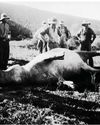
South Africa's famous wandering hippo
From 1928 to 1931, a hippopotamus trekked 1 600km from what was then northern Natal to the Eastern Cape's Keiskamma River near Peddie, where it was shot dead by a posse of farmers. As Mike Burgess writes, this journey would immortalise the hippo in South African history.
3 mins
January 30 - February 06, 2026
Translate
Change font size