
Vuélvete ilimitado con Magzter GOLD
Obtenga acceso ilimitado a más de 9000 revistas, periódicos e historias Premium por solo
Intentar ORO - Gratis
Dealing with spear thistle
Farmer's Weekly
|17 May 2024
Tokozwayo Sive, a production scientist who specialises in pasture science at Animal Production Improvement Research and Development at the Eastern Cape Department of Rural Development and Agrarian Reform, suggests ways to control an invasion of spear thistle.

Spear thistle is a member of the Asteraceae family and is commonly known as roadside thistle, bull thistle and plume thistle.
The plant is native to Europe, Western Asia and North Africa, but is now naturalised and widespread throughout South Africa.
It is believed that spear thistle was introduced into South Africa for the first time during the Boer War (in the 1880s), probably with hay or fodder. It was first identified near Van Reenen in KwaZulu-Natal. The plant is prevalent in areas with cooler temperatures and high rainfall, but it is rare in the drier areas of South Africa.
A spear thistle invasion is a significant threat to both agricultural and natural ecosystems: the plant is a competitor with grasses that are beneficial to livestock, disrupting natural community dynamics and causing injuries to animals.
LEGISLATION
According to the Conservation of Agricultural Resources Act of 1983, spear thistle has been classified as an invader species under Category 1, and it is imperative to remove and destroy it immediately. The plant is uneconomical and has traits that make it harmful to animals. In addition, the uncontrolled spread of this herbaceous biennial is constantly threatening the livelihoods of farmers as it progressively reduces grazing capacity and croplands and causes animal injuries.
The plant thrives on abandoned lands and disturbed soils, and competes with grasses for soil resources and sunlight.
HABITAT OF THE SPEAR THISTLE
Spear thistle can adapt and grow in various soil types under different moisture conditions.


Esta historia es de la edición 17 May 2024 de Farmer's Weekly.
Suscríbete a Magzter GOLD para acceder a miles de historias premium seleccionadas y a más de 9000 revistas y periódicos.
¿Ya eres suscriptor? Iniciar sesión
MÁS HISTORIAS DE Farmer's Weekly
Farmer's Weekly
Cash flow budgets: keeping farmers in control of liquidity, risk, and their survival
Profit doesn't guarantee a farm's survival - cash does. Cobus du Plessis explains why cash flow budgets are one of the most important yet underused financial tools on South African farms.

5 mins
February 27 - March 06, 2026

Farmer's Weekly
The toast of the Navy
The incredible story of the World War II-era Great Dane dog Nuisance being enlisted in the Royal Navy is well documented. Graham Jooste shared some entertaining anecdotes involving the canine shipmate.
6 mins
February 27 - March 06, 2026
Farmer's Weekly
Healthier soils deter destructive locusts
Locust swarms remain a serious global threat, capable of devastating crops, livelihoods and local economies across vast regions.
1 min
February 27 - March 06, 2026
Farmer's Weekly
Wheat crisis dominates Grain SA regional meetings
As the ongoing wheat crisis continues to erode producers' margins, emotions ran high at Grain SA's regional meeting in Moorreesburg in the Western Cape.
2 mins
February 27 - March 06, 2026

Farmer's Weekly
A FARMER'S EXPERIENCE
Street Wallet has been a game-changer for Mario Athanasopoulos, hydroponic production consultant and owner of Green City Farms.
1 mins
February 27 - March 06, 2026
Farmer's Weekly
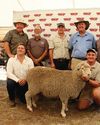
Kesieberg Merino Stud Production Sale
The Kesieberg Merino Stud Production Sale was held on the farm Leeuwfontein on 4 February on behalf of Willie and Herman Henning.
1 min
February 27 - March 06, 2026
Farmer's Weekly
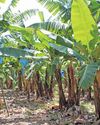
Not cheaper, just different: what you should know about farming in Mozambique
Although Mozambique is often viewed as a cheaper, easier farming location than South Africa, cost comparisons tell a more complex story. But while cross-border production presents real challenges, it also offers opportunities for complementary trade, diversification and regional food security, particularly when it comes to subtropical crops such as bananas.
10 mins
February 27 - March 06, 2026
Farmer's Weekly
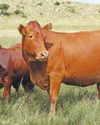
The all-rounder anchoring South Africa's beef value chain
Louis Steyl, CEO of the Bonsmara Cattle Breeders' Society of South Africa, spoke to Octavia Avesca Spandiel about how the versatile Bonsmara breed anchors the country's beef value chain, delivering balanced performance, reproductive and feed efficiency, and carcass traits across extensive and intensive systems.
6 mins
February 27 - March 06, 2026

Farmer's Weekly
THE HITCHING POST
I'm a 60-year-old white woman who loves camping, animals, the outdoors, and watching sport.
2 mins
February 27 - March 06, 2026
Farmer's Weekly
Foot-and-mouth disease in pigs
Recently, the radio news mentioned an outbreak of foot-and-mouth disease (FMD) in pigs in South Africa.
2 mins
February 27 - March 06, 2026
Listen
Translate
Change font size