Intentar ORO - Gratis
The responsible path of Generative AI
DataQuest
|February 2024
Generative AI, a powerful force in various industries, raises ethical concerns that demand careful consideration. In this exclusive conversation with Deepak Pargaonkar, Vice President of Solution Engineering at Salesforce India, we delve into how Salesforce approaches the responsible development and deployment of Generative AI solutions.
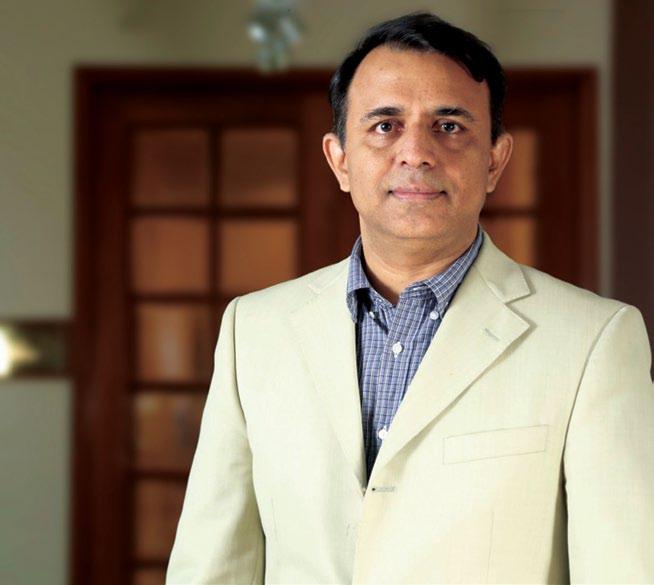
From bias mitigation to data privacy, Pargaonkar sheds light on the ethical guardrails and guidelines that underpin their innovative strides. Excerpts from an interview:
Generative AI has shown tremendous potential in various domains, but it also raises concerns about ethical implications. How does Salesforce approach the responsible development and deployment of Generative AI solutions?
Salesforce takes a responsible and ethical approach to the development and deployment of Generative AI solutions. Our commitment lies in providing safe and accurate AI services to our customers while mitigating potential risks and ethical concerns. Like all of our innovations, we are embedding ethical guardrails and guidance across our products to help customers innovate responsibly. We see tremendous opportunities and challenges emerging in this space, and to ensure responsible development and implementation of generative AI, we're building on our Trusted AI Principles with a new set of guidelines. Our guidelines for Responsible Generative AI aim to assist users of generative AI in addressing potential challenges responsibly during development.
Ethics and bias in AI are critical considerations. What steps does Salesforce take to identify and mitigate potential biases in Generative AI models to ensure fairness and inclusivity?
Salesforce is bringing trusted generative AI to the enterprise. Our Office of Ethical and Humane Use of Technology is involved in every step of product development and deployment. We've created a set of guidelines specific to generative AI based on our Trusted AI Principles, an industry-leading framework to help companies think through how to thoughtfully work with generative AI. Salesforce has always had a multi-tenant architecture that ensures our customers have complete control over their data, and customers' data never mixes. Our generative AI products are no different.

Esta historia es de la edición February 2024 de DataQuest.
Suscríbete a Magzter GOLD para acceder a miles de historias premium seleccionadas y a más de 9000 revistas y periódicos.
¿Ya eres suscriptor? Iniciar sesión
MÁS HISTORIAS DE DataQuest

DataQuest
Engineering India's Al-First Data Centres at Hyperscale
Rohan Sheth explains how AI and HPC are reshaping India's data centres, from density and cooling to power economics, sustainability, and hyperscale decision criteria.

4 mins
February 2026

DataQuest
From copilots to colleagues: Why agentic AI is forcing enterprises to rethink control, trust, and culture
As AI agents shift from assisting to acting, enterprises must redesign governance, data controls, and security guardrails so autonomy stays auditable, reversible, and trusted.
2 mins
February 2026

DataQuest
Reclaiming Control in the AI Era: A Conversation with Kalyan Kumar, CPO, HCLSoftware
Enterprises are reassessing cloud-first strategies as AI becomes core to operations. HCLSoftware's Kalyan Kumar explains why sovereignty, choice and control now shape decisions.
5 mins
February 2026

DataQuest
When infrastructure learns: The rise of the Al-native core
AI-native infrastructure is moving from concept to operational reality, reshaping how organisations build, govern, and scale intelligence across their digital core.
6 mins
February 2026

DataQuest
Bridging the gap between connectivity and compute at scale
As AI scales in India, data centres are evolving into high-density, low-latency platforms that unify connectivity, compute, and sustainability at national scale.
4 mins
February 2026

DataQuest
PUE is not a grapefruit metric, anymore
So what are the new high-hanging fruits for data centre strategists today? And are players going after them?
4 mins
February 2026

DataQuest
Even if Al demand fades, India need not worry - about data centres
For every megawatt (MW) of installed colocation capacity, users here generate approximately 13.2 PB of data monthly- compared to 0.3 PB for Australia and just 0.01 PB for Singapore. India's data centre growth is not dependent on one tech lever. Plus, it is phased and modular and not kneejerk. Manoj Paul explains these contours in detail.
7 mins
February 2026

DataQuest
AI infrastructure and systemic risk
What has been the biggest change in data centre industry-specially after AI workloads? Is Al-bubble a big risk for data centre infra- how much will it affect data centres if something cracks?
1 min
February 2026

DataQuest
Inside the Shift to High-Density, Al-Ready Data Centres
CtrlS' Vipin Jain discusses what it truly takes to build AI-ready data centres in India, balancing high density, liquid-ready cooling, resilience, and ESG accountability.
4 mins
February 2026

DataQuest
Sustainability is now the headline, not a footnote
Sanjay Agrawal, Head Presales and CTO at Hitachi Vantara India and SAARC opines that the conversation is moving beyond headline metrics like PUE toward a broader view of how data lifecycle management and infrastructure efficiency reduce the overall environmental footprint. Let's see why and how- while also touching upon adjacent (or not-so-adjacent) factors like redundancies, availability and AI-readiness
3 mins
February 2026
Listen
Translate
Change font size