Intentar ORO - Gratis
Do more features make for a better incubator?
The Country Smallholder
|February 2026
When first starting out, the range of features on offer for poultry incubators can be bewildering. Hugh & Fiona Osborne are chicken breeders and have used and sold poultry incubators for many years. They firmly believe that incubation doesn't have to be complicated, but that some features will certainly save time and others will improve hatch rates.
-
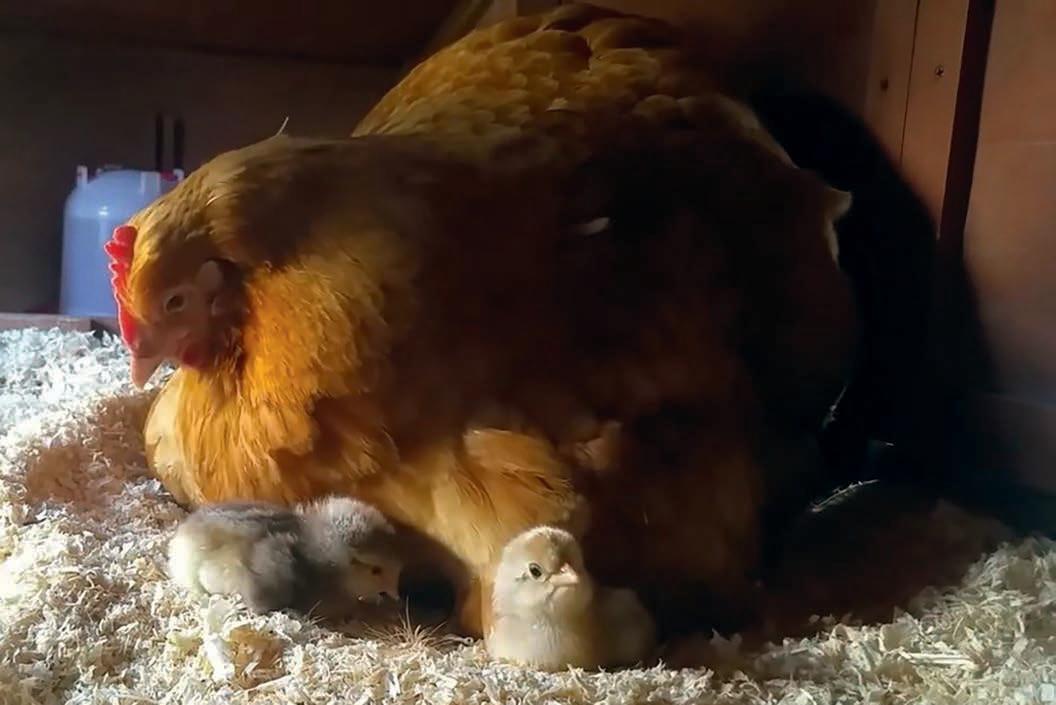
I CAN'T FIND THE TEMPERATURE SETTING ON A CHICKEN!
I (Hugh) am frankly a bit of a nerd! I like to understand things at a technical level and try to do things right. I care about the correct temperature at which to incubate eggs, the optimal level of humidity and how often an egg needs to be turned (and by how much). Getting a good hatch rate matters to me and if things go wrong I really, really want to know why?
It’s important to remind myself occasionally that chickens have been successfully hatching eggs for millennia by plucking their breast and warming them with body heat. They turn eggs with their beak by rolling them, leave the eggs to cool while they nip out for a bite to eat and a comfort break and pretty much leave humidity to take care of itself! You know what? Those eggs still hatch. Life is resilient and evolution ensures that eggs can go through a lot and still hatch.
Having used incubators over the years, we’ve seen manufacturers learn from the broody hen. The advancements in technology have ensured both that hatch rates have improved, and that the incubation process has become easier and less time consuming for the chicken keeper.
THE BASICS
Temperature Control.
For an egg to develop and hatch a few things have to be put in place. The egg has to be kept warm. For most poultry the ideal temperature is 37.5C. It’s quite clever that eggs can be left at room temperature for quite a period before incubation (at least a couple of weeks) whilst a hen or flock build a clutch. Only when the hen sits on a clutch full time will those eggs start to develop, meaning that they will all hatch together. Interestingly, modern scientific studies have shown an increase in hatch rates if eggs are allowed short cooling periods during incubation (which mimics a hen leaving the nest to feed etc.).
Turning the eggs

Esta historia es de la edición February 2026 de The Country Smallholder.
Suscríbete a Magzter GOLD para acceder a miles de historias premium seleccionadas y a más de 9000 revistas y periódicos.
¿Ya eres suscriptor? Iniciar sesión
MÁS HISTORIAS DE The Country Smallholder
The Country Smallholder
Geese for your garden or orchard
There are many reasons for wanting to keep geese - but there are geese for all reasons. Find out which is the one for you!

3 mins
February 2026

The Country Smallholder
Farming thoughts as the smallholding carries on
Agricultural journalist, and machinery writer Jane Brooks, joins us for her regular look at the world.
4 mins
February 2026
The Country Smallholder
Dutch beauty - the Welsummer, famous for plumage colour and terracotta coloured eggs
Victoria Roberts BVSC MRCVS looks at a breed that has been kept by royalty and finds a suitably regal bird with a fascinating history
3 mins
February 2026
The Country Smallholder
How and why eggs vary in size
Paul Donovan investigates the factors influencing the size of a chicken's egg and finds some surprising influences that cause variations
8 mins
February 2026

The Country Smallholder
Newark hosts 10,000 vintage tractor and heritage machinery enthusiasts
Around 10,000 people turned out to celebrate the history of farm machinery and implements through the ages at this year's Newark Vintage Tractor and Heritage Show, held under bright skies at Newark Showground. The two-day event once again proved why it remains one of the highlights of the vintage calendar, with visitors travelling from across the UK - some from more than 400 miles away - to share in a weekend that mixed nostalgia, engineering excellence and community spirit. Exhibits spanned everything from pre-First World War tractors and classic combines to potato handling equipment, steam engines and restored diggers, with every era of British farming represented. One of the standout attractions was the spectacular Caterpillar display, where 89 exhibits ranging from the smallest crawlers to the largest dozers filled the showground. There was incredible history on the stand, including a Holt 75 manufactured during the First World War and presented in pristine condition. The biggest of all, a mighty D10, towered above the crowd and drew constant attention from visitors.
2 mins
February 2026

The Country Smallholder
Then, Now... and Into the Future
Farming and smallholding practices have altered over the past century or so. Some have been subtle, others less so and many brought about by technology and legislation. In the last of the series, Jeremy Hobson continues to outline just a few of them.
2 mins
February 2026
The Country Smallholder
In the forest garden
Adrian Thomas visits a garden in Somerset that's an inspiring mix of food growing, sustainability and wildlife
4 mins
February 2026

The Country Smallholder
Tis the season for Seville oranges time to make marmalade
Henrietta Balcon looks forward to spring with the breakfast favourite
2 mins
February 2026
The Country Smallholder
Track and Trace
John Sones looks at changes concerning livestock welfare measures and available funding
3 mins
February 2026
The Country Smallholder
Massive win for animal welfare as new vet-backed law set to clamp down on puppy smuggling
After a long and sustained campaign by British Veterinary Association, the Animal Welfare (Import of Dogs, Cats and Ferrets) Bill has received Royal Assent to become law.
2 mins
February 2026
Listen
Translate
Change font size