Intentar ORO - Gratis
THE MYSTERIOUS OWL GULI
BBC Wildlife
|October 2025
Far away in the Galápagos Islands, a peculiar nocturnal seabird is finally starting to give up its secrets
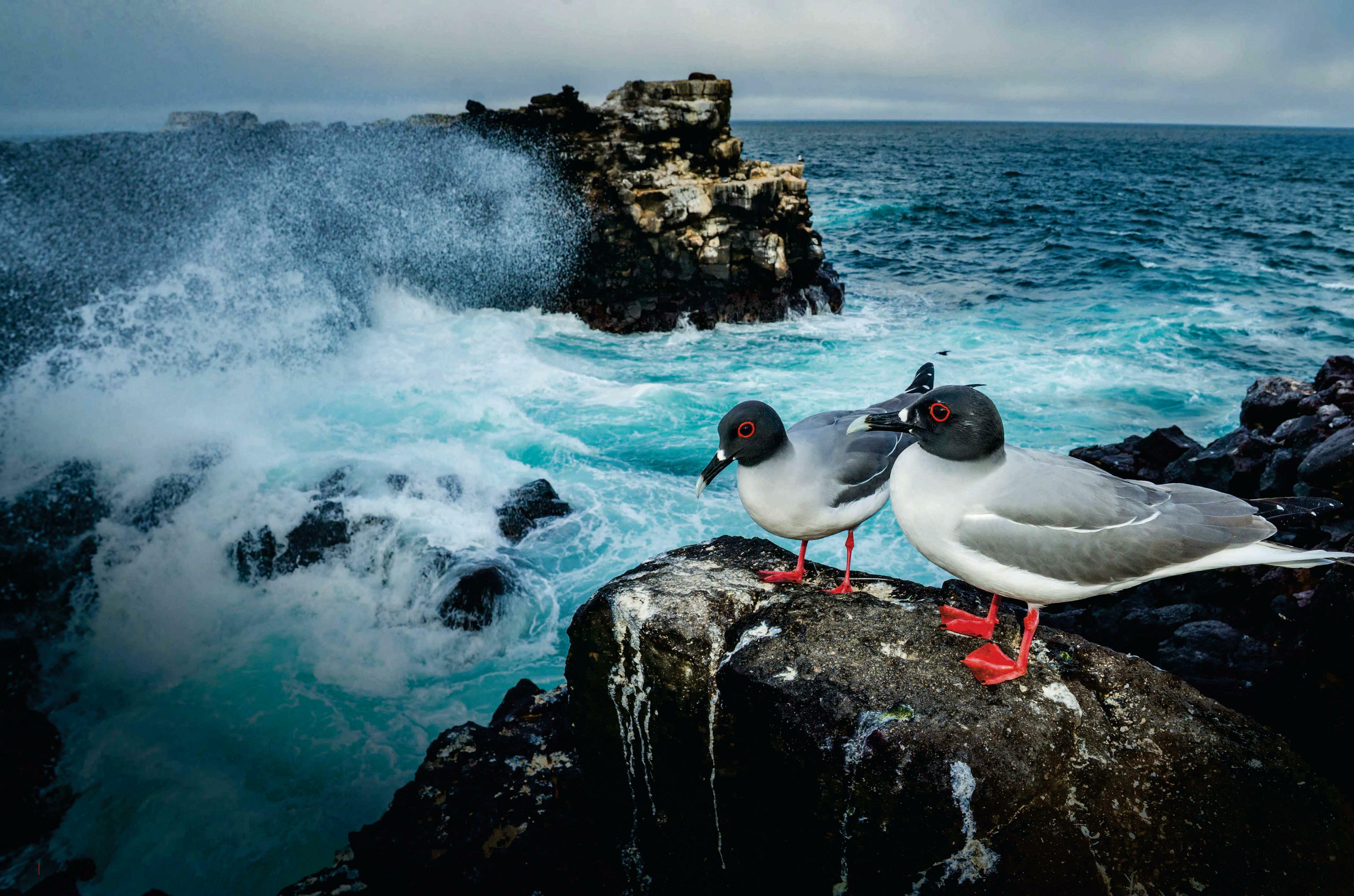
GHOSTLY WHITE FORMS DRIFTED LIKE white handkerchiefs on the brisk night breeze, dipping, rising, flapping, turning and tumbling over an inky black ocean. My small sailing boat rocked gently on the waves, while a handful of stars blinked between the clouds above. The shoreline lay some 30km ahead, just visible as a faint smudge on the horizon, but my gaze was fixated on these spectral beings in constant motion.
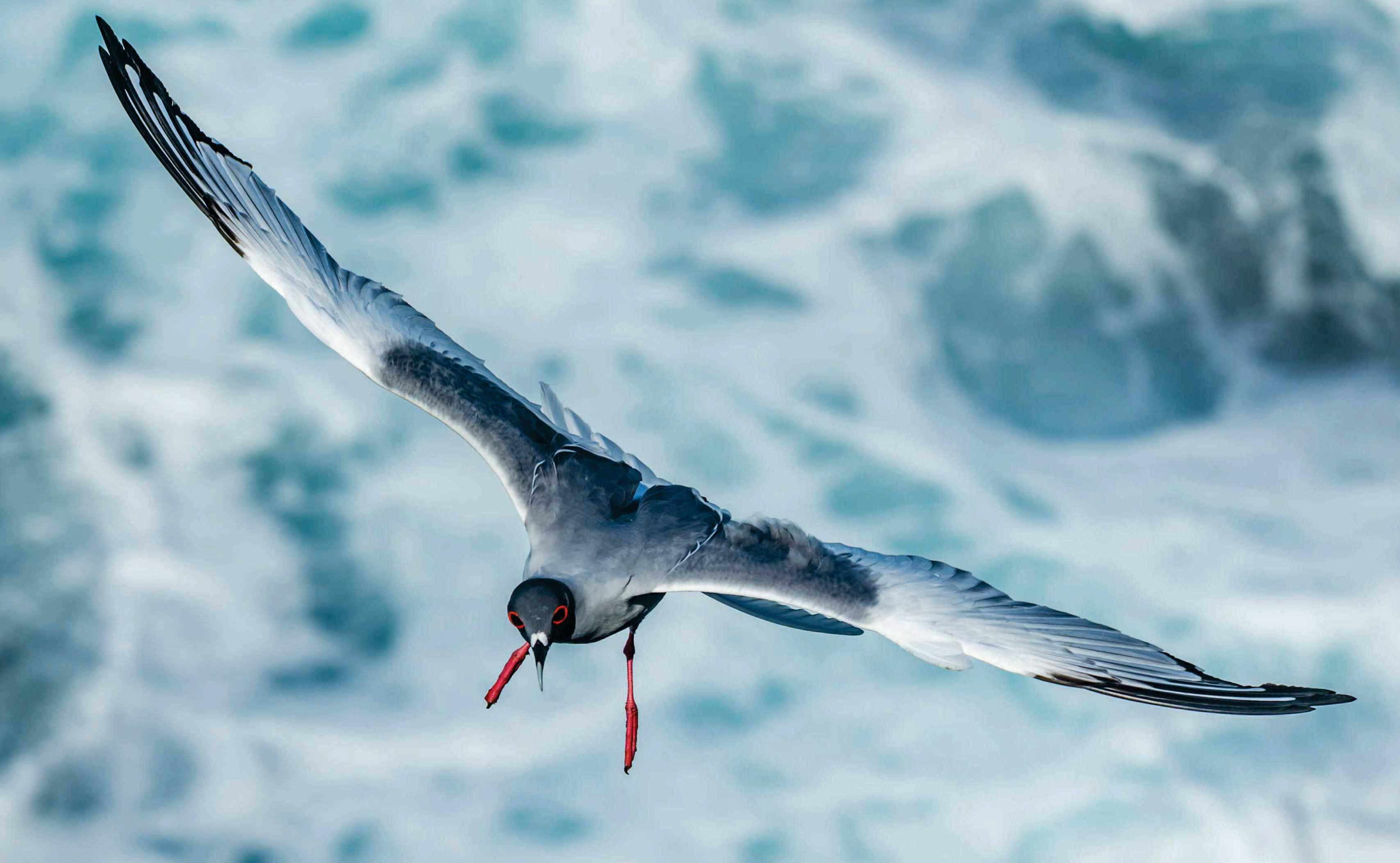
That experience was more than half-a-century ago and remains one of my favourite teenage memories. I was living on the Galápagos – as I still am today – and, back then, moving between the archipelago's islands involved hand-steering from the open cockpit of a small boat. I was just 17, working as a naturalist and deckhand, taking the first very small groups of visitors to see 'my' islands. We travelled at night so we could spend the days exploring on land. Those white handkerchiefs over the sea were in fact swallow-tailed gulls (Creagrus furcatus), found only in the Galápagos and in tiny numbers on Malpelo Island, off Colombia, some 1,600km to the northeast. And they weren't aimlessly blowing past the boat: they were hunting - in near total darkness.
I watched them for hours that night, barely visible in the dim glow of the navigation lights, swooping down and back up with extraordinary agility. They emitted strange, shrill crackling noises, mostly when they suddenly dipped low over the lightless sea surface. It was utterly captivating.

Esta historia es de la edición October 2025 de BBC Wildlife.
Suscríbete a Magzter GOLD para acceder a miles de historias premium seleccionadas y a más de 9000 revistas y periódicos.
¿Ya eres suscriptor? Iniciar sesión
MÁS HISTORIAS DE BBC Wildlife
BBC Wildlife
"I was terrified the elephant would ram us"
African elephant in Kenya

2 mins
January 2026
BBC Wildlife
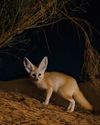
ALL YOU EVER NEEDED TO KNOW ABOUT THE Fennec fox
THE FENNEC FOX IS THE SMALLEST fox in the world, with a body length that can be as little as 24cm.
3 mins
January 2026
BBC Wildlife
INTO THE PLASTISPHERE
A unique synthetic ecosystem is evolving in our oceans – welcome to the plastisphere
7 mins
January 2026
BBC Wildlife
“More than half of all animal life exists in a parasitic relationship, and all life lives in symbiosis”
Our survival depends on species evolving to live together - but some relationships take dark turns
7 mins
January 2026
BBC Wildlife
Are animals able to dream?
SLEEP IS A MYSTERIOUS THING. FOR A long time, we weren't sure why we do it.
1 mins
January 2026
BBC Wildlife
Does a cuckoo know it's a cuckoo?
ABSURD LITTLE BIRDS ACROSS THE world lay their eggs in the nests of other species, leaving the hapless parents to raise a changeling at the expense of their own offspring.
2 mins
January 2026
BBC Wildlife
Orcas killing young sharks
Juvenile great whites are easy prey for orca pod
1 mins
January 2026
BBC Wildlife
Ocean goes on tour
Acclaimed film touring the UK, backed by live orchestra and choir
1 min
January 2026
BBC Wildlife
Feisty bats hunt like lions
Winged mammals use a 'hang and wait' strategy to take down large prey
1 mins
January 2026

BBC Wildlife
SNAP-CHAT
Richard Birchett on magical merlins, wily coyotes and charging deer
2 mins
January 2026
Listen
Translate
Change font size