
Vuélvete ilimitado con Magzter GOLD
Obtenga acceso ilimitado a más de 9000 revistas, periódicos e historias Premium por solo
Intentar ORO - Gratis
CROSS COUNTRY
BBC Wildlife
|March 2025
Translocating elephants is no mean feat-but it's helping this iconic mammal to reclaim its historic lands
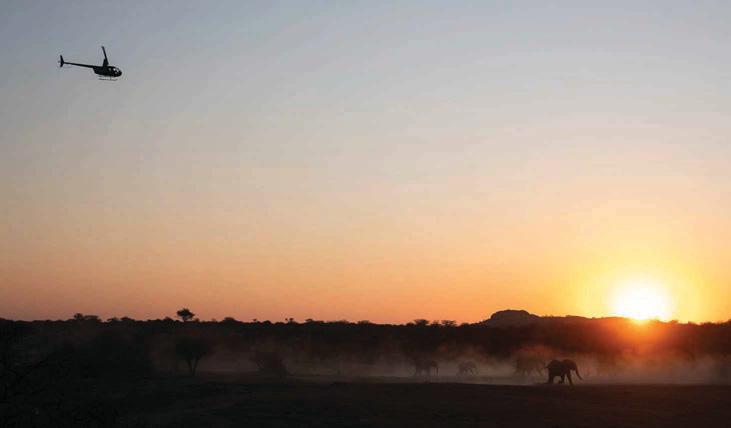
THE AIR TINGLES WITH NERVOUS excitement as Alex Oelofse, owner of Okonjati Game Reserve in Namibia, lifts off in a helicopter. Hanging out the side, dart gun at the ready, is vet Hans Reuter, whose sights are set firmly on the elephants below. As the chopper approaches, the animals tense then flee, kicking up a cloud of dust in the golden morning light.
It's August 2024 and the elephants are destined for a new life north of the border. Okonjati's elephant population has grown to double what the land can sustain, a situation exacerbated by six years of drought, and several family groups need to be relocated. Finding a new home for the herd has proved difficult. In much of the species' range, space for elephants has been squeezed to the limit, and burgeoning human and elephant populations increasingly come into conflict.
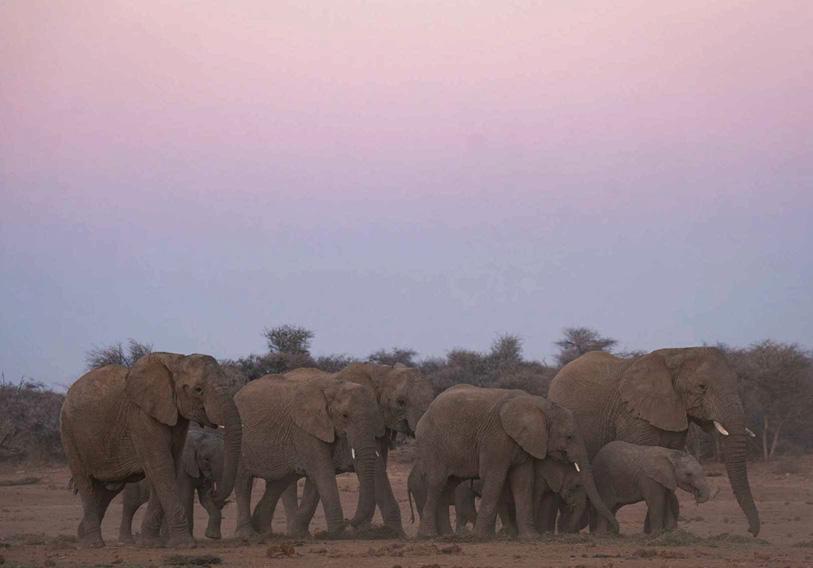 "Culling isn't really an option, we'd really rather move them," says Alex. "But at some point, you need to make a decision - how are you going to manage the herd before they destroy everything?"
Just as time and options were running out, Alex heard that Cuatir Conservation Area, a private conservation project in south-east Angola, was looking for elephants. Made up of 20,000ha of pristine wilderness nestled in the crook of the Cubango River - a tributary of the Okavango that feeds into the Okavango Delta Cuatir had ideal elephant habitat but with no elephants. It was the perfect solution.
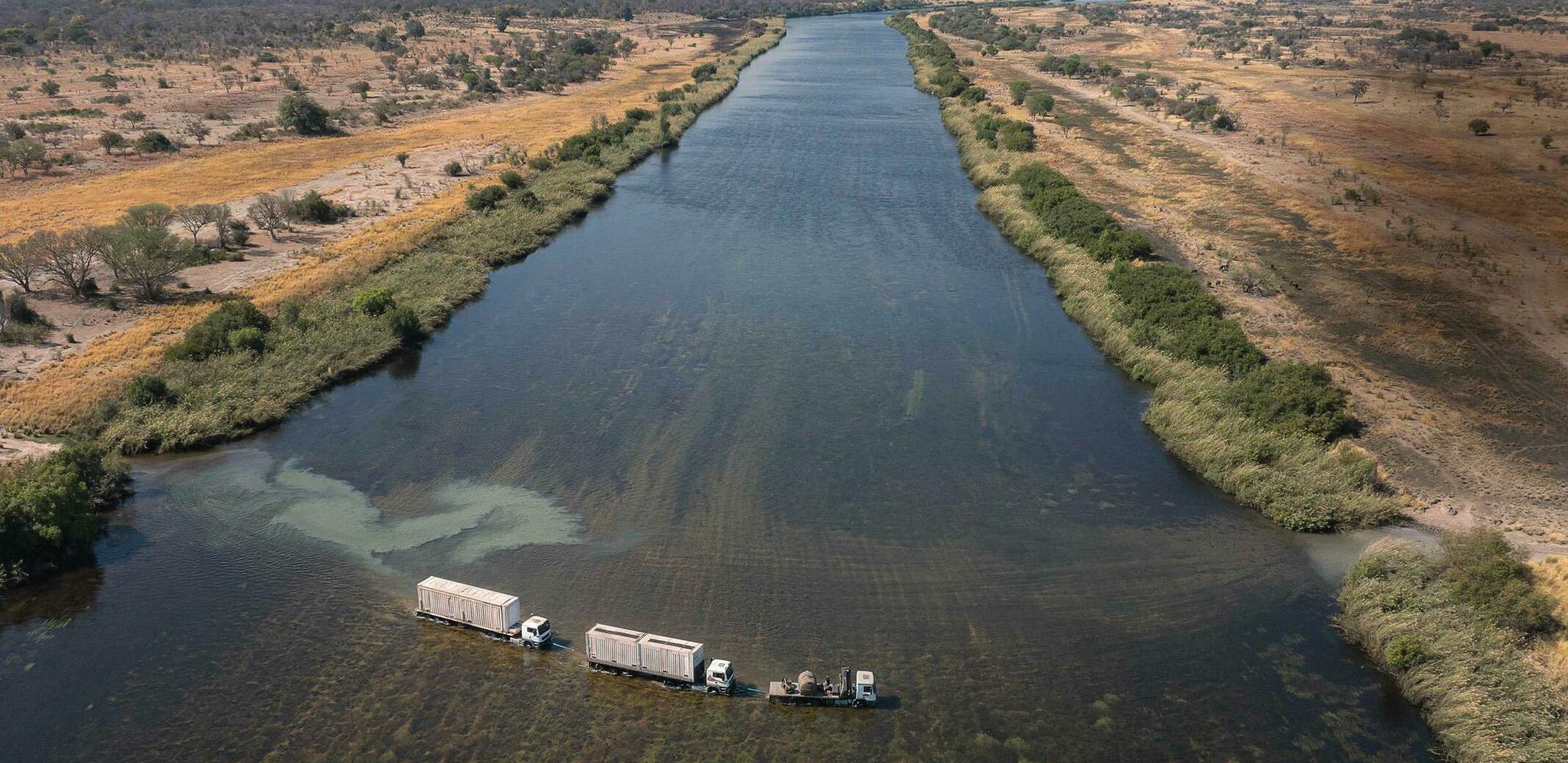
 THE CHALLENGE WOULD BE actually getting the elephants there. Cuatir is only 800km from Okonjati but, with the condition of the roads on the Angolan side of the border, not to mention the river crossings, translocation would be very difficult, to say the least.

Esta historia es de la edición March 2025 de BBC Wildlife.
Suscríbete a Magzter GOLD para acceder a miles de historias premium seleccionadas y a más de 9000 revistas y periódicos.
¿Ya eres suscriptor? Iniciar sesión
MÁS HISTORIAS DE BBC Wildlife
BBC Wildlife
Animal welfare
FURTHER TO EM GENOVESE'S LETTER (Your Letters, Spring 2026), I would like to signpost the charity Wild Welfare to readers.

2 mins
May 2026
BBC Wildlife
"The hooves pounded up the trail behind us"
Moose in Colorado
3 mins
May 2026
BBC Wildlife
SEAGRASS SAVIOURS
Sometimes, saving the planet requires a bright idea, some practical know-how and a bit of tinkering
6 mins
May 2026
BBC Wildlife
WALL TO WILD
After the fall of the Berlin Wall, reunified Germany became a new landscape not only for people, but for wildlife too 'M SITTING IN A FOREST IN Brandenburg, northeast Germany, looking over a large clearing.
7 mins
May 2026
BBC Wildlife
SNAP-CHAT
Samuel Bloch on wild horses, crazy capercaillies and sleeping on the job
2 mins
May 2026
BBC Wildlife
Old trees key to resilience
Study finds mature trees trump youthful ones
1 min
May 2026
BBC Wildlife
ONE STEP BEYOND
There's a lot more to these quirky seabirds than their eye-catching limbs
2 mins
May 2026
BBC Wildlife
RETURN OF A LEGEND
Once teetering on the very brink of extinction, the elusive Scottish wildcat is prowling the Highlands once more, thanks to a bit of help
7 mins
May 2026
BBC Wildlife
Urban scavengers help curb carbon
New study reveals the extent of emissions saved as city animals feast on food waste
2 mins
May 2026
BBC Wildlife
Merlin on the brink
The diminutive raptor is one of many species facing extinction in Britain, suggests new report
1 mins
May 2026
Listen
Translate
Change font size