
Vuélvete ilimitado con Magzter GOLD
Obtenga acceso ilimitado a más de 9000 revistas, periódicos e historias Premium por solo
Intentar ORO - Gratis
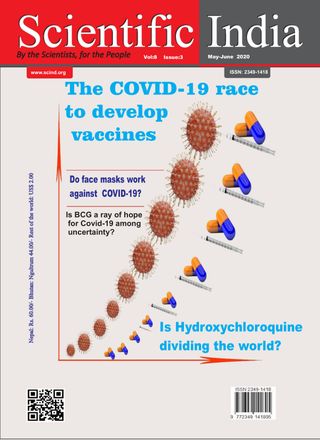
Use of non-nutritional feed additives against foodborne Salmonella infection with special reference to pork
Scientific India
|May - June 2020
Foodborne diseases are serious public health, economic and food safety issues, among them the role of Salmonella in pork is one of major interest.


Esta historia es de la edición May - June 2020 de Scientific India.
Suscríbete a Magzter GOLD para acceder a miles de historias premium seleccionadas y a más de 9000 revistas y periódicos.
¿Ya eres suscriptor? Iniciar sesión
MÁS HISTORIAS DE Scientific India
Scientific India
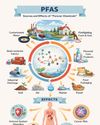
Global Fight Against PFAS Pollution: A Turning Point in Regulation and Justice
Per-and polyfluoroalkyl substances (PFAS), a group of over 10,000 synthetic chemicals known for their extreme persistence in the environment and the human body, have become one of the most challenging pollution issues of our times.

2 mins
January - February 2026
Scientific India
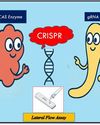
CRISPR-Cas Technology: Revolutionizing the future of modern disease diagnosis and healthcare
The accurate and rapid detection of human pathogens is critical for public health.
3 mins
January - February 2026
Scientific India
Ecology to Epidemiology: How Forest Loss Is Increasing Mosquitoes Thirst for Human Blood
Forests are not only important for climate regulation and biodiversity conservation they are also critical for maintaining ecological balance and protecting human health.
3 mins
January - February 2026

Scientific India
The 10 biggest science stories of 2025
The year 2025 was marked by remarkable scientific achievements that pushed the boundaries of medicine, genetics, and biotechnology. Breakthroughs once considered futuristic moved from theory to real-world application, offering new hope for patients and redefining the limits of innovation.
6 mins
January - February 2026
Scientific India
Just two days of oatmeal cut bad cholesterol by 10%
Eating mostly oatmeal for just two days may significantly reduce cholesterol, according to a clinical trial from the University of Bonn published in Nature Communications.
3 mins
January - February 2026

Scientific India
Artificial Trees: The Technology Breathe for the Globe
Global raising concern over for clean air due to progression of population, industrialization, urbanization, vehicular emission are pushed air pollution and atmospheric carbon dioxide to alarming level.
4 mins
January - February 2026

Scientific India
Five outstanding physics research in 2025
This year has been vibrant for physics research; scientists of various sub disciplines have uncovered many unknowns, from the discovery of single naked black holes to the invention of 2D metallic sheets.
5 mins
January - February 2026

Scientific India
Top 10 Science Stories of India in 2025
The year 2025 has been a landmark for Indian science, characterized by \"firsts\" in space, indigenous computing, and breakthroughs in lifesaving genetics. Here are the top 10 science and technology stories from India in 2025:
4 mins
January - February 2026

Scientific India
Extremophiles Microbes from Hot Springs - Identified as a Potential Source of Next Generation Biobased Sunscreens
Protection from harmful ultraviolet (UV) radiation is essential for human health.
3 mins
January - February 2026
Scientific India
Global Fight Against PEAS Pollution: A Turning Point in Regulation and Justice
Per- and polyfluoroalkyl substances (PFAS), a group of over 10,000 synthetic chemicals known for their extreme persistence in the environment and the human body, have become one of the most challenging pollution issues of our times.
2 mins
January - February 2026
Translate
Change font size