Intentar ORO - Gratis
VALUE IN THE WEED
Down To Earth
|November 16, 2021
BATHUA IS IN DEMAND FOR ITS NUTRITION AND TASTE. IMPROVED VARIETIES OF THE WEED CAN MAKE IT POPULAR AMONG FARMERS

COME WINTERS, and vegetable markets in Delhi are flooded with varieties of leafy greens. Among these vegetables is one hitherto unwanted weed, foraged from wheat fields. Commonly known as bathua in Hindi, cheel bhaji in Gujarati, paruppu keerai in Tamil, chandanbethu in Bengali and vastuccira in Malayalam, this weed is 15-20 cm tall and has broad, lobed leaves, resembling a goose's foot. Because of the shape of the leaves, the plant is also called white goosefoot or Chenopodium album in scientific lexicon—Greek words chen means goose and podion means foot.
Its fresh leaves, which taste a bit salty, are used for making various traditional dishes. Piping hot bathua stuffed parathas and soothing bathua raita are some of the popular dishes consumed in most parts of North India (see recipes). Bathua is known for its rich fibre content and medicinal properties. In Ayurveda, it is prescribed for conditions such as cough, diarrhoea, fever and poor appetite. A 2014 study published in the Journal of Pharmacognosy and Phytochemistry shows that the methanol extract of the plant has antibacterial properties and can inhibit growth of Staphylococcus epidermidis, Bacillus subtilis, Staphylococcus aureus and Escherichia coli. Some people even dry the leaves and store them to add to their diet throughout the year. Modern chefs are now also using bathua in salads and Italian raviolis.
Bathua is one of the 21 species of Chenopodium found in India. Its country of origin has not been identified as yet, but it is closely related to quinoa which grows in Peru and Bolivia.


Esta historia es de la edición November 16, 2021 de Down To Earth.
Suscríbete a Magzter GOLD para acceder a miles de historias premium seleccionadas y a más de 9000 revistas y periódicos.
¿Ya eres suscriptor? Iniciar sesión
MÁS HISTORIAS DE Down To Earth

Down To Earth
GREAT NICOBAR DILEMMA
In the fragile ecosystem of Nicobar, strategic development must align with constitutional commitment to protect environment, indigenous dignity

3 mins
March 16, 2026
Down To Earth
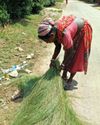
CATCH BY THE ROOTS
Sabai grass could be a game-changer for the marginalised economies of West Bengal's dry uplands. All it needs is an efficient market strategy
4 mins
March 16, 2026

Down To Earth
POWERING TRANSITION
India's renewable ambitions are rising rapidly, with half of its installed power capacity now coming from non-fossil sources. Yet the gap between capacity and generation remains wide. The experiences of two pioneering states, Karnataka and Tamil Nadu, which together generate over a fifth of the country's renewable energy, offer crucial lessons for accelerating the transition, reports PUJA DAS from Bengaluru, Chennai, Mumbai and New Delhi
16 mins
March 16, 2026
Down To Earth
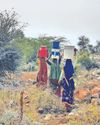
At core of survival
Water scarcity defines life in a village inside Sariska Tiger Reserve's critical habitat, as debates over its relocation drag on
5 mins
March 16, 2026

Down To Earth
What's on your plate
An upcoming digital tool can help people learn about the origin of their meals and make climate-positive food choices
2 mins
March 16, 2026

Down To Earth
'Bad environment can never be good economics'
The Supreme Court of India and even the high courts were once very active and took a proactive role in protecting the environment; unfortunately, that is no longer true
4 mins
March 16, 2026
Down To Earth
Things fall apart
IN THE past year, the world has counted more missiles and bombs than hours.
2 mins
March 16, 2026

Down To Earth
Universities in crisis, innovation is stifled
Political control and skewed policies have led to unrest in academia, stifling creativity and meaningful research
4 mins
March 16, 2026

Down To Earth
SPARK IN THE GAME
The Reserve Bank of India's restored recognition of Default Loss Guarantees re-enables credit flow into last-mile electric mobility
3 mins
March 16, 2026

Down To Earth
Ushering in new eras
An appraisal of the state of biodiversity conservation, pollution reduction and climate adaptation regimes in India
3 mins
March 16, 2026
Translate
Change font size