Intentar ORO - Gratis
SO, WHO BLINKS FIRST
Down To Earth
|January 16, 2021
Recent mutations in COVID-19 virus have complicated the fight against the pandemic. Can we win?

ONLY THOSE with a propensity to survive will do so. So it is foolish to think that in this war between humans and SARS-COV-2, only humans are getting ready with treatment protocols, prevention measures and vaccines. Being a virus which is far more agile than humans, SARS-COV-2, too, is mutating and changing its infection strategies to survive against all odds.
Scientists say not all mutations are noteworthy. Usually they keep an eye out for changes in the antigen —a molecular structure present on the outside of the pathogen, which the immune system reads to trigger a response against it. Most of the time, the changes are insignificant and at best just create sensational headlines. But scientists get alarmed when they encounter mutations that can make the virus more infectious and aggressive. The first such prominent change in sarscov-2 appeared as early as February 2020, when it displayed a mutation termed “D614G”. The mutation helped the virus spread faster and infect more easily than the one originated in Wuhan, China, but did not change its other properties nor made it more lethal. By June 2020, the strain with D614G mutation had replaced the original one, circulating globally.
The other significant change was in a strain found in minks in Denmark in September 2020. According to the World Health Organization (who), the mutation reduced the capacity of the host's immune system to neutralise the virus. However, it did not spread much; only 12 human cases have been documented with this strain so far, and studies are going on to understand its other impacts.
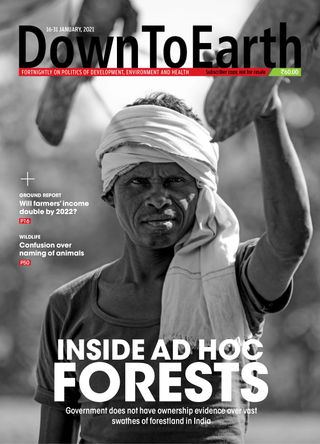

Esta historia es de la edición January 16, 2021 de Down To Earth.
Suscríbete a Magzter GOLD para acceder a miles de historias premium seleccionadas y a más de 9000 revistas y periódicos.
¿Ya eres suscriptor? Iniciar sesión
MÁS HISTORIAS DE Down To Earth

Down To Earth
MILES TO GO
As impacts of climate change accelerate, climate finance remains trapped in incrementalism

6 mins
April 16, 2026
Down To Earth
Hope for revival of the great Indian bustard
The birth of a great Indian bustard chick in the Kutch region of Gujarat has created history in the world of conservation, reviving hope.
2 mins
April 16, 2026
Down To Earth
IN MAHUA TERRITORY
Once mahua starts to flower, every thing else takes a back seat for tribal communities in forests of central India
6 mins
April 16, 2026

Down To Earth
CAUGHT IN THE ENERGY GAP
Kitchens across rural India reflect a peculiar reality: energy is within reach but affordability remains a concern. PUJA DAS travels across 15 villages in Madhya Pradesh, Chhattisgarh and Uttar Pradesh to investigate why rural households still rely on traditional fuels like firewood, dung cakes and crop residue that pose a health risk, and why their energy bills are rising.
12 mins
April 16, 2026
Down To Earth
Lake or wetland?
While villages around Almora's Tadag Tal want the seasonal lake to be developed into a perennial waterbody, experts say the area is a wetland and should not be disturbed
5 mins
April 16, 2026
Down To Earth
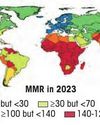
World far from curbing maternal deaths
INDIA HAS cut its maternal mortality ratio (MMR) by 80 per cent since 1990, according to a recent analysis published in The Lancet.
1 min
April 16, 2026
Down To Earth
Energy in times of war
THE DISASTROUS US-Israel war against Iran has disrupted energy supply across the world. Governments in both rich and poor countries are warning their people of dire times ahead, unlike anything seen before by this generation: acute energy scarcity, rationing and even the prospect of cars and aeroplanes running out of fuel. The question is what will the future energy map look like?
3 mins
April 16, 2026
Down To Earth
Unfinished business
Land consolidation is globally considered a critical component of land reforms and holds the key to improve agrarian productivity. But it is yet to be undertaken in meaningful ways in most parts of the country, reports
6 mins
April 16, 2026

Down To Earth
Roots of revival
Chhattisgarh's Baiga community mounts conservation efforts to keep alive a traditional art form at risk of vanishing due to ecological changes
2 mins
April 16, 2026
Down To Earth
A mass human capital loss
ADULT HEIGHT across countries, including India, is no longer increasing.
2 mins
April 16, 2026
Translate
Change font size