Intentar ORO - Gratis
Mumbai Coastal Road Project - An Ecological Disaster
Down To Earth
|August 01, 2019
The US $1.7 billion mumbai coastal road to be built by reclaiming the inter-tidal Western Coast is an ecological and livelihood disaster in the making. Here’s why

Expressing concern about the degrading state of the environment, the Chief Justice of the Bombay High Court, Pradeep Nandrajog, on June 18, passed a notepad to lawyers with a caricature of a human being from the future affected with deformities as a result of pollution. Nandrajog was hearing eight petitions challenging the alleged lack of approvals for the Mumbai coastal road project. And on July 16, the high court quashed the coastal regulation zone clearances granted to the city’s civic body and ordered construction to stop.
The US $1.7 billion Mumbai coastal road project is one of the most expensive infrastructure development projects stretching 35.6 km and connecting the entire western coast of Mumbai city. The project aims to create 90 hectares of land by reclaiming the inter-tidal western coast of the city’s shoreline. But citizens’ groups and environmentalists have raised concerns that the project will destroy the region’s unique ecology and the livelihoods of traditional communities who depend on the inter-tidal zone for fishing.
The project has been surrounded by controversies ever since the Union Ministry of Environment, Forest and Climate Change (MOEFCC) gave environmental clearance in 2017. The ministry submitted ambiguous reasons to give the clearance.
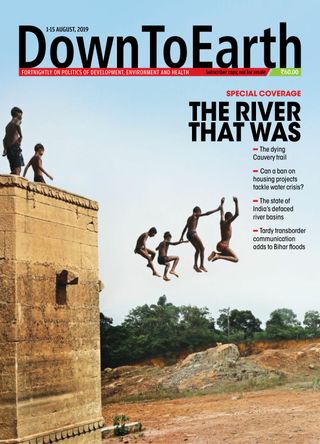

Esta historia es de la edición August 01, 2019 de Down To Earth.
Suscríbete a Magzter GOLD para acceder a miles de historias premium seleccionadas y a más de 9000 revistas y periódicos.
¿Ya eres suscriptor? Iniciar sesión
MÁS HISTORIAS DE Down To Earth

Down To Earth
THE GREAT PIVOT
China's moves to transition to clean energy offer critical lessons to India

4 mins
March 01, 2026

Down To Earth
COAL V CORRIDOR
A proposal to mine coal along a corridor that links two tiger reserves in central India is a step away from getting final clearance. The move could affect movement and genetic diversity of tiger populations in the region
8 mins
March 01, 2026

Down To Earth
India's challenging AI predicament
Hobbled by lack of innovation and AI skills in its crucial technology sector, India is focusing on a ruinous plan to host data centres
4 mins
March 01, 2026
Down To Earth
China to implement zero tariffs across Africa
CHINA ON February 14 announced that it will implement zero tariffs for imports from all the 53 African nations it has diplomatic relations with, starting from May 1.
1 min
March 01, 2026
Down To Earth
Poverty, sans the threshold
MEASUREMENT OF poverty is a fundamental exercise, needed to direct development programmes.
2 mins
March 01, 2026
Down To Earth
A bridge across forever
For two decades, a Chhattisgarh village remains stuck in a loop of building temporary river crossings to access markets and sell forest produce
4 mins
March 01, 2026
Down To Earth
Liveable cities need a new model
CRY FOR my Delhi. This is my city—my family records many generations who have lived here.
3 mins
March 01, 2026

Down To Earth
Real impacts of the changing seasons
This refers to the article \"1,500 days, and an alarm for new climate\" (1-15 December, 2025).
1 mins
March 01, 2026

Down To Earth
‘It’s a systematic effort by US to dismantle climate policy’
The US, the world's largest historical emitter of greenhouse gases, has overturned its “endangerment finding”, the legal foundation for regulating emissions under the Clean Air Act since 2009.
4 mins
March 01, 2026
Down To Earth
Amazon turned carbon source in 2023 drought
EXTREME DROUGHT and a prolonged heatwave in 2023 pushed parts of the Amazon rainforest from acting as a carbon sink to becoming a carbon source for three months, according to a February 13 study published in the journal AGU Advances of the American Geophysical Union.
1 min
March 01, 2026
Translate
Change font size