
Vuélvete ilimitado con Magzter GOLD
Obtenga acceso ilimitado a más de 9000 revistas, periódicos e historias Premium por solo
“It will open up a new area of Mars exploration”
Down To Earth
|March 01, 2021
On February 18, NASA’s Perseverance rover landed on Mars. The space agency’s first astrobiology mission aims to look for signs of ancient microbial life and collect samples of rock and soil to be brought to Earth in a future mission. On board the rover is Ingenuity—a helicopter whose main purpose is to attempt a flight in an atmosphere only 1 per cent as dense as Earth’s. The date of the flight is not scheduled, but it is likely to be in May 2021. DAKSHIANI PALICHA speaks to Ingenuity’s chief engineer J (BOB) BALARAM on the significance of the flight attempt and the advantages of a flying probe in the study of the planet

I think of it as three R’s—reach, range, resolution. Helicopters, just like drones here on Earth, have the ability to get to places where it is very difficult, if not impossible, for a rover or an astronaut to reach. Steep cliff walls, caverns and other geological features are present on Mars. So this ability would be of interest to the scientific community.
Next is range and resolution—even though Ingenuity is not going to fly very fast, the vehicle is capable of forward flights at 20-30 m per second and could cover kilometres in a day. We will not try this, but inherently, helicopters have a much larger range than rovers. Mars has already been explored by various orbital missions—Mangalyaan, the Mars Reconnaissance orbiter, the Trace Gas Orbiter and now the Chinese and the UAE spacecrafts. But imagine exploring all of Earth only from the orbit; you would miss a lot. The ability of a helicopter to carry a high-resolution instrument, like the camera, to get up close and travel long distances opens a new area of Mars exploration.
How did you arrive at the final design of Ingenuity?


Esta historia es de la edición March 01, 2021 de Down To Earth.
Suscríbete a Magzter GOLD para acceder a miles de historias premium seleccionadas y a más de 9000 revistas y periódicos.
¿Ya eres suscriptor? Iniciar sesión
MÁS HISTORIAS DE Down To Earth
Down To Earth
KING OF BIRDS
Revered for centuries, western tragopan now needs protection as its forests shrink, human pressures mount

3 mins
December 16, 2025

Down To Earth
WHISKERS ALL AQUIVER
Climate change threatens creatures that have weathered extreme environments for thousands of years
2 mins
December 16, 2025

Down To Earth
GOLDEN SPIRIT
Survival of the shy primate is closely tied to the health of Western Ghats
3 mins
December 16, 2025

Down To Earth
RINGED EYES IN THE CANOPY
Rapid habitat destruction forces arboreal langur to alter habits
2 mins
December 16, 2025
Down To Earth
HANGING BY THE CLIFF
The Himalaya's rarest wild goat is on the brink of local extinction
2 mins
December 16, 2025
Down To Earth
ANGEL OF THE BEAS
Conservation reserves, citizen science, and habitat protection give the Indus River dolphin a fighting chance in India
2 mins
December 16, 2025
Down To Earth
UNDER MOONLIT SCRUB
Survival of this hidden guardian tells us whether our scrublands still breathe
2 mins
December 16, 2025
Down To Earth
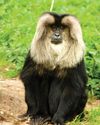
SYMBOL OF SILENT VALLEY
Lion-tailed macaque remains vulnerable despite past victories
2 mins
December 16, 2025

Down To Earth
THE APE IN OUR STORIES
India's only non-human ape species is a cultural icon threatened by forest fragmentation
2 mins
December 16, 2025
Down To Earth
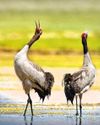
SENTINEL OF THE HIGH COLD DESERT
The bird's evocative call may not continue to roll across the cold desert valley for long
3 mins
December 16, 2025
Translate
Change font size