Intentar ORO - Gratis
For a Good Night's Sleep
Down To Earth
|March 01, 2017
Most urban Indians dread bedtime. Sleep disorders ensure that 93 per cent of the people living in cities don't sleep well or worse, are not able to sleep at all. This sleeplessness results in diseases, which can cost their health and the country's economy dearly. What is causing us to lose sleep? And how can we sleep well again? VIBHA VARSHNEY and KARNIKA BAHUGUNA make sense of latest research.

Thomas Edison, the inventor of the light bulb, once said, “Sleep is a criminal waste of time, inherited from our cave days.” His invention helped people work more easily after dark. Even today, many people, including world leaders and celebrities, boast of getting by with less sleep every night. But scientists and doctors have started seeing adverse health effects in people who deprive themselves of sleep and are trying to understand why this happens.
Dictated by our body clock, sleep allows us to rest and rejuvenate. Studies have shown that areas in the brain involved in the repair and restoration of the body’s physiological processes are more active when we sleep. They have also shown that the brain processes and consolidates memories as we sleep and the body winds down for a few hours to save energy. Sleeping takes up a third of our lifetime.
Research is on to explore all the functions of sleep. We are trying to find what happens to our biological and cognitive functions when we do not sleep enough, or when we change our sleeping time due to our lifestyle, jet lag or shift work. “There is still much work to be done to fully appreciate sleep and the consequences of not obtaining sufficient sleep,” says Gemma Paech, a postdoctoral research fellow at the Rush University Medical Center’s Biological Rhythms Research Lab in Chicago, USA. Understanding these aspects would help doctors devise treatments for people suffering from sleep disorders, of which there are more than 80 kinds. The most common disorders are insomnia (trouble falling or staying asleep), obstructive sleep apnoea (when walls of the throat relax and narrow, blocking the airway and disrupting breathing) and restless leg syndrome (an urge to move one’s legs). (See ‘Why we should sleep’, p33.)


Esta historia es de la edición March 01, 2017 de Down To Earth.
Suscríbete a Magzter GOLD para acceder a miles de historias premium seleccionadas y a más de 9000 revistas y periódicos.
¿Ya eres suscriptor? Iniciar sesión
MÁS HISTORIAS DE Down To Earth
Down To Earth
THINK TWICE BEFORE FELLING SAL TREES
Many trees considered to be affected by sal borer in the 1990s are still alive today

1 mins
February 16, 2026

Down To Earth
EDGE OF SURVIVAL
Caste divides deny marginalised communities land, resources and essential aid, leaving them more vulnerable to climate disasters
6 mins
February 16, 2026

Down To Earth
A WISH LIST?
Union Budget for 2026-27 conveys the impression of a roll-call of intentions and ambitious proposals, with little detail on their formulation
6 mins
February 16, 2026
Down To Earth
Break down the gender wall
THE RULING National Democratic Alliance (NDA) government has been heavily invested in the goal to make India a developed economy by 2047.
2 mins
February 16, 2026

Down To Earth
MENSTRUAL HEALTH, NOW A FUNDAMENTAL RIGHT
In a landmark judgement, the Supreme Court has recognised menstrual health and hygiene as a fundamental right under Article 21 of the Constitution of India, which guarantees the right to life and dignity.
8 mins
February 16, 2026

Down To Earth
Of devolution and new disasters
The 16th Finance Commission pushes for changes in view of new fiscal and climatic conditions
11 mins
February 16, 2026
Down To Earth
Rising risks of plastics
NEGATIVE IMPACTS on human health due to emissions linked to the plastic lifecycle could double by 2040, according to a study published in The Lancet Planetary Health in January.
1 min
February 16, 2026
Down To Earth
GAP BETWEEN EPIDEMICS NARROWING
A watershed-based and landscape-level approach is needed to address forest degradation
2 mins
February 16, 2026
Down To Earth
WAITING TO STRIKE
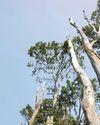
Sal heartwood borer is considered the biggest threat to forestry in India, especially to the sal tree, where it lives and breeds.
11 mins
February 16, 2026

Down To Earth
A SPRING DELIGHT
Mustard flowers are not meant only for the eyes. Invite them to your plate once in a while
3 mins
February 16, 2026
Translate
Change font size