Intentar ORO - Gratis
GAMING IN LOCKDOWN: WHY ARE SO MANY PEOPLE PLAYING ANIMAL CROSSING?
BBC Focus - Science & Technology
|July 2020
It sold more digital units in its first month of release than any other video game in history. What makes Animal Crossing: New Horizons such a compelling game to play?

As far as Nintendo games go, Animal Crossing isn’t perhaps as well-known outside of gamer circles as series such as Super Mario, Pokémon or The Legend Of Zelda. And yet the latest instalment, New Horizons, has become something of a phenomenon in this worrying new world we find ourselves in. If you haven’t already come across it, New Horizons is a life-simulation game, a more easygoing counterpart to earlier titles like The Sims. You start off by purchasing a getaway package to a deserted island, armed only with a tent and a few basic tools to tend to the land. Although there’s a basic storyline to follow, what you do in your newfound escape is up to you. Among other things, you can go bug-hunting, try to catch rare fish, excavate for fossils, design your home, create elaborate gardens, invite friends over for a catch-up, or stare at the night sky, waiting for shooting stars. There’s no endgame, no final boss: this is your own little world, to do with as you please.
In part, this is why New Horizons has been such a runaway success. Launched towards the end of March, it came out at a time when we were all finding ourselves confined to our homes, unable to visit our friends and loved ones, and generally feeling as though we were losing control of our day-to-day lives. Along came
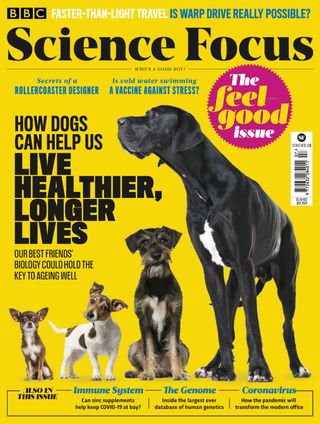

Esta historia es de la edición July 2020 de BBC Focus - Science & Technology.
Suscríbete a Magzter GOLD para acceder a miles de historias premium seleccionadas y a más de 9000 revistas y periódicos.
¿Ya eres suscriptor? Iniciar sesión
MÁS HISTORIAS DE BBC Focus - Science & Technology

BBC Science Focus
HEALTH: Eating oats could lower your cholesterol in just two days
The health benefits of a two-day porridge diet lasted for weeks afterwards

1 mins
April 2026

BBC Science Focus
Most people are too sure they can identify fake human faces
Even 'super recognisers' struggle with the challenge. Can you do better?
1 min
April 2026

BBC Science Focus
WHAT'S THE WORST THING YOU CAN DO FOR THE PLANET ONLINE?
Human beings can barely move a muscle without some kind of deleterious effect on the environment around us.
2 mins
April 2026

BBC Science Focus
A bug in the system
The complex arrangement of equipment you see here is part of a particle accelerator.
1 min
April 2026

BBC Science Focus
Snug as a bug in a rug
At first glance, you might feel envious of this little leafhopper, swaddled beneath the folds of what appears to be a luxurious fur blanket.
1 min
April 2026

BBC Science Focus
WHY DO WE ROOT FOR THE VILLAIN IN MOVIES?
Whether it's Darth Vader or Cruella de Vil, we all have a favourite movie villain.
1 mins
April 2026

BBC Science Focus
A TURN TO DISPERSE
Why a fart walk after dinner does more than release your gas
3 mins
April 2026

BBC Science Focus
Hatching a nebula
Welcome to the Egg Nebula, an enigmatic structure formed by ejected stardust in the Cygnus constellation around 1,000 light-years from Earth.
1 min
April 2026

BBC Science Focus
7 TIMES AI GOT IT SPECTACULARLY WRONG
For the past four years, AI has been reshaping how we work and live. But its failures are proving just as transformative as its triumphs
8 mins
April 2026
BBC Science Focus
CHARLES ADCOCK, VIA EMAIL: COULD DARK MATTER BE ALL AROUND PLANET EARTH BUT UNDETECTABLE?
Astronomers have gathered overwhelming evidence that 80 per cent of all matter in the Universe is invisible.
1 min
April 2026
Translate
Change font size