Intentar ORO - Gratis
Scratch, Optics and Everything in Between
Smart Photography
|September 2021
Corning has recently introduced Gorilla Glass DX products, specialist cover glass composites for smartphone camera modules. Smart Photography spoke to Scott Forester, Division Vice President, Business Director, Glass and Operations Council, Corning Gorilla Glass, who gave in-depth insights about the company, the product and material science. Please don’t forget to read the unabridged version of this interview on the Smart Photography website by scanning the QR code.

Could you give us a background on the origins of Gorilla Glass?
It has been 13-14 years since we introduced Gorilla Glass, and it was really focussed on smartphones and cover glass. With the introduction of touch sensors and touch interface, you needed some material to protect the touch interface, and the obvious choice was plastic since it is cheap and clear. But with the first devices, people saw that it scratched, and scratched horribly. So, people started thinking about glass. But glass breaks. So how do we overcome that problem?
At Corning, we have been making glass for almost 170 years now and have seen lots of glass compositions. It is a challenge to make really tough thin glass. So, what we did is, we took a glass composition and made the ions in the glass, free ions, so that they could easily be exchanged in and out of the glass, and you put it into a hot bath with potassium salt. When you put a glass composition into this hot bath, the heat initiates an exchange of ions. What it does is, it takes the sodium ions out of the glass and replaces with potassium ions from the bath. These potassium ions are huge compared to the outgoing sodium ions. So, you effectively jam the surface of the glass with these big ions. And this creates a massive compressive stress on the surface of the glass which makes it really hard to break. To break a substance, you have to put in more stress than what is on the surface by bending till it eventually breaks. But this is glass that you can physically bend and yet won’t break because you are not creating enough stress to overcome the inherent stress that is holding it all together. Our innovation was to create glass that wouldn’t break as you drop your device since it flexes.
How did Gorilla Glass evolve over time?


Esta historia es de la edición September 2021 de Smart Photography.
Suscríbete a Magzter GOLD para acceder a miles de historias premium seleccionadas y a más de 9000 revistas y periódicos.
¿Ya eres suscriptor? Iniciar sesión
MÁS HISTORIAS DE Smart Photography

Smart Photography
Telephoto Extender Kit
The Vivo X300 Pro Photography Kit transforms the smartphone into a seemingly professional-grade camera system, featuring a detachable ZEISS 2.35x Telephoto Extender lens and a multifunctional Imaging Grip Kit.

1 mins
January 2026

Smart Photography
Powerful. Zoomtastic. Pro.
The Vivo X300 Pro represents the biggest generational leap the company has made in years, including for someone upgrading from the VivoX200 Pro, this is not just an incremental step; it's a worthy, meaningful upgrade across design, camera technology, battery innovation, and system experience.
3 mins
January 2026

Smart Photography
MumbaiOgraphy Photo Exhibition
MumbaiOgraphy' - a photography group started over a decade ago, has over 1200 members.
1 min
January 2026

Smart Photography
BIBURY – THE MOST BEAUTIFUL VILLAGE IN THE UNITED KINGDOM
Everyone who has visited the English countryside is aware of how pretty villages in England can be.
1 min
January 2026
Smart Photography
New Features of Lightroom Classic Ver.15
It is customary for Adobe to release updates for its major software packages in the last quarter of the year. This year was not an exception, and Adobe introduced many significant enhancements. In this article, we will explore how the popular Lightroom Classic (or just LrC hereafter for brevity) has been improved. It was also given a new major release designation - Version 15.
7 mins
January 2026

Smart Photography
A Good Hybrid
Canon's latest offering -the successor to the tried and tested Canon R6 III is the full frame EOS R6 Mark III, targeted at enthusiasts, - is a hybrid camera with high-end photo as well as video capabilities, but, in my opinion, leaning more towards cinematic video. It offers features like 7K RAW Open Gate recording (a fancy term for full-frame, non-cropped video), 4K/120p, LCPM/24-bit/4-channel Audio, and some more goodies. Let's see how this new baby performs...
3 mins
January 2026

Smart Photography
A Journey Through Film, Culture, and Quiet Wonder The Making of Naga Megha Saga
Bengaluru-based photographer and IT professional Sumanth Shivakumar reflects on his solo travels through Nagaland and Meghalaya, and how analogue photography, human connection, and quiet moments of discovery shaped his photobook Naga Megha Saga.
4 mins
January 2026
Smart Photography
Inexpensive & Superfast
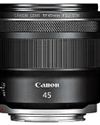
The Canon RF 45mm f/1.2 STM lens was introduced globally along with the Canon EOS R6 III body around the end of November 2025. The lens is targeted at newcomers and enthusiasts who need a superfast lens for low light photography without breaking the bank.
2 mins
January 2026

Smart Photography
Super Range
A large percentage of the mirrorless camera market is controlled by amateurs and enthusiasts who often prefer to have one all-in-one lens rather than several lenses.
2 mins
January 2026
Smart Photography
New firmware for Lumix S Series
Panasonic's Lumix S 1 RII, S 1 II and S 1 II Par proved E get new firmware for improved shooting performance and enhanced functionality.
1 min
January 2026
Translate
Change font size