
Vuélvete ilimitado con Magzter GOLD
Obtenga acceso ilimitado a más de 9000 revistas, periódicos e historias Premium por solo
We Are All Harappans
Outlook
|August 13, 2018
The Rakhigarhi project shines light on an old enigma: the Harappans were genetically ‘Ancestral South Indian’ stock. Which is to say, all of us in South Asia are their children.

JUST three-and-a-half hours due northwest of Delhi, the GPS takes you unerringly to ancient India. Not a mythic world, but one made of bricks dried in an age-old sun. It’s a part of Haryana that can pass, at one glance, for Assam: the wet green of paddy stretches to the flat, misty horizons. Some spans of time are as endless—it boggles the mind, for instance, to think that the duration between the early onset of civilisation and its decline in these parts is longer than what separates us now from Harappa.
Or shall we say, Rakhigarhi.
Yes, the shift in centre of gravity is as fundamental as that. The Harappan site at Rakhigarhi, in Hisar district, is the biggest one known yet—at up to 550 hectares, it’s more than twice the size of Mohenjodaro. It’s also the one with the deepest time-scale, taking shape at 5500 BC and running four millennia. The nearby satellite site of Bhirrana, part of this Bronze Age metropolitan network, is even older: it offers the classic arc of evolution, beginning from early Neolithic farming around 7500 BC. Almost 10 millennia ago. Even with India’s endless capacity for imagining deep time, that’s serious depth. On the edge of modern Rakhigarhi village, buffaloes amble out of a pond placidly, unmindful of passing archaeologists or of the runic mysteries glimmering under the undulating mounds.
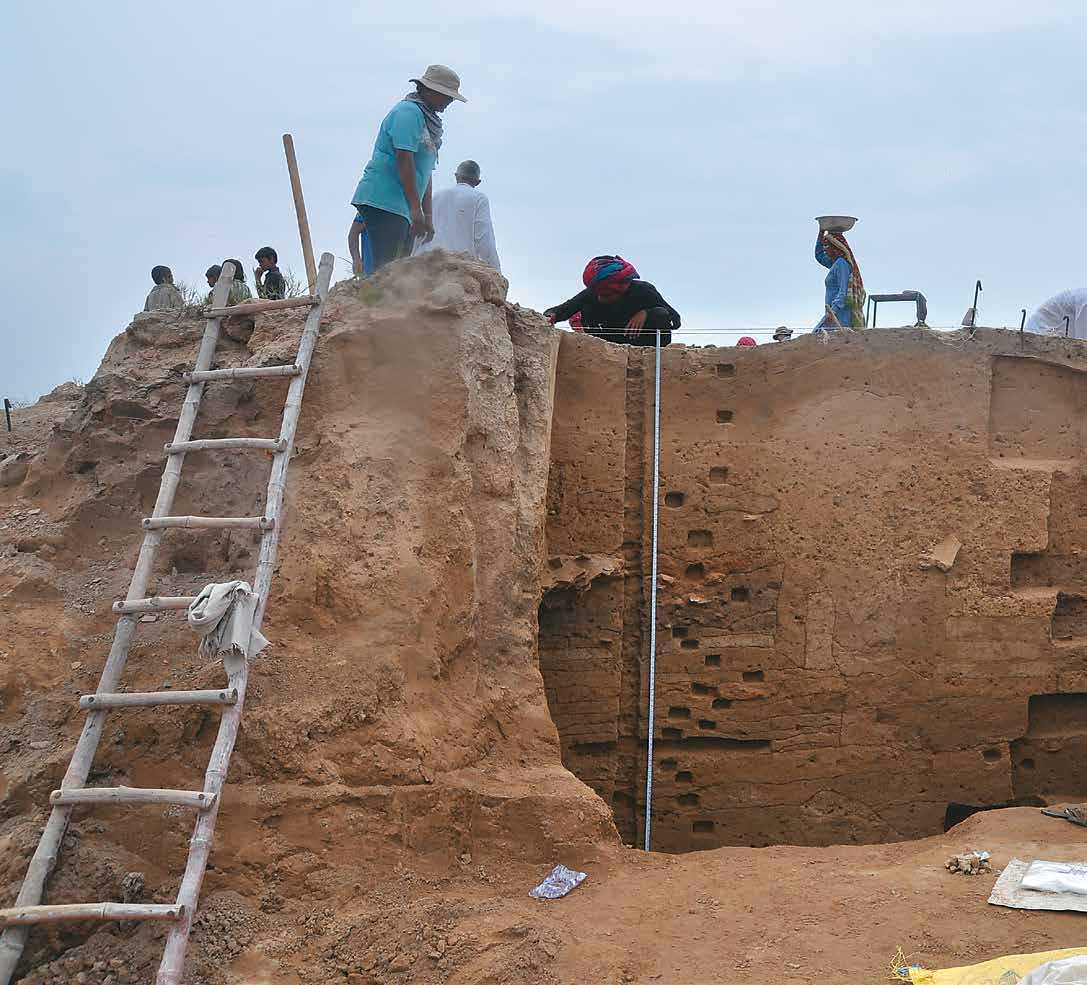
Decades ago, Wazir Chand would come to these mounds as a dreamy little boy tending to his buffaloes. He started picking up pieces of terracotta bangles, shards of pottery, little bric-a-brac…
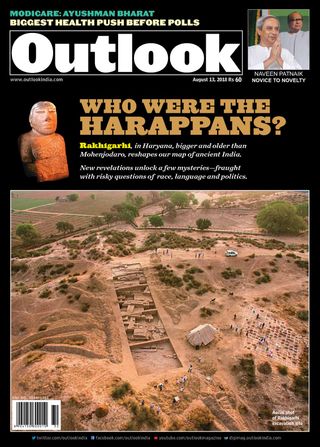

Esta historia es de la edición August 13, 2018 de Outlook.
Suscríbete a Magzter GOLD para acceder a miles de historias premium seleccionadas y a más de 9000 revistas y periódicos.
¿Ya eres suscriptor? Iniciar sesión
MÁS HISTORIAS DE Outlook

Outlook
The Big Blind Spot
Caste boundaries still shape social relations in Tamil Nadu-a state long rooted in self-respect politics

8 mins
December 11, 2025

Outlook
Jat Yamla Pagla Deewana
Dharmendra's tenderness revealed itself without any threats to his masculinity. He adapted himself throughout his 65-year-long career as both a product and creature of the times he lived through
5 mins
December 11, 2025
Outlook
Fairytale of a Fallow Land
Hope Bihar can once again be that impossibly noisy village in Phanishwar Nath Renu's Parti Parikatha-divided, yes, but still capable of insisting that rights are not favours and development is more than a slogan shouted from a stage
14 mins
December 11, 2025

Outlook
The Lesser Daughters of the Goddess
The Dravidian movement waged an ideological war against the devadasi system. As former devadasis lead a new wave of resistance, the practice is quietly sustained by caste, poverty, superstition and inherited ritual
2 mins
December 11, 2025

Outlook
The Meaning of Mariadhai
After a hundred years, what has happened to the idea of self-respect in contemporary Tamil society?
5 mins
December 11, 2025

Outlook
When the State is the Killer
The war on drugs continues to be a war on the poor
5 mins
December 11, 2025

Outlook
We Are Intellectuals
A senior law officer argued in the Supreme Court that \"intellectuals\" could be more dangerous than \"ground-level terrorists\"
5 mins
December 11, 2025
Outlook
An Equal Stage
The Dravidian Movement used novels, plays, films and even politics to spread its ideology
12 mins
December 11, 2025
Outlook
The Dignity in Self-Respect
How Periyar and the Self-Respect Movement took shape in Tamil Nadu and why the state has done better than the rest of the country on many social, civil and public parameters
5 mins
December 11, 2025

Outlook
When Sukumaar Met Elakkiya
Self-respect marriage remains a force of socio-political change even a century later
7 mins
December 11, 2025
Translate
Change font size