Intentar ORO - Gratis
Khaki Meets Khadi
Outlook
|December 04, 2017
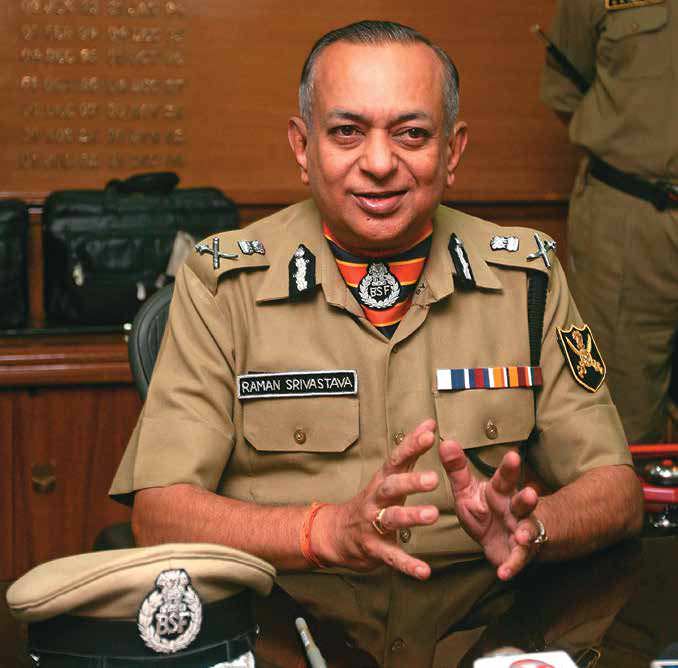
Politicians often turn a blind eye to police lawlessness so that cops are beholden enough to do their bidding. Policing suffers the most due to this symbiosis.

When Delhi Police’s much-feted “encounter specialist” ACP Rajbir Singh was shot dead by a property dealer friend in the latter’s Gurgaon office back in 2008, there were immediate signs that something was not quite kosher. The then top cop ordered that nobody from the force was to attend his funeral. For a fabled officer credited with 42 “kills” and conferred with two out-of-turn promotions, a PRO was the sole representative of the 85,000-strong Delhi Police in attendance. The most nominal of gestures possible.
Political leaders, who had often patted him on his back and benefited from his kills, too preferred to give it a quiet miss. So did sundry former commissioners and heads of the anti-terror Special Cell, who had basked in the glory each of his encounters brought them. His “kills” included western UP gangsters notorious in the 1990s, Kashmiri militants and Pakistan-trained terrorists. He was the key officer in charge of two of the biggest terror cases—the Red Fort attack of 2000 and the Parliament attack of 2001—both heralded as great investigation successes, but also questioned, in equal measure, by lawyers and human rights activists.
Rajbir’s rise in Delhi Police was meteoric and unprecedented—from a mere sub-inspector to an ACP in 13 years, a non-IPS officer who cracked the top echelons, aided by those out-of-turn promotions. His exploits earned him the praise of politicians, helped him forge close bonds with intelligence operatives, as also a network of underworld informers.
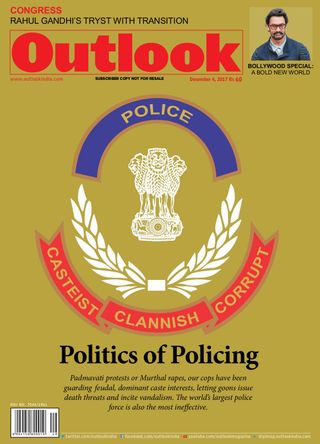

Esta historia es de la edición December 04, 2017 de Outlook.
Suscríbete a Magzter GOLD para acceder a miles de historias premium seleccionadas y a más de 9000 revistas y periódicos.
¿Ya eres suscriptor? Iniciar sesión
MÁS HISTORIAS DE Outlook

Outlook
The Big Blind Spot
Caste boundaries still shape social relations in Tamil Nadu-a state long rooted in self-respect politics

8 mins
December 11, 2025

Outlook
Jat Yamla Pagla Deewana
Dharmendra's tenderness revealed itself without any threats to his masculinity. He adapted himself throughout his 65-year-long career as both a product and creature of the times he lived through
5 mins
December 11, 2025

Outlook
Fairytale of a Fallow Land
Hope Bihar can once again be that impossibly noisy village in Phanishwar Nath Renu's Parti Parikatha-divided, yes, but still capable of insisting that rights are not favours and development is more than a slogan shouted from a stage
14 mins
December 11, 2025

Outlook
The Lesser Daughters of the Goddess
The Dravidian movement waged an ideological war against the devadasi system. As former devadasis lead a new wave of resistance, the practice is quietly sustained by caste, poverty, superstition and inherited ritual
2 mins
December 11, 2025

Outlook
The Meaning of Mariadhai
After a hundred years, what has happened to the idea of self-respect in contemporary Tamil society?
5 mins
December 11, 2025

Outlook
When the State is the Killer
The war on drugs continues to be a war on the poor
5 mins
December 11, 2025

Outlook
We Are Intellectuals
A senior law officer argued in the Supreme Court that \"intellectuals\" could be more dangerous than \"ground-level terrorists\"
5 mins
December 11, 2025

Outlook
An Equal Stage
The Dravidian Movement used novels, plays, films and even politics to spread its ideology
12 mins
December 11, 2025
Outlook
The Dignity in Self-Respect
How Periyar and the Self-Respect Movement took shape in Tamil Nadu and why the state has done better than the rest of the country on many social, civil and public parameters
5 mins
December 11, 2025

Outlook
When Sukumaar Met Elakkiya
Self-respect marriage remains a force of socio-political change even a century later
7 mins
December 11, 2025
Translate
Change font size