Intentar ORO - Gratis
EDUCATION AS NATIONAL SECURITY
Geopolitics
|March 2020
India’s educational system is falling into the danger of leaving the country behind countries with higher educational and innovation standards. This has adverse implications for Indian security, warns AMIT GUPTA

National security strategies are usually woven around military and economic capabilities: does the country have the economic ability to prosecute a military campaign? But there is another capability that determines a country’s ability to prosecute a national security strategy and that is the educational level of its people. In the current global system, there are two sets of nations—those that are knowledge economies that are incorporating the latest technologies into their societies, economies, and militaries and the rest who continue with educational programmes from the 1950s and 1960s and are thus not producing globalized labor or innovation-driven economies. It is this educational divide that will drive the development and security of nation-states in the coming decades.
India Literacy Standards at Independence
Indian literacy rates at independence were abysmal as only 16.1 per cent of the country was literate and that number went up to about 18 per cent by the census of 1951—and these numbers were probably generous since there is a huge difference between functional literacy which gives one the ability to function in a technological, industrial, or academic setting and being merely able to read and write at a very basic level.
Nehru’s objective was to create an indigenous pool of talented and educated Indians; hence we saw the building of IITs with the cooperation of the Europeans, the Soviet Union, and the United States. Additionally, the core universities in India were slowly expanded to give a quality education to the masses. To do this, the government kept tuition and other fees low to make higher education affordable to the middle to lower-middle-class in India.
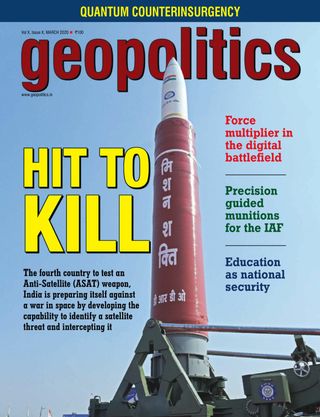

Esta historia es de la edición March 2020 de Geopolitics.
Suscríbete a Magzter GOLD para acceder a miles de historias premium seleccionadas y a más de 9000 revistas y periódicos.
¿Ya eres suscriptor? Iniciar sesión
MÁS HISTORIAS DE Geopolitics
Geopolitics
Tata expands Morocco push with LAMV offer
After securing an order for its WhAP 8x8 armoured vehicle from the Royal Moroccan Army, Tata Advanced Systems Limited is now actively promoting its Light Armoured Multipurpose Vehicle in the same market.

1 min
February 2026
Geopolitics
Armenia eyes India's Astra Missile for Su-30SM fleet
Armenia is in advanced discussions with India to acquire the Astra beyond-visual-range air-to-air missile, signalling a deepening of defence ties between the two countries.
1 min
February 2026
Geopolitics
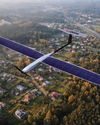
SUVI V1 becomes India's first Type-Certified UAV
In India's unmanned aviation sector has reached a significant regulatory milestone with Okulo Aerospace announcing that its SUVI V1 platform has received Type Certification from the Directorate General of Civil Aviation.
1 min
February 2026
Geopolitics
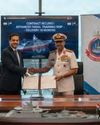
Swan Defence wins Oman naval training ship contract
Swan Defence and Heavy Industries has secured a defence export contract from the Government of the Sultanate of Oman for the construction and supply of an advanced naval training ship for the Royal Navy of Oman.
1 min
February 2026

Geopolitics
HAL'S 'DHRUV' BET
Hindustan Aeronautics Limited (HAL) is attempting a careful reset of the Dhruv helicopter narrative, positioning the platform simultaneously as a cornerstone of India's future civil helicopter market and as a rehabilitated workhorse returning to frontline maritime service.
2 mins
February 2026
Geopolitics
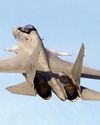
India Offers Su-30MKM Upgrade to Malaysia
India has offered a midlife modernisation package for Malaysia's fleet of 18 Sukhoi Su-30MKM fighters, marking a significant step in bilateral defence-industrial cooperation.
1 min
February 2026
Geopolitics
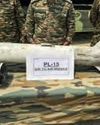
Astra upgrade rooted in indigenous R and D
Recent reports linking the Indian Air Force's Astra missile upgrades to Chinese PL-15 technology have been firmly dismissed by defence officials and scientists.
1 min
February 2026

Geopolitics
COMMAND OR COMPLIANCE? RECLAIMING THE SPIRIT OF MILITARY INITIATIVE
What does it truly mean to be a military leader in a democracy? It is a question sparked by the recent controversy surrounding General Manoj Naravane's memoir. While the government always has the final say, a great general shouldn't just wait for instructions; they must lead with confidence, give honest advice, and take decisive action on the battlefield. KARAN KHARAB highlights why India needs a military culture that rewards bold Initiative over hesitation and \"seeking orders.\"
8 mins
February 2026
Geopolitics
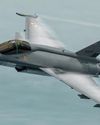
India's integrated air combat plan from Mk1A to MkIII
India's combat aviation landscape is entering a defining phase, marked by parallel developments in aircraft production and missile technology that together reflect a broader push toward operational self-reliance.
3 mins
February 2026

Geopolitics
DEFENCE BUDGET 2026-27: FOCUS ON CAPITAL ACQUISITIONS
While there is an overall increase in the latest defence budget, the statistics only tell half of the story, explains AMIT COWSHISH
11 mins
February 2026
Translate
Change font size