
Vuélvete ilimitado con Magzter GOLD
Obtenga acceso ilimitado a más de 9000 revistas, periódicos e historias Premium por solo
The Stone That Strikes Fire
Rock&Gem Magazine
|November 2016
Pyrite Is a Common Sulfi de Mineral And a Collector Favorite.

If you keep striking a piece of pyrite with a steel hammer, sparks fly and the air is filled with a noxious odor. Perhaps without realizing it, you have discovered the chemical makeup of pyrite: iron (sparks) and sulfur (odor). Tiny bits of iron (Fe) will flash from the heat of friction due to the strike. Sulfur (S) is released at the same time in the form of a gas that has a distinctive “rotten egg” odor.The ancients called it /pyrites lithos—” re stone”.
The Stone that Strikes Fire
Molecules of pyrite are composed of one iron atom and two sulfur atoms. It is the most common of all the sulfides and among the easier ones to identify. It is also a wonderful mineral species to collect because of its fascinating variety of crystal forms, which range from the simplest of cubes to some of the most complex twins and multifaced—as many as 48—crystals! It can form concretions, disks called pyrite “suns”, and other oddities. If you ever decide to collect just one species, you should consider pyrite because of its abundant occurrences and wonderfully varied crystal forms.
Pyrite is found in virtually every rock formation and is particularly abundant in some sulfide mines. Scientists have even found it among the several sulfides produced by the amazing black smoker gushers we have discovered along the boundaries of continental plates, such as those in the Red Sea and Pacific Ocean.
Pyrite forms in the isometric system, which means the simple cube is the basis for its varied crystal forms. Cubes are common, so it is not unusual to see a whole line of simple cubes, ranging in size from the tiniest fraction of an inch to something measuring in inches. At shows, these are o en displayed in a curving line from smallest to largest.
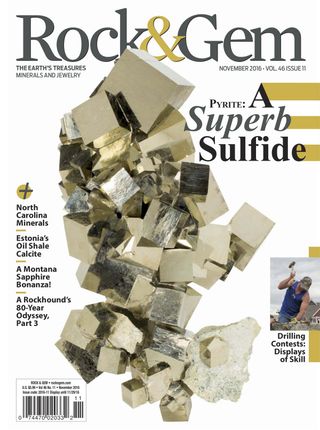

Esta historia es de la edición November 2016 de Rock&Gem Magazine.
Suscríbete a Magzter GOLD para acceder a miles de historias premium seleccionadas y a más de 9000 revistas y periódicos.
¿Ya eres suscriptor? Iniciar sesión
MÁS HISTORIAS DE Rock&Gem Magazine
Rock&Gem Magazine
A New Amber Locality Fills a Gap
A sandstone quarry in central Ecuador has yielded the first significant deposit of Mesozoic amber from South America.

1 min
January / February 2026
Rock&Gem Magazine
Did "Left-Handed" Fish Leave Water Earlier than Thought?
Fossil evidence suggests that fish (or \"fishapods\") dragged themselves onto land during the middle Devonian Period.
1 min
January / February 2026

Rock&Gem Magazine
"Lab Quakes” Produce Surprising Results
When faults let loose and earthquakes result, the main effect we mortals experience is the violent shaking.
1 min
January / February 2026
Rock&Gem Magazine
This Egg is No Spring Chicken
How to date a dino egg
1 min
January / February 2026
Rock&Gem Magazine
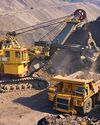
Have we Already Mined the Critical Minerals We Need
Then why are we throwing them away?!
1 min
January / February 2026
Rock&Gem Magazine
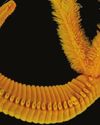
One Toxic Worm
A critter that creates & tolerates orpiment!
1 min
January / February 2026
Rock&Gem Magazine
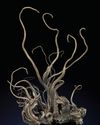
ROCK & GEM FIELD GUIDE: Silver
Silver (Ag) is a native element and one of Earth's most prized precious metals.
2 mins
January / February 2026
Rock&Gem Magazine
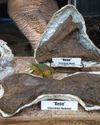
DINOSAURS OF THE HELL CREEK MUSEUM
In the Badlands of South Dakota, just outside the small town of Belle Fourche—pronounced “Bell Foosh”—a new attraction has taken shape that every dinosaur enthusiast should see. The Dinosaurs of the Hell Creek Museum is part hands-on exhibit, part science center and part active research lab.
3 mins
January / February 2026
Rock&Gem Magazine
The Lost Twins of Kongsberg
A Silver Story Resurfaced
3 mins
January / February 2026
Rock&Gem Magazine
Switzerland's ICE PALACE
Walk Inside a Glacier at The Top of Europe
7 mins
January / February 2026
Translate
Change font size