Intentar ORO - Gratis
SPIN UP
Apparel
|September 2021
Satish Nagendra Poludas, Founder & Principal Designer, Kora Design Collaborative, Hyderabad, shares his thoughts with Brinda Gill on the practise and potential of hand-spinning in India

HAND-SPINNING IS ONE OF THE OLDEST CRAFTS IN INDIA. WHAT ARE YOUR THOUGHTS ON THIS FORM OF INDIAN CRAFTSMANSHIP?
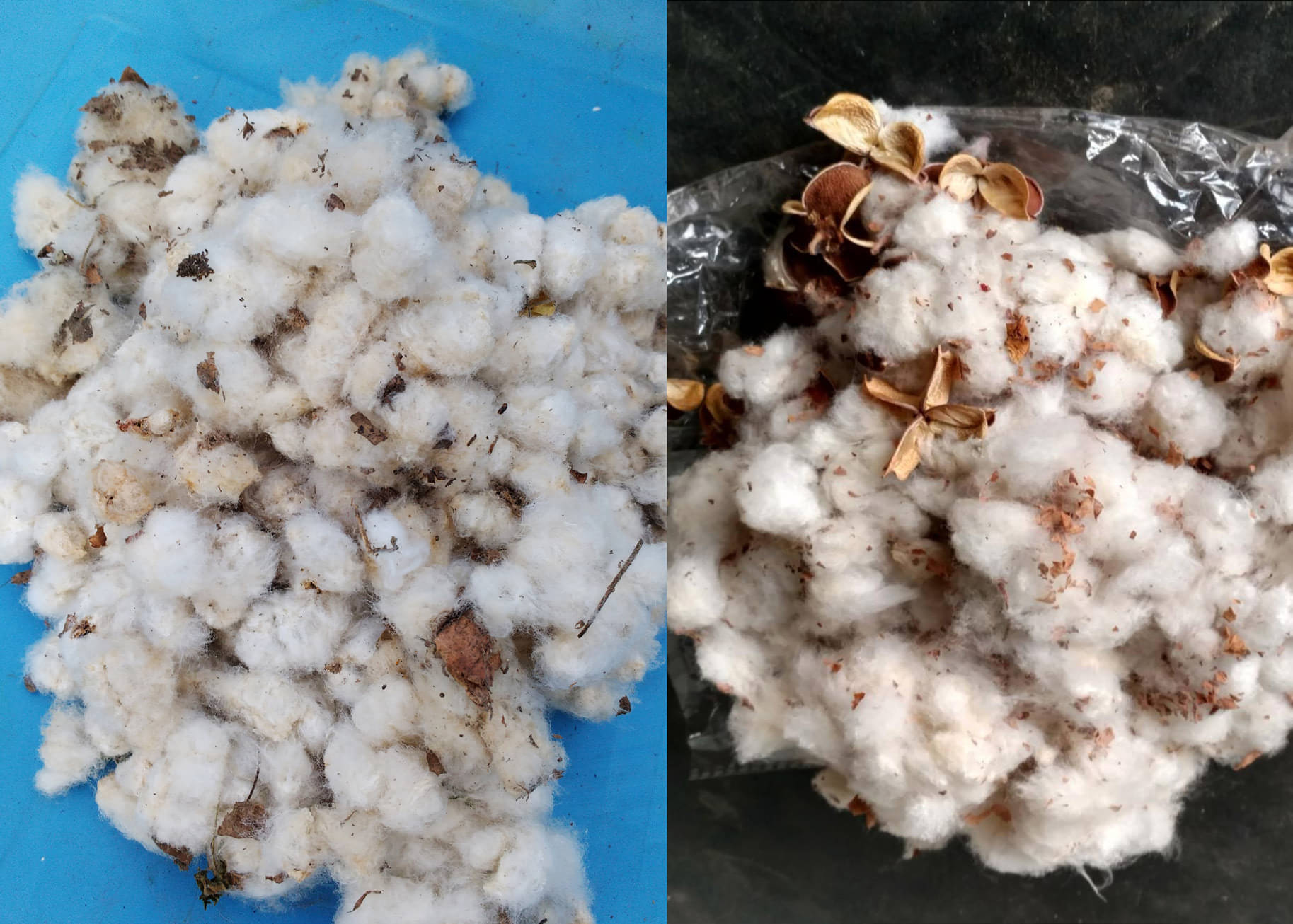
Traditionally, most people have practised hand-spinning of cotton, in different parts of the country, as part of their daily activities. There is evidence of hand-spinning in sites associated with the Indus Valley Civilisation that tell of its existence for millennia. The growing of different varieties of cotton in different parts of the country led to the continued practise of hand-spinning over the centuries. Cotton cultivation through the centuries meant that cotton adapted to local conditions and developed individual characteristics. This led to the emergence of a great range of indigenous cotton varieties in India. Even today, cotton is hand-spun using different tools, techniques and charkhas.
In India, it is possible to travel back in time when you travel in the interior districts of the country. Travel in India is very interesting —one can see the evolution of any skill or process.
When we talk about spinning, in some interior places of Jharkhand, one sees a primitive spindle being used; in the Northeast, the small drop spindle is used. The technique in Andhra Pradesh makes use of a detailed pre-spinning and spinning process. On the other hand, whereas the pre-spinning into sliver-making process before hand-spinning is more mechanised in Bihar. In Nagaland, the women sing as they spin by thigh-rolling the spindle to make the yarn.
WHAT IS THE ROLE OF HAND SPINNERS?


Esta historia es de la edición September 2021 de Apparel.
Suscríbete a Magzter GOLD para acceder a miles de historias premium seleccionadas y a más de 9000 revistas y periódicos.
¿Ya eres suscriptor? Iniciar sesión
MÁS HISTORIAS DE Apparel

Apparel
All About Dressing As You Want
A. Das uncovers the current trend which is all about dressing as you want. Easy, over-sized, baggy fits and unstructured cuts are ruling every wardrobe.

6 mins
January 2022

Apparel
Online Shopping Likely To Reach $1.2 Trillion By 2025
Market Watch
1 min
January 2022

Apparel
Weaving A Sustainable Future
Brinda Gill talks to Ashita Singhal, awardwinning weaver, designer and social entrepreneur, and founder, Paiwand Studio, who is committed to converting textile waste into new, meaningful textiles.
6 mins
January 2022

Apparel
Summer of 2022
Heer Kothari walks our eager onlookers through the runways of New York, Milan and Paris, exploring the nuance of summer styling for men in 2022
4 mins
January 2022

Apparel
Journeying for the Joth
Brinda Gill drafts the interesting journey of Vinay Narkar, a textile designer and revivalist based in Solapur, spared no effort in the pursuit of joth, one of the lost weaves of Maharashtra, and reviving it.
8 mins
January 2022

Apparel
Go Digital - Get Organised Reshamandi Style!
Heer Kothari explores India’s first and largest market-place, digitising the natural textile supply chain. It is a full stack ecosystem in the form of a super app, starting from farm to fashion.
4 mins
January 2022

Apparel
Erotissch – Stitching differently
Chitra Balasubramaniam explores Erotissch, a brand by women for women, based on the concept of ‘Bed to street wear'.
3 mins
January 2022

Apparel
Colourful Fable
A. DAS interviews Karan Torani to find out the inspiration behind the designs of his label Torani and his thoughts on it being widely welcomed and connected well.
5 mins
January 2022

Apparel
Going #PLUS
Heer Kothari explores the growth of the Plus Size apparel segment in India.
4 mins
December 2021

Apparel
Endorsing Desi Oon
Brinda Gill discovers India’s indigenous wools, locally called Desi Oon, which hold potential for use in the apparel industry
8 mins
December 2021
Translate
Change font size