
Vuélvete ilimitado con Magzter GOLD
Obtenga acceso ilimitado a más de 9000 revistas, periódicos e historias Premium por solo
Intentar ORO - Gratis
Snuffers, scrapers and murder-holes
BBC History UK
|July 2022
From medieval portcullises to the Regency craze for "Wellington" knockers, the evolution of the front door offers a unique entry point to British history. Rachel Hurdley looks at six ways in which doors reflect our desire to avert danger, and impress our neighbours

1 No-go areas
From plague houses to Number 10, doors have long been used to keep threats out - and in
To most of us today, front doors are mere portals between the outside world and the privacy of our own homes, worthy of little more than a clean and perhaps a new lick of paint every now and then. But if you were charged with the defence of a castle in the Middle Ages, they could be the difference between life and death.
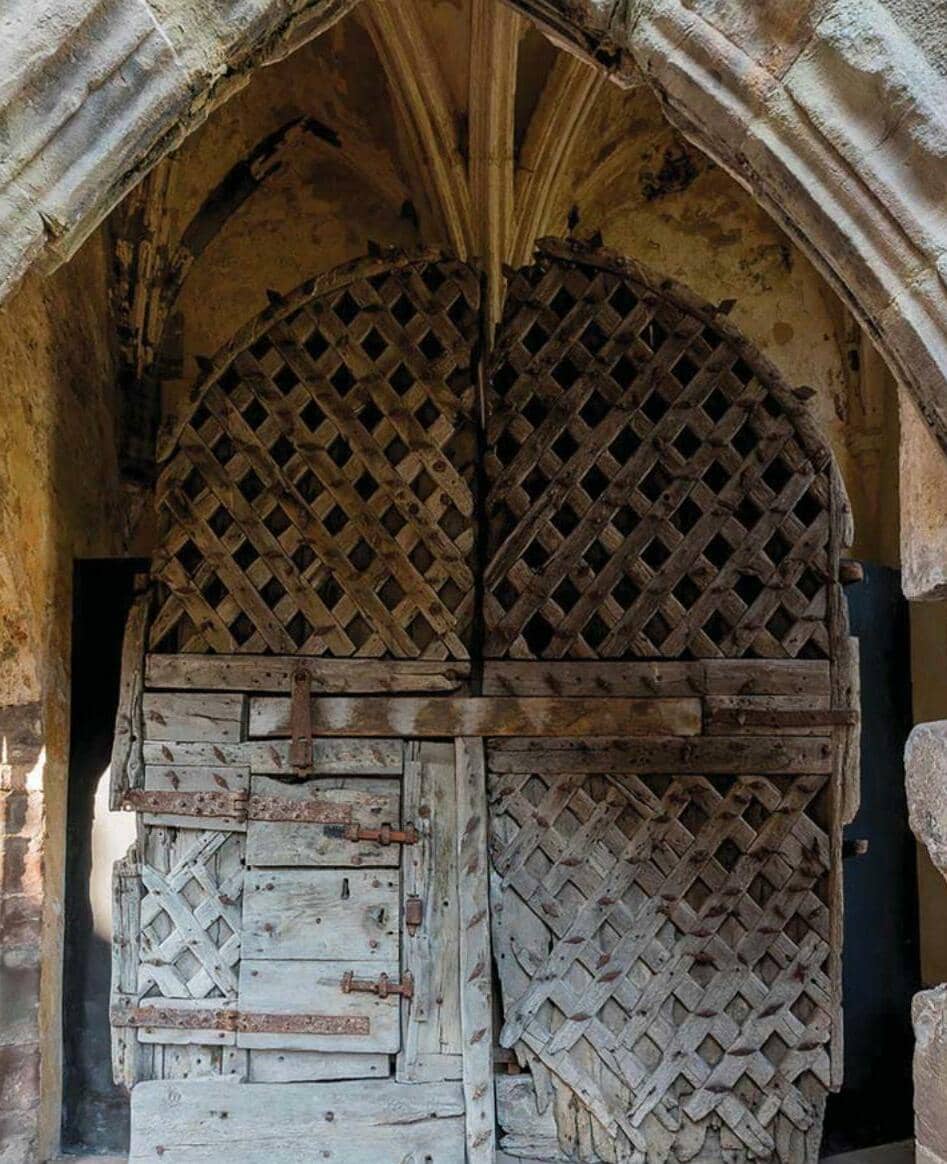
Doors were the weak spot in even the best medieval fortifications, and by the 12th century, great efforts were being made to ensure entry was difficult for attackers. Before they even reached the door, assailants might have to negotiate the drawbridge across the moat and quickly get through before the "quick release" portcullis was lowered, a security system that allowed castle defenders vital time to prepare.
Even more effective was the tactic of trapping attackers between two portcullises, and then hurling down rocks from "murder holes" in the roof. Herefordshire's Goodrich Castle, among others, had arrow slits opening into the gatehouse, allowing defenders to shoot those unfortunate enough to be trapped inside. If you were brave enough to attempt to breach King's Gate at Caernarfon Castle, you'd have to negotiate two drawbridges, five doors, and six portcullises.


Esta historia es de la edición July 2022 de BBC History UK.
Suscríbete a Magzter GOLD para acceder a miles de historias premium seleccionadas y a más de 9000 revistas y periódicos.
¿Ya eres suscriptor? Iniciar sesión
MÁS HISTORIAS DE BBC History UK

History Extra
Drawn to the past
JAMES OSBORNE offers the definitive word on a game that casts players in the role of illustrators creating fantastical images for medieval manuscripts

1 mins
July 2026

History Extra
Young (and old) guns
Well into the 16th century, guns were considered unmanly - the armament of cowards and ne'er-do-wells.
1 mins
July 2026

History Extra
The president and the comedian
Details were sketchy as HistoryExtra went to press, but the latest series from Higher Ground, the production company founded by Barack and Michelle Obama, looks like it could be a hoot.
1 min
July 2026

History Extra
Meet the Boleyns
The cultured charmer, the moneybags lord mayor, the powerful heiress, the scheming uncle. Anne's colourful family shaped the mind and character of the future queen of England, as Tracy Borman reveals
9 mins
July 2026

History Extra
Kyoto in five places
Japan’s imperial capital for 11 centuries remains its most enchanting city. LESLEY DOWNER suggests the most enticing and historic temples, gardens and palaces to visit
3 mins
July 2026
History Extra
Did a bear once serve in the Polish army?
In 1942, Polish troops making their way through Iran to join the Allied effort in Europe came across a young boy carrying a Syrian brown bear cub, whose mother had been shot by hunters.
1 min
July 2026

History Extra
Voices from the past
What did those who lived through the American Revolutionary War 250 years ago make of the conflict as it unfolded?
1 min
July 2026

History Extra
Is it true that Arthur Conan Doyle helped to solve real-life crime cases?
Inevitably, as the creator of Sherlock Holmes, Conan Doyle was inundated with requests to solve mysteries, often of a criminal nature.
1 mins
July 2026

History Extra
Fight the patriarchy!
The work of modernist novelist Virginia Woolf isn't renowned for delivering laughs.
1 min
July 2026

History Extra
National hero
In 1828, following a distinguished career in European politics and diplomacy, Ioannis Kapodistrias (1776–1831) became the first governor of Greece.
1 min
July 2026
Translate
Change font size