Intentar ORO - Gratis
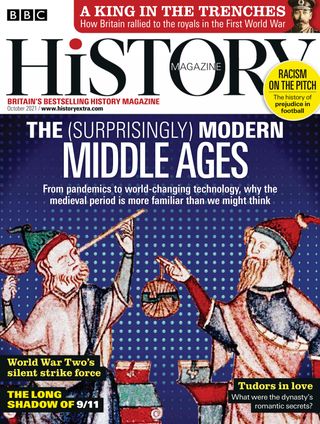
The (Surprisingly) Modern Middle Ages
BBC History Magazine
|October 2021
From devastating climate change to deadly pandemics, the challenges that kept our medieval ancestors awake at night weren’t so different from those preoccupying us today, says Dan Jones

In the middle of the 16th century, the historian John Foxe looked back at the great sweep of time since the birth of Christ, and decided that it could be sliced into three chunks.
History, he suggested, began with the “primitive time”, when Christians were persecuted and had to hide in catacombs from wicked Romans. More recently came the “latter days”, Foxe’s own times – the age of the Reformation. Sandwiched between these two was an era of about 1,000 years, which were neither fish nor fowl. Foxe called these centuries “the middle age”. Today we call them the Middle Ages, or the medieval period.
That vast slab of history stretched from the fall of the western Roman empire in the fifth century AD to the European voyages to the New World in the 16th. It has a bit of an odd reputation: the Middle Ages are often the butt of a big historical joke. In the popular imagination, that era is a time when the classical world had vanished but the modern world had yet to get going; when people (supposedly) believed that the world was flat and that water was poisonous; when God was in charge of everything; and when everyone was either a knight, a priest or a peasant.
Politicians and newspaper journalists often use the word “medieval” to characterise something that is bad, backward, stupid, cruel, violent or hopelessly outdated. This can get historians quite worked up; some have even tried to jettison the term “Middle Ages”, instead preferring to refer to the “Middle Millennium”. Needless to say, this hasn’t caught on – yet.
But if we look a little more closely at the medieval world, there is plenty to see that we may recognise in our own times. Because although there

Esta historia es de la edición October 2021 de BBC History Magazine.
Suscríbete a Magzter GOLD para acceder a miles de historias premium seleccionadas y a más de 9000 revistas y periódicos.
¿Ya eres suscriptor? Iniciar sesión
MÁS HISTORIAS DE BBC History Magazine
History Extra
A treaty transformed North American history
California became American territory just days after gold had been discovered in the Sierra Nevada foothills – and Mexico lost out

3 mins
April 2026
History Extra
England's mistress
Nell Gwyn became famous for her love affair with Charles II, and for her love of drinking, gambling and carousing. Yet, writes Sophie Shorland, this upwardly mobile celebrity was also a canny political operator who wielded substantial power in court
10 mins
April 2026

History Extra
Across history, intellectual life repeatedly becomes suspect when societies fracture
A mistrust of ‘experts’ and ‘intellectuals’ has recently crystallised into US government interventions targeting academic institutions. EMILY KNOX and JOAN SCOTT share their thoughts with Danny Bird about the troubling history of anti-intellectualism
9 mins
April 2026
History Extra
BLOOD AND PLUNDER
It's a tale of slavery, racism and naked imperial power. Barnaby Phillips traces the fate of the exquisite golden treasures looted by British forces from the kingdom of Asante 150 years ago
10 mins
April 2026
History Extra
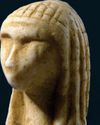
THE FACE FIXATION
From a Stone Age Venus and an Egyptian death mask to an unflinchingly challenging 21st-century sculpture, Fay Bound-Alberti introduces seven depictions of the face that track humanity's ever-evolving relationship with creativity, hierarchy and self-image
9 mins
April 2026
History Extra
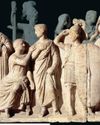
ROME'S PEOPLE POWER
From Romulus's open-city policy to Claudius's reforms, citizenship was used by Rome as both a reward and a weapon. And, as Shushma Malik explains, it enabled the burgeoning empire to build power and define identity
10 mins
April 2026
History Extra
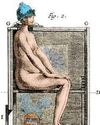
Sex in the city
A study of the understanding and treatment of sexually transmitted disease fascinates
2 mins
April 2026
History Extra
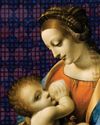
How medieval mothers took back control
In the Middle Ages, the bearing and raising of children defined women's lives. But as Elinor Cleghorn explains, there were women who had other ideas and boldly challenged attitudes towards motherhood
10 mins
April 2026
History Extra
Ancient Egyptian omelette
ELEANOR BARNETT whips up an eggah - a tasty dish that continues to be enjoyed in Egypt to this day
2 mins
April 2026

History Extra
Seventy years ago, Nikita Khrushchev stood before a packed hall in central Moscow and delivered a four-hour denunciation of Josef Stalin, one that exposed mass terror and attempted to reclaim the legacy of Leninism. So what drove this extraordinarily radical move? And did the Soviet people buy Khrushchev's message?
When I was an undergraduate, a perennial exam question was ‘Did Stalin betray the revolution?’.
11 mins
April 2026
Translate
Change font size