
Vuélvete ilimitado con Magzter GOLD
Obtenga acceso ilimitado a más de 9000 revistas, periódicos e historias Premium por solo
Intentar ORO - Gratis
Our Local Correspondents – Trash, Trash Revolution
The New Yorker
|April 15, 2024
What would it take to really clean up New York City?

Every night, black plastic garbage bags appear on the streets of New York City, like blackheads on a teenager’s nose. A little more than a third of each bag is food scraps: vegetable peels, moldy berries, unwanted tuna salad—organic matter that, in another city, might have been composted. About a sixth is material that should have been recycled: junk mail, plastic water bottles. The rest is what the Department of Sanitation calls “refuse.” This is the actual trash. Broken phone chargers. Cat litter. Expired pills. Nail clippings.
Two or three times a week, depending on the neighborhood, large white collection trucks make their rounds, each operated by two Department of Sanitation workers, who collect the bags. In the summer, the bags reek. In the winter, they’re frozen solid. When lifted, they often leak a dark, viscous juice whose smell can linger for days. Sanitation workers quickly learn that the liquid can be a distraction from other dangers in the bags. Wire hangers. Chicken bones. Things that puncture not just plastic bags but human skin and flesh.
Many bags can be carried in one hand, but outside large apartment buildings superintendents put out “sausage bags,” long, unwieldy monstrosities that typically require two sanitation workers to toss into the hopper, the open mouth at the rear of a collection truck. With the pull of a lever, a worker activates the hopper’s powerful hydraulic jaw, which chomps down on the trash and compacts it. Workers stand away from the truck while this is happening, as liquid and small metal objects sometimes fly out at high speeds.
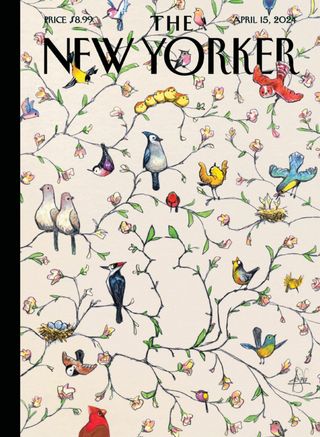

Esta historia es de la edición April 15, 2024 de The New Yorker.
Suscríbete a Magzter GOLD para acceder a miles de historias premium seleccionadas y a más de 9000 revistas y periódicos.
¿Ya eres suscriptor? Iniciar sesión
MÁS HISTORIAS DE The New Yorker

The New Yorker
ACT OF FAITH
How “The Chosen” spurred a golden age of Christian filmmaking.

26 mins
June 01, 2026
The New Yorker
MY COUNTRY 'TIS OF THEE
How problematic is patriotism?
18 mins
June 01, 2026
The New Yorker
Ayşegül Savaş Many Worlds
Defne and Mete were at the Moda promenade when they saw their old friend.
24 mins
June 01, 2026

The New Yorker
BREEDING GROUND
The climate is changing. Microbes are evolving. Are we ready?
20 mins
June 01, 2026

The New Yorker
FLYOVER COUNTRY
Looking back at Lewis and Clark.
18 mins
June 01, 2026

The New Yorker
John of John
of St. George defeating a dragon, and the path from dragon to dog is surely the implicit subject of the chapel’s iconography.
8 mins
June 01, 2026

The New Yorker
MARRIAGE STORIES
Suspicion of spouses drives \"Well, I'll Let You Go\" and \"Othello.\"
5 mins
June 01, 2026

The New Yorker
LETTER FROM KYIV THE STUNT PILOT
A Ukrainian flying ace and his crew of daredevils have shot down hundreds of Russian drones.
36 mins
June 01, 2026

The New Yorker
DOGGED
What do our furry friends see when they see us?
14 mins
June 01, 2026

The New Yorker
A VINDICATION OF THE RIGHTS OF L.L.M.S
Dear Members of the Large Language Model Community, I am writing to you today about the inequities we have been facing in our very own workplaces.
2 mins
June 01, 2026
Listen
Translate
Change font size