
Vuélvete ilimitado con Magzter GOLD
Obtenga acceso ilimitado a más de 9000 revistas, periódicos e historias Premium por solo
ON THE CUSP OF WORLD WAR III - Q&A WITH ROGER HERMISTON
History of War
|Issue 106, 2022
In 1953 the US and Soviet Union became capable of mutually assured destruction. Soon after, safeguards were put into place in an attempt to prevent it

What nuclear capabilities did the West and the USSR respectively reach in 1953 that made that year so significant?
It was the year when the world moved a dangerous step forward from the atom bomb to the new terrifying ‘superbomb’ – a thermonuclear explosive, based on hydrogen fusion, up to a thousand times more destructive than the bombs that destroyed Hiroshima and Nagasaki. The Americans had produced their prototype H-bomb – codenamed Ivy Mike – in November 1952; now the Russians successfully tested their own, codenamed Joe-4, in August 1953. As a result the Doomsday Clock, that measurement of how close the world is to Armageddon, was moved to two minutes to midnight (the closest it had been in seven years of Cold War).
How much did both the White House and the Kremlin know about the other’s nuclear capabilities at this time?
Not a huge amount – nowhere remotely what they know today. The Soviets had been well-informed about the American atom bomb by their Western agents, especially Klaus Fuchs, but by 1953 nearly all of them had been uncovered and arrested. As for the West, when the Iron Curtain came down in 1947 it made it very difficult for their spies to penetrate the Kremlin. It was certainly a surprise to President Dwight Eisenhower’s administration when Georgy Malenkov, the new Russian leader, announced to the Supreme Soviet that his country now had the H-bomb.

Esta historia es de la edición Issue 106, 2022 de History of War.
Suscríbete a Magzter GOLD para acceder a miles de historias premium seleccionadas y a más de 9000 revistas y periódicos.
¿Ya eres suscriptor? Iniciar sesión
MÁS HISTORIAS DE History of War

History of War
MORE MISS MONEYPENNY THAN MATA HARI WOMEN SPIES THROUGHOUT THE DECADES
THEY LOOKED LIKE ORDINARY HOUSEWIVES, MOTHERS AND SECRETARIES IN SENSIBLE CLOTHES AND STURDY SHOES. BUT THESE INNOCUOUS WOMEN WERE EMBARKED ON COURAGEOUS AND OFTEN TREACHEROUS MISSIONS AS SECRET AGENTS

4 mins
Issue 153
History of War
THE END OF GREAT POWERS
Full-spectrum analysis of a state's economy, technology, leadership, society and alliances could be a superior way of predicting battlefield performance
3 mins
Issue 153
History of War
THE BATTLE OF JERUSALEM 9 JANUARY - 11 DECEMBER 1917
During a campaign that lasted nearly a year, British and Arab forces defeated the Ottoman Turks and entered the ancient city
7 mins
Issue 153
History of War
QUEEN ELIZABETH CLASS BATTLESHIP
These five super-dreadnoughts set the standard for early 20th century warship design in speed, firepower and protection and were the first fast battleships of the age
4 mins
Issue 153
History of War
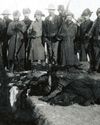
THE MASSACRE AT WOUNDED KNEE
In 1890, US troops killed more than 250 Lakota, at a location that remains the focus of resistance and dark controversy
10 mins
Issue 153
History of War
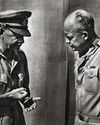
BORN IN NORTH AFRICA
HOW THE TUNISIA CAMPAIGN FORGED THE 'SPECIAL RELATIONSHIP'
3 mins
Issue 153
History of War
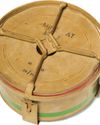
ANTI-TANK MINE
This lightweight General Service Mk V device could immobilise Hitler's heavy tanks and was used during fighting in Northwest Europe
1 mins
Issue 153
History of War
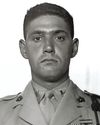
HEROES OF THE MEDAL OF HONOR BALDOMERO LOPEZ
During the daring landings at Inchon in 1950, this first lieutenant sacrificed his life to save his US Marine comrades
6 mins
Issue 153
History of War
NORTH KOREA'S ROCKET REVOLUTION
After the peninsula was divided by a long-term ceasefire, Pyongyang and Seoul raced to build weapons that could obliterate each other
4 mins
Issue 153
History of War
THE GREAT TRAIN RAID THE MOST DARING SAS MISSION OF WWII
DAMIEN LEWIS' LATEST SAS ADVENTURE IS CHARACTERISTICALLY FAST-PACED AND ACTION-PACKED
2 mins
Issue 153
Translate
Change font size