
Vuélvete ilimitado con Magzter GOLD
Obtenga acceso ilimitado a más de 9000 revistas, periódicos e historias Premium por solo
Intentar ORO - Gratis
Rinderpest: a continuing threat to livestock
Farmer's Weekly
|September 25, 2020
Despite rinderpest being finally eradicated from nature in 2011, the threat of re-emergence remains. The Food and Agriculture Organization of the United Nations has therefore continued to urge farmers to learn the symptoms of the disease, and to notify state veterinarians if they suspect an animal may be showing signs of rinderpest.

Few animal diseases have caused as much devastation and economic loss as rinderpest. While having been eradicated from the natural environment, there is some risk that the disease will re-emerge due to governments and laboratories across the world holding on to rinderpest stock. Such a re-emergence could lead to food insecurity and huge financial losses, according to the Food and Agriculture Organization of the United Nations (FAO), and it is for this reason that the FAO and the World Organisation for Animal Health’s (OIE) education on the subject continues to be of great importance. The re-emergence of rinderpest would undermine veterinary biosecurity, result in the restriction of local and international trade, and endanger wildlife, as well as threaten animal welfare and rural livelihoods.
Moreover, it would cost millions of dollars to re-eradicate the disease once again.
The Global Rinderpest Eradication Programme initiated by the FAO and OIE in 1994 led to the successful eradication of rinderpest in 2011, making it the first animal disease to be completely eradicated from nature. It has been estimated that the eradication of rinderpest has saved Africa alone around US$920 million (about R15,42 billion).
HISTORY
Rinderpest is considered the deadliest animal disease in history, and according to the website animalresearch.com, the first outbreak was recorded in 376 CE. While the devastation of the disease led to the establishment of veterinary schools throughout Europe, the disease was not adequately contained, and it was brought to Africa by European settlers in the late 1800s. An outbreak of rinderpest in 1890 caused the death of millions of cattle and was responsible for the starvation of about a third of the human population of Ethiopia and Tanzania respectively.
WHAT IS RINDERPEST?


Esta historia es de la edición September 25, 2020 de Farmer's Weekly.
Suscríbete a Magzter GOLD para acceder a miles de historias premium seleccionadas y a más de 9000 revistas y periódicos.
¿Ya eres suscriptor? Iniciar sesión
MÁS HISTORIAS DE Farmer's Weekly

Farmer's Weekly
Pastry delights and cupcakes
The versatility of pastry in baking and cooking is best flaunted by two vastly different recipes appealing to the sweet and savoury tooth, while a novel way to bake those Christmas-themed cupcakes will also go down well.

4 mins
December 5-12, 2025
Farmer's Weekly
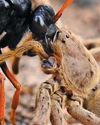
Specialised spider-hunting wasps
Wasps are apex predators of the insect world and have developed many survival strategies. One group of wasps focuses on hunting spiders to provide a source of food for their larval offspring
2 mins
December 5-12, 2025
Farmer's Weekly
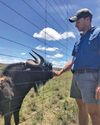
From bulls to boardrooms: farming part-time as a professional
Maintaining a farm requires time, resources, and commitment. Farming part-time while being fully employed elsewhere can seem daunting and risky. Although it certainly presents unique challenges, it is feasible for some. Koot Klopper and Herman van Heerden spoke to Henning Naudé about how excellent time management and the delegation of resources, as part-time farmers, successfully keep their farms productive.
5 mins
December 5-12, 2025

Farmer's Weekly
Holy Shiitake: mastering the science of gourmet fungi
Mushroom production is inherently the practice of expanding mycelium. But since wanted and unwanted fungi flourish under the same circumstances, a mushroom farmer's biggest challenge is ensuring the right fungi prevails. Lindi Botha reports on Rory Brooks' learning curve.
9 mins
December 5-12, 2025
Farmer's Weekly
No more 'secret' price hikes?
'Secret' electricity price hikes in South Africa have been curbed in a game-changing court ruling, explains Felix Dube, lecturer in the Department of Law at the University of Venda.
4 mins
December 5-12, 2025
Farmer's Weekly
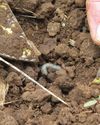
The cutworm scourge, and how to control it
The dominant cutworm, Agrotis segetum, is causing renewed, costly damage to South African maize, soya bean, and sunflower.
5 mins
December 5-12, 2025
Farmer's Weekly
Legislative gap requires a rethink on biosecurity controls
Since the dawn of democracy, the agriculture sector has cemented its place as one of the essential and trusted pillars for economic growth, job creation, and foreign earnings in South Africa.
2 mins
December 5-12, 2025

Farmer's Weekly
From kitchen experiments to a thriving meat empire
What started as an after-hours kitchen project in the Truter household has grown into the fully fledged meat empire Deli-Co. Brothers Pieter and Hendri Truter told Glenneis Kriel how they turned a local favourite into a multigenerational family business.
7 mins
December 5-12, 2025
Farmer's Weekly
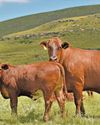
Brushing up on your 'cow speak'
Experienced stockman and cattle judge Willie de Jager spoke to Sabrina Dean about some of the basics of reading cattle behaviour and how best to handle these animals.
8 mins
December 5-12, 2025
Farmer's Weekly
Corporate day job fuels farming dream
Marius Smit lives in the middle of Gauteng in Centurion and spends his workdays in the fast-paced high-stress corporate sector as a group forensic head for Discovery.
5 mins
December 5-12, 2025
Translate
Change font size