
Vuélvete ilimitado con Magzter GOLD
Obtenga acceso ilimitado a más de 9000 revistas, periódicos e historias Premium por solo
Intentar ORO - Gratis
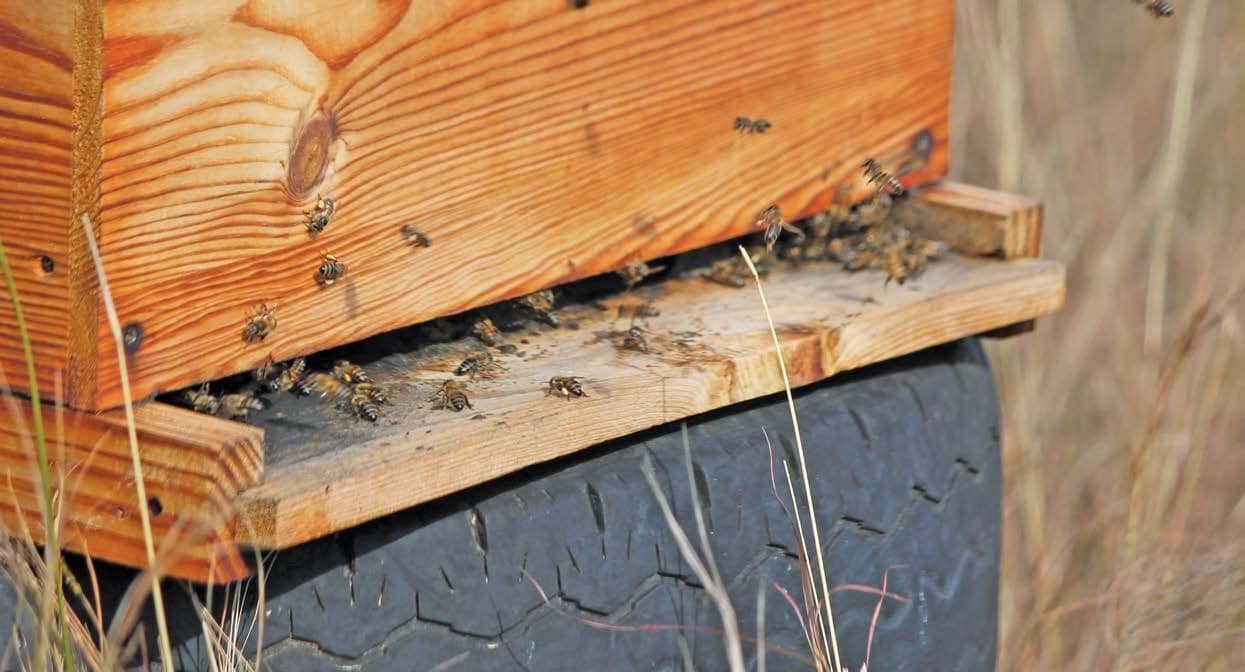
MAKING AGRICULTURE MORE BEE-FRIENDLY
Farmer's Weekly
|February 21, 2020
With the majority of food crops being pollinated by bees, dwindling colonies pose a threat to agriculture. But while pesticides play a major role in declining bee numbers, monocultures and a lack of biodiversity are the greater problem. Lindi Botha spoke to industry leaders.

Fruit orchards across South Africa are expanding rapidly, and it is estimated that the number of beehives available for pollination will have to double over the next decade to meet demand.
Calculations have shown that 65 000 hives are required for the deciduous fruit industry as it stands, with an additional 30 000 needed during the next decade as new orchards come into production. The seed and berry industries collectively require 50 000 hives over the next 10 years. The macadamia industry needs 160 000 beehives to optimally pollinate the current 40 000ha of macadamias, yet the industry is set to double in size over the next decade.
“As we don’t even have 160 000 hives in the entire country, the need to protect what we have has become crucial to ensure sustainable fruit crop production,” says Dr Hannelie Human of the University of Pretoria’s department of entomology and zoology. “Bees are as important as water to growing most of our food crops, so farmers should be as invested in bee health as they are in orchard health.”
REASONS FOR THE DECLINE
Pesticides have received much attention for their role in the decline in the number of bee colonies, but research points to insufficient forage opportunities as one of the main reasons.
Human notes that pollination depends on colony strength, and any reduction in the number of bees will reduce crop yield.
She adds that in addition to urbanisation, mining activities, air pollution, insecticides and declining natural food sources, farming is providing poorer-quality food for bees, as intensification of agriculture and monocultures limits nutrition for the insects.

Esta historia es de la edición February 21, 2020 de Farmer's Weekly.
Suscríbete a Magzter GOLD para acceder a miles de historias premium seleccionadas y a más de 9000 revistas y periódicos.
¿Ya eres suscriptor? Iniciar sesión
MÁS HISTORIAS DE Farmer's Weekly

Farmer's Weekly
The foot-and-mouth disease threat is growing
Foot-and-mouth disease poses a growing threat to the livestock industry, especially communal farmers, with devastating economic consequences unless awareness and compliance improve, writes Shane Brody.

3 mins
January 30 - February 06, 2026

Farmer's Weekly
Shipping conditions to ease in 2026, but risk remains high
Early signs suggest a more favourable export season for South African producers, as easing global shipping congestion and improved performance by Transnet point to higher throughput at local ports. Lindi Botha reports.
2 mins
January 30 - February 06, 2026

Farmer's Weekly
A path of accelerating land reform in South Africa
Delivering the ANC's January 8th Statement a few weeks ago, President Cyril Ramaphosa noted, amongst other things, that: “Land reform remains one of the most urgent tasks of the National Democratic Revolution. While progress has been made, much more is required to give effect to the constitutional requirement for redress and equitable access to land.”
2 mins
January 30 - February 06, 2026
Farmer's Weekly
Reflections on 2025 and the policy space for 2026
The year 2025 was a year characterised initially by a wave of misinformation, particularly relating to legislation and tariff issues. This year some big moves are expected in the trade space.
3 mins
January 30 - February 06, 2026

Farmer's Weekly
From planning to peak lay: building a profitable egg business
Mpumalanga poultry farmer Lebogang Mashego spoke to Octavia Avesca Spandiel, and shared practical insights on planning, building systems that work, breed choice, feed management, and markets to build a profitable and sustainable egg business.
5 mins
January 30 - February 06, 2026

Farmer's Weekly
Impofu Wind Farm becomes a canvas for community connection through Enel's Blowing Art Initiative
Enel Green Power South Africa has introduced the Blowing Art Initiative at the Impofu Wind Farm in the Eastern Cape, a creative community project that turns renewable energy infrastructure into a living gallery.
2 mins
January 30 - February 06, 2026

Farmer's Weekly
Geely is intent on hanging around
Having fallen off the radar around a decade ago following a short local stint, Chinese manufacturer Geely has announced its proposed return to South Africa towards the end of 2026. The Citizen's Jaco van der Merwe reports.
4 mins
January 30 - February 06, 2026

Farmer's Weekly
Great reads to enjoy during ‘me-time'
Patricia McCracken has plucked an assortment of fascinating titles covering different areas of interest, from coastal exploration and dining in the wild, to African traditions surrounding love and marriage.
3 mins
January 30 - February 06, 2026
Farmer's Weekly
Thokoman Peanut Butter marks 25-year milestone with R500 000 commitment to food security
Thokoman Peanut Butter, one of South Africa's biggest producers of peanut butter, celebrates 25 years of consistent quality and community support, marking the occasion with a significant R500 000 partnership with Hot 102.7's Hot Cares initiative for 2026.
2 mins
January 30 - February 06, 2026
Farmer's Weekly
South Africa's famous wandering hippo
From 1928 to 1931, a hippopotamus trekked 1 600km from what was then northern Natal to the Eastern Cape's Keiskamma River near Peddie, where it was shot dead by a posse of farmers. As Mike Burgess writes, this journey would immortalise the hippo in South African history.
3 mins
January 30 - February 06, 2026
Translate
Change font size