
Vuélvete ilimitado con Magzter GOLD
Obtenga acceso ilimitado a más de 9000 revistas, periódicos e historias Premium por solo
Intentar ORO - Gratis
An Analysis Of Reservation Policy In Indian Education System
BUSINESS ECONOMICS
|September 1 - 15, 2018
After India’s independence in 1947, there were some major initiatives in favour of the Scheduled Tribes (STs), Scheduled Castes (SCs) that were aimed at their social uplift.

A common form of caste discrimination in India was the practice of untouchability. The SCs were the primary targets of the practice, which was outlawed by the new Constitution of India. In his book, Annihilation of Caste, B.R. Ambedkar criticised the Hindu religion, its caste system and its religious texts. He argued that inter-caste marriage is not sufficient to annihilate the caste system but “the real method of breaking up the caste system was… to destroy the religious notions upon which caste is founded.”
Reservation in Indian education system
In 1954, the Ministry of Education suggested that 20% of the seats should be reserved for the SCs and STs in educational institutions with a provision to relax minimum qualifying marks for admission by 5% wherever required. In India, reservation is allotted to the ST, SC and OBC candidates in all the prestigious institutions across the country. This reservation policy has been debated over in recent times. The top educational institutions in India like the IITs, AIIMS and IIMs are highly admired. The decision of the government to execute the policy of reservation in central institutions is because of the inequality in terms of lack of access to quality education for students from these backward categories. The reservation policy is executed as to balance the inequalities faced by the SC, ST, and OBC communities.


Esta historia es de la edición September 1 - 15, 2018 de BUSINESS ECONOMICS.
Suscríbete a Magzter GOLD para acceder a miles de historias premium seleccionadas y a más de 9000 revistas y periódicos.
¿Ya eres suscriptor? Iniciar sesión
MÁS HISTORIAS DE BUSINESS ECONOMICS

BUSINESS ECONOMICS
Tata Power introduces EZ Home Automation Solutions in Kolkata
Designed to make everyday life more comfortable and secure, Tata Power introduced its Tata Power EZ Home Automation Solutions in Kolkata.

1 min
February 01 - 28, 2026

BUSINESS ECONOMICS
Economic Survey 2025–26
Every year, the Economic Survey is presented in Parliament two days before the Union Budget.
3 mins
February 01 - 28, 2026

BUSINESS ECONOMICS
Navigating the soul's ultimate intelligence
In recent years, psychologists and thinkers have introduced the concept of Spiritual Intelligence (SI) to describe what makes a human being whole, integrated, and profoundly creative.
3 mins
February 01 - 28, 2026

BUSINESS ECONOMICS
Where Bengal meets Rajasthan in heritage conservation
The government of Rajasthan organized a significant heritage preservation initiative as part of the NDTV Conclave - 'Rising Rajasthan Vikas Bhi, Virasat Bhi', held on 24th December at Mandawa Castle, Fort Mandawa, Rajasthan.
1 min
February 01 - 28, 2026

BUSINESS ECONOMICS
Structural glitches trouble Indian economy
India's economy is often described as one of the fastest-growing in the world.
2 mins
February 01 - 28, 2026

BUSINESS ECONOMICS
Tredence sets the stage for Eastern India's AI future with new center in Kolkata
Tredence announced the inauguration of its new office in Kolkata, in the presence of Babul Supriyo, Minister of Information Technology and Electronics, West Bengal.
1 min
February 01 - 28, 2026

BUSINESS ECONOMICS
Educator, Author, and Thought Leader on Consciousness, Education, and Governance
Devesh Gupta works at the intersection of consciousness, education, and public systems.
5 mins
February 01 - 28, 2026

BUSINESS ECONOMICS
Beyond GDP numbers- recalibrating prosperity for 2026
Why growth alone no longer tells the full story
2 mins
February 01 - 28, 2026

BUSINESS ECONOMICS
World's greed for Rare Earth: US steps into Greenland, Venezuela & Ukraine
Attempts to grab Greenland, Ukraine & Venezuela are examples of modern-day colonialism.
3 mins
February 01 - 28, 2026
BUSINESS ECONOMICS
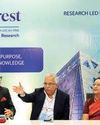
TCG CREST to expand globally with academic hubs in the UK, Japan, and the US
TCG CREST (Deemed University) announced a significant expansion roadmap, outlining its plans to establish academic hubs in the UK, Japan, and the US as part of a broader strategy to deepen global research collaboration and cross-sector engagement.
1 min
February 01 - 28, 2026
Translate
Change font size