Intentar ORO - Gratis
WILDMONTH
BBC Wildlife
|October 2021
Golden leaves, delicate fungi and migrant wildfowl in all their finery – it’s time to embrace autumn.

1 | SILVER BIRCH
Lady of the woods
Among our native trees, the silver birch puts on one of the most spectacular autumn displays. Golden leaves provide a beautiful contrast with pale, peeling bark, enhanced by the dappled effect created by the tree’s naturally open and airy structure. In a breeze, the burnished foliage dances and shimmers. Birch was known as the ‘lady of the woods’ in Irish Gaelic poetry, and more recently, in Coleridge’s romantic poems.
This isn’t a large or long-lived tree. Many birches don’t see out a century; some will already show signs of rot and decay in their sixth decade. Their importance to the landscape comes not through longevity, but as environmental pioneers: birch saplings are often the first trees to colonise open areas. In the distant past, birch forest sprang up across the British Isles as the ice sheets retreated. Nowadays, this pioneering role is reprised as birches quickly take advantage of new road verges, railway cuttings and brownfield sites. They also march up hillsides, taking over from other trees as the ground gets steeper and more exposed – and were it not for the browsing of sheep would grow higher still.
In autumn, the branches of birch trees are full of dark red mature female catkins packed with tiny seeds. These attract roving flocks of finches, especially redpolls and siskins.
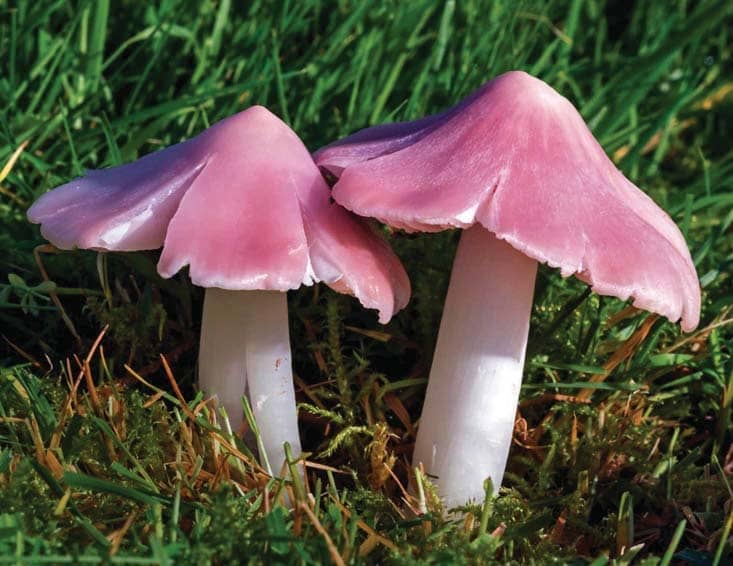
2 | BALLERINA WAXCAP
Pretty in pink
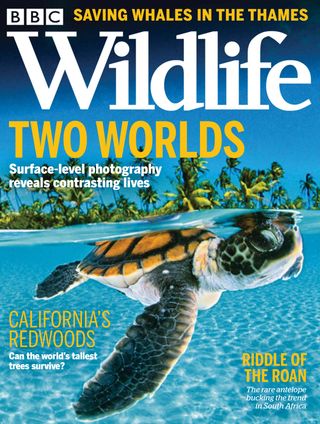

Esta historia es de la edición October 2021 de BBC Wildlife.
Suscríbete a Magzter GOLD para acceder a miles de historias premium seleccionadas y a más de 9000 revistas y periódicos.
¿Ya eres suscriptor? Iniciar sesión
MÁS HISTORIAS DE BBC Wildlife
BBC Wildlife
“Our canoe was nearly sunk by a hippo”
Hippos in Niger

3 mins
March 2026

BBC Wildlife
Why does Australia have such weird animals?
AUSTRALIA IS A LONG WAY FROM anywhere and has been for a very long time. The landmass definitively separated from the supercontinent of Gondwana around 40 million years ago and, since then, has existed - as a big blob in the middle of an even bigger ocean - in glorious geographical isolation.
2 mins
March 2026
BBC Wildlife
Which country has the fewest native animals?
AT AROUND 61KM² SAN MARINO, IN Europe, is one of the world's smallest countries. Entirely landlocked, it is surrounded by Italy.
1 min
March 2026

BBC Wildlife
Why do some species sunbathe?
RING-TAILED LEMURS ARE FAMED FOR their 'sun-worshipping' posture, legs and arms outstretched to reveal their pale bellies. Like humans, they do it to save energy and boost health. Sunlight is necessary to many bodily processes. As a source of vitamin D it's required to maintain bone and muscle health. It is also related to the production of serotonin, the chemical that regulates mood, sleep and stress response.
1 mins
March 2026
BBC Wildlife
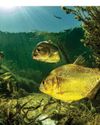
ALL YOU EVER NEEDED TO KNOW ABOUT THE Piranha
PIRANHAS HAVE A REPUTATION as some of the most dangerous freshwater hunters: terrifying predators capable of devouring a large mammal in mere minutes.
3 mins
March 2026
BBC Wildlife
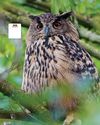
EAGLES LANDING
Eagle owls were once heavily persecuted. But thanks to a new initiative, these magnificent birds are reclaiming a wetland home
7 mins
March 2026
BBC Wildlife
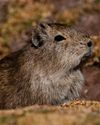
Do wild guinea pigs exist?
GUINEA PIGS, WHICH ARE NOT pigs and not from Guinea, are domesticated rodents that do not exist in the wild.
1 min
March 2026
BBC Wildlife
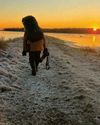
SNAP-CHAT: THE INSIDE WORLD OF WILDLIFE PHOTOGRAPHY
Boris Belchev on birds, batteries and battling bears with pop music
3 mins
March 2026
BBC Wildlife
Does anything live in the Bermuda Triangle?
THE BERMUDA TRIANGLE, IN THE NORTH Atlantic Ocean, has become infamous for the planes and ships that are said to have vanished without a trace while travelling through the area.
1 min
March 2026
BBC Wildlife
Do animals have different blood types?
HUMANS HAVE FOUR MAIN BLOOD GROUPS: A, B, AB and O.
1 min
March 2026
Translate
Change font size