Try GOLD - Free
Galileo's GREATEST DISCOVERIES
How It Works UK
|Issue 179
Peer into the mind of this trailblazing astronomer and discover his pioneering observations

Using a brass telescope of his own design, Galileo spent hours spying on worlds beyond our own. What he discovered changed the way we viewed the Solar System. Born in Pisa, Italy, in 1564, Galileo Galilei spent his youth as a keen musician and medical student at the University of Pisa. However, like so many other great minds, Galileo felt the pull of mathematics and found himself immersed in the worlds of mechanics and astronomy. Before his rise to academic stardom, the world largely viewed the universe through the eyes of Greek philosophers such as Aristotle. Based on the existence of celestial spheres and an Earth-centric view of the universe, the science of astronomy in the early 16th century was very much in its infancy. At least until Galileo began a scientific revolution using a new invention.
Arguably his most important contribution to science was the creation of his refracting telescope. Having discovered a new instrument called the spyglass in 1609, Galileo began experimenting with how he might use it to magnify his view of the world and beyond. Although Galileo didn’t technically invent the telescope, which was first patented by Dutch eyeglass maker Hans Lippershey, his modifications to the original design gave him the ability to gaze at the stars with unrivalled precision. Wasting no time, Galileo pointed his telescope towards the stars for the first time in 1610. The year that followed was filled with lunar discoveries, solar revelations and planetary observations that changed the way we view the celestial residents of space. From Moon craters to Saturn’s ‘ears’, Galileo saw objects in space up close using his refractor telescope, which he developed to have a magnification of up to 30 times.


This story is from the Issue 179 edition of How It Works UK.
Subscribe to Magzter GOLD to access thousands of curated premium stories, and 10,000+ magazines and newspapers.
Already a subscriber? Sign In
MORE STORIES FROM How It Works UK

How It Works UK
20 WEARABLE HEALTH TRACKERS
Whether you strap a wellness coach to your wrist or weave subtle sensors into your clothes, these devices are revolutionising how we track our health

9 mins
Issue 210
How It Works UK
SUPERPOWERED PLANTS
The world of plants is vibrant and diverse, just like this book.
1 min
Issue 210
How It Works UK
SECRET STORIES OF LOST BEASTS
We're all aware of the mighty dinosaurs that once roamed Earth, but there are so many weird and wonderful species that have been lost to time.
1 min
Issue 210

How It Works UK
ALL ABOUT BLIMPS
Is it a bird? Is it a spaceship? No... it's a non-rigid airship
2 mins
Issue 210
How It Works UK
SUPER QUESTERS MISSION: RAINFOREST MAGIC
Join adventurers Leo, Lilli and Bea as they transform into superheroes and journey to the rainforest in the pursuit of knowledge.
1 min
Issue 210
How It Works UK
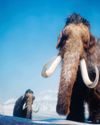
HOW THE MIGHTY MAMMOTH RULED THE ICE AGE
Meet the prehistoric giants that roamed the Arctic Circle thousands of years ago
4 mins
Issue 210
How It Works UK
Have they found LIFE ON MARS?
Although it's by no means certain, scientists are slowly accumulating evidence that life once existed on the Red Planet
2 mins
Issue 210

How It Works UK
HOW FAST DO GLACIERS MOVE?
The speed at which a glacier flows depends on its mass, the depth and slope of the underlying rock bed and friction.
1 min
Issue 210

How It Works UK
HOW IN-FLIGHT WI-FI WORKS
This technology allows you to scroll to your heart's content while killing time at cruise altitude
3 mins
Issue 210
How It Works UK
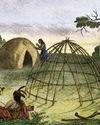
HOW WIGWAMS WERE BUILT
Discover the construction and living conditions inside these traditional domed dwellings
1 mins
Issue 210
Translate
Change font size