
Go Unlimited with Magzter GOLD
Get unlimited access to 10,000+ magazines, newspapers and Premium stories for just
THE HUNGARIAN MODEL
The Atlantic
|May 2025
MAGA conservatives love Viktor Orbán. But he's left his country corrupt, stagnant, and impoverished.
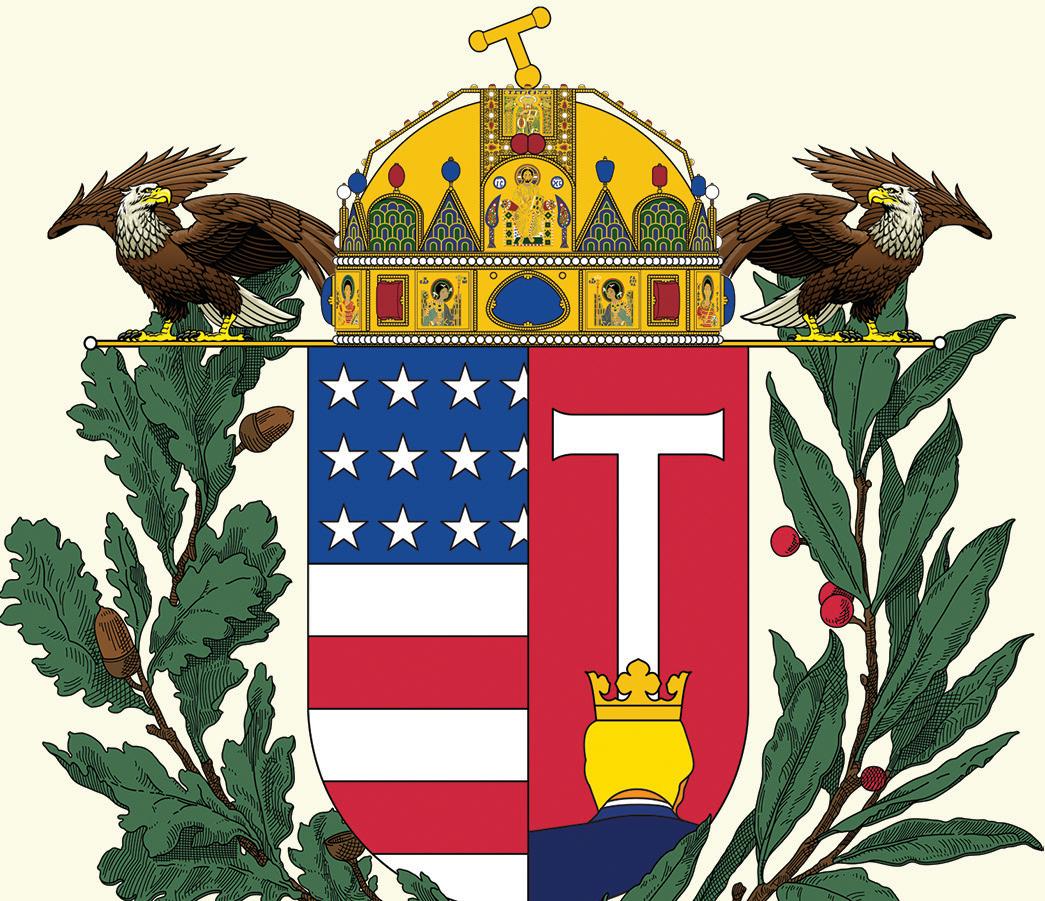
Flashy hotels and upmarket restaurants now dominate the center of Budapest, a city once better known for its shabby facades. New monuments have sprung up in the center of town too. One of them, a pastiche of the Vietnam War memorial in Washington, D.C., mourns Hungary's lost 19th-century empire. Instead of war dead, the names of formerly “Hungarian” places—cities and villages that are now in Romania, Slovakia, Ukraine, Poland—are engraved in long granite walls, solemnly memorialized with an eternal flame.
But the nationalist kitsch and tourist traps hide a different reality. Once widely perceived to be the wealthiest country in Central Europe (“the happiest barrack in the socialist camp,” as it was known during the Cold War), and later the Central European country that foreign investors liked most, Hungary is now one of the poorest countries, and possibly the poorest, in the European Union. Industrial production is falling year-over-year. Productivity is close to the lowest in the region. Unemployment is creeping upward. Despite the ruling party's loud talk about traditional values, the population is shrinking. Perhaps that's because young people don't want to have children in a place where two-thirds of the citizens describe the national education system as “bad,” and where hospital departments are closing because so many doctors have moved abroad. Maybe talented people don't want to stay in a country perceived as the most corrupt in the EU for three years in a row. Even the Index of Economic Freedom—which is published by the Heritage Foundation, the MAGA-affiliated think tank that produced Project 2025—puts Hungary at the bottom of the EU in its rankings of government integrity.

This story is from the May 2025 edition of The Atlantic.
Subscribe to Magzter GOLD to access thousands of curated premium stories, and 10,000+ magazines and newspapers.
Already a subscriber? Sign In
MORE STORIES FROM The Atlantic

The Atlantic
You Had to Be There
An emerging field of history asks if we can ever really understand how our forebears experienced love, anger, fear, and sorrow.

23 mins
January 2026

The Atlantic
By the Horns
The week before the biggest bullfight of her career, in Cádiz, Spain, this past July, 24-year-old Miriam Cabas posted a carefully produced video on Instagram.
1 mins
January 2026

The Atlantic
The New German War Machine
After World War II, Germany embraced pacifism as a form of atonement. Now the country is arming itself again.
18 mins
January 2026
The Atlantic
The Eloquence
The prime minister was watching a disaster movie when we found him.
4 mins
January 2026

The Atlantic
What's for Dinner, Mom?
The women who want to change the way America eats
12 mins
January 2026

The Atlantic
How Terror Works
A 1947 German novel explores the sometimes corrosive, sometimes energizing nature of fear.
8 mins
January 2026

The Atlantic
Yesterday's Idea of a Modern Man
Sam Shepard, a self-made cowboy, was also a poet of masculine angst.
7 mins
January 2026

The Atlantic
ACCOMMODATION NATION
America's colleges have an extra-time-on-tests problem.
11 mins
January 2026

The Atlantic
Respect the Drummer
A new history of rock, told through its overlooked heroes
5 mins
January 2026

The Atlantic
THE MOST POWERFUL MAN IN SCIENCE
WHY IS ROBERT F. KENNEDY JR. SO CONVINCED HE'S RIGHT?
42 mins
January 2026
Listen
Translate
Change font size