
Go Unlimited with Magzter GOLD
Get unlimited access to 10,000+ magazines, newspapers and Premium stories for just
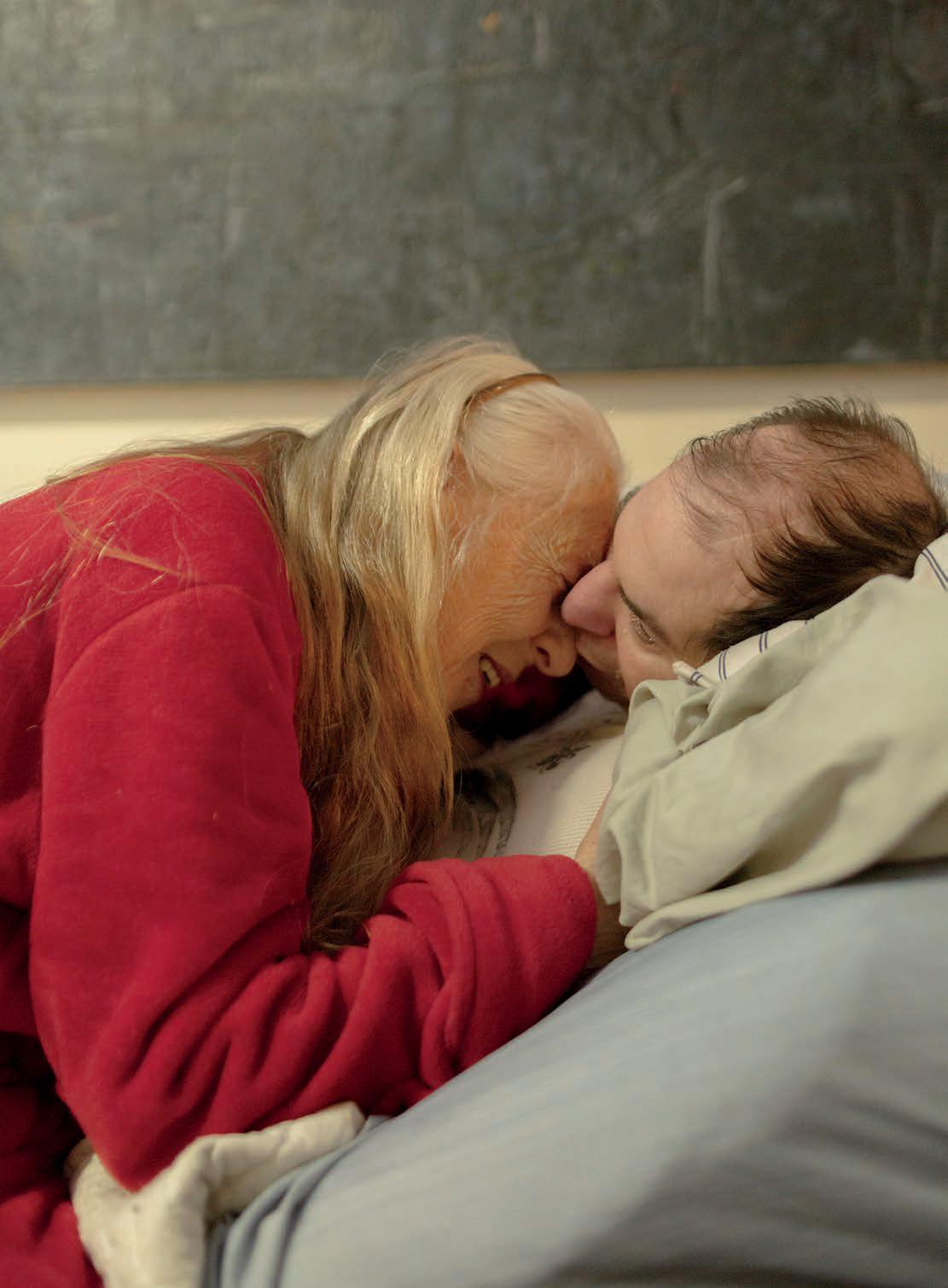
IS IAN STILL IN THERE?
The Atlantic
|June 2025
People in a vegetative state may be far more conscious than was once thought.
Inside the truck, the bodies of three teenage boys hurled forward, each with terrible velocity.
One boy died instantly; a second was found alive outside the car. The third boy, Ian Berg, remained pinned in the driver's seat, a bruise blooming on the right side of his forehead. He had smacked it hard-much harder than one might have guessed from the bruise alone-which caused the soft mass of his brain to slam against the rigid confines of his skull. Where brain met bone, brain gave way. The matter of his mind stretched and twisted, tore and burst.
When the jaws of life freed him from the wreckage, Ian was still alive, but unconscious. "Please don't die. Please don't die.
Please don't die," his mother, Eve Baer, pleaded over him at the hospital. She imagined throwing a golden lasso around his foot to keep him from floating away.
And Ian didn't die. After 17 days in a coma, he finally opened his eyes, but they flicked wildly around the room, unable to sync or track. He could not speak. He could not control his limbs.
The severe brain injury he'd suffered, doctors said, had put him in a vegetative state. He was alive, but assumed to be cognitively gone-devoid of thought, of feeling, of consciousness.
Eve hated that term, vegetative-an "unhuman-type classification," she thought. If you had asked her then, in 1986, she would have said she expected her 17-year-old son to fully recover. Ian had been handsome, popular, in love with a new girlfriend-the kind of golden boy upon whom fortune smiles. At school, he was known as the kid who greeted everyone, teachers included, with a hug. He and his two friends in the car belonged to a tight-knit group of seniors. But on the day he would have graduated that June, Ian was still lying in a hospital bed, his big achievement being that he'd finally made a bowel movement.


This story is from the June 2025 edition of The Atlantic.
Subscribe to Magzter GOLD to access thousands of curated premium stories, and 10,000+ magazines and newspapers.
Already a subscriber? Sign In
MORE STORIES FROM The Atlantic

The Atlantic
You Had to Be There
An emerging field of history asks if we can ever really understand how our forebears experienced love, anger, fear, and sorrow.

23 mins
January 2026

The Atlantic
By the Horns
The week before the biggest bullfight of her career, in Cádiz, Spain, this past July, 24-year-old Miriam Cabas posted a carefully produced video on Instagram.
1 mins
January 2026

The Atlantic
The New German War Machine
After World War II, Germany embraced pacifism as a form of atonement. Now the country is arming itself again.
18 mins
January 2026
The Atlantic
The Eloquence
The prime minister was watching a disaster movie when we found him.
4 mins
January 2026

The Atlantic
What's for Dinner, Mom?
The women who want to change the way America eats
12 mins
January 2026

The Atlantic
How Terror Works
A 1947 German novel explores the sometimes corrosive, sometimes energizing nature of fear.
8 mins
January 2026

The Atlantic
Yesterday's Idea of a Modern Man
Sam Shepard, a self-made cowboy, was also a poet of masculine angst.
7 mins
January 2026

The Atlantic
ACCOMMODATION NATION
America's colleges have an extra-time-on-tests problem.
11 mins
January 2026

The Atlantic
Respect the Drummer
A new history of rock, told through its overlooked heroes
5 mins
January 2026

The Atlantic
THE MOST POWERFUL MAN IN SCIENCE
WHY IS ROBERT F. KENNEDY JR. SO CONVINCED HE'S RIGHT?
42 mins
January 2026
Listen
Translate
Change font size