
Go Unlimited with Magzter GOLD
Get unlimited access to 10,000+ magazines, newspapers and Premium stories for just
Try GOLD - Free
Hume's Problem of Induction
Philosophy Now
|February/March 2024
Patrick Brissey exposes a major unprovable assumption at the core of science.
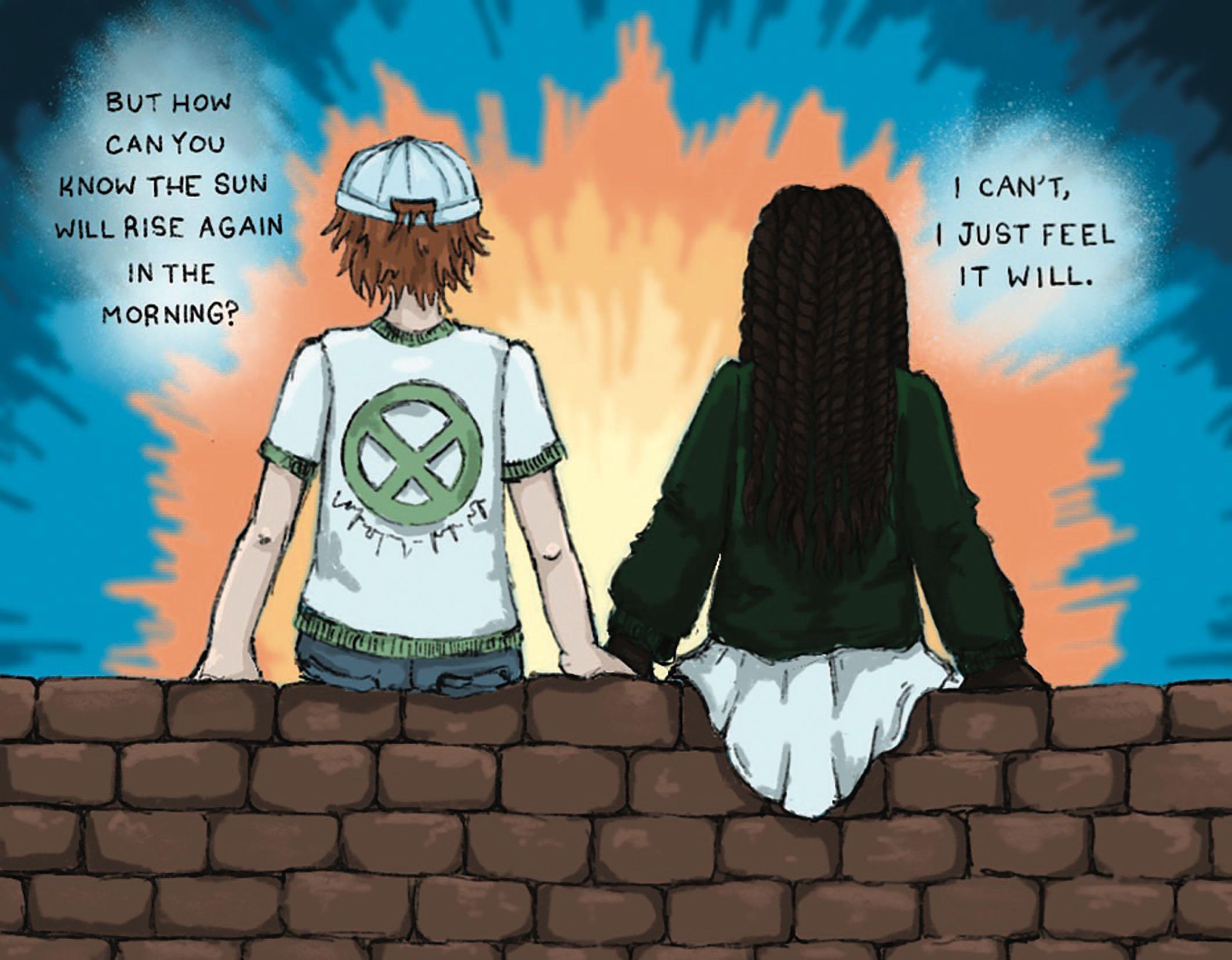
Will the sun rise tomorrow? The answer seems simple: an emphatic “Yes!” But how do you know? We can imagine the following commonsense response: “Well, every morning, the sun rises; atleast from my perspective. Wait until tomorrow; you’ll see!” The reasoning is that, based on past observations, we know that the sun will more than likely rise in the morning. Notice that this conclusion is not certain: the argument is not a purely logical deduction. There are, after all unlikely science fiction scenarios where the sun is suddenly destroyed. These scenarios show that the claim the sun will rise in the morning is possibly false. Despite this, there seems to be a very good probability that it will rise.
In his Enquiry Concerning Human Understanding (1748), David Hume (1711-1776) asserts that even this argument is not good. Hume thinks the skeptical answer – ‘We Don’t Know!’ – is the logical response to this sort of inductive (past-experience-based) argument. For him, we ought to withhold belief on inductive assertions about the future, even over such likely questions as whether the sun will rise in the morning. But perhaps this does not seem right to you: We all know that the sun will rise in the morning, don’t we?
Let’s see how Hume gets to his conclusion.
The ‘Future Will Resemble the Past’ Principle
Imagine someone playing a game of pool. She hits the cue ball, and it collides with the eight ball. What should happen next?
Based on past experience, one would think that the eight ball will travel in a straight line away from the cue ball until impeded by another object. But this is only one hypothesis. Consider the following alternative hypotheses:
Hypothesis 1

This story is from the February/March 2024 edition of Philosophy Now.
Subscribe to Magzter GOLD to access thousands of curated premium stories, and 10,000+ magazines and newspapers.
Already a subscriber? Sign In
MORE STORIES FROM Philosophy Now

Philosophy Now
Nosferatu
Stefan Bolea considers two very different artistic approaches to love and death.

6 mins
April/May 2025

Philosophy Now
Heidegger's Ghost
Raymond Tallis wonders where Heidegger's body went when he was philosophising.
7 mins
April/May 2025

Philosophy Now
Is Comedy Good For Us?
Damaris Stock has a laugh with Plato and friends.
10 mins
April/May 2025
Philosophy Now
In Defense of Idleness
Wendell O'Brien says, 'Just Don't Do It'.
10 mins
April/May 2025
Philosophy Now
Leaving Nothing to Chance by Carl Knight
LEAVING NOTHING TO Chance (2025) by Carl Knight, is an informed, proficient and lucid defence of luck egalitarianism.
3 mins
April/May 2025
Philosophy Now
Star Maker by Olaf Stapledon
THE 1937 SCIENCE FICTION novel Star Maker was written by philosophy professor Olaf Stapledon in the dark days as Europe awaited the onslaught of Nazi Germany. This casts a shadow over the whole book.
6 mins
April/May 2025
Philosophy Now
Love & Emptiness in the Sufi Tradition
Medha Ninad Tambe meditates on Rumi, love and self-negation.
7 mins
April/May 2025

Philosophy Now
The Hedgehog's Dilemma: A Metaphor About the Challenges of Human Intimacy
Krishna Chaubey explains Arthur Schopenhauer's poignant thought experiment.
4 mins
April/May 2025
Philosophy Now
The Mirror & the Flame
Rebwar Fatah imagines Attar's & Hegel's shared path.
4 mins
April/May 2025
Philosophy Now
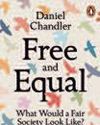
Free and Equal by Daniel Chandler
DANIEL CHANDLER, AN economist and philosopher based at the London School of Economics, begins Free and Equal: What Would a Fair Society Look Like? (2023) by asking an intriguing question. How is it, he wonders, that the most influential political philosopher of the last century has had almost no practical impact on politics or policy? The philosopher in question is John Rawls, whose magnum opus was A Theory of Justice (1971).
5 mins
April/May 2025
Listen
Translate
Change font size