Try GOLD - Free
D-DAY LANDING CRAFT
History of War
|Issue 133
Over 4,000 Allied landing craft took part in the Normandy Landings with a huge range of designs created for specific roles and capabilities

LANDING CRAFT, VEHICLE, PERSONNEL LCVP
Often referred to as a Higgins Boat after its designer, Higgins Industries of New Orleans, the LCVP was the standard American assault craft on D-Day. The three crew were a coxswain (steering), an engineer and a deck hand. Over 800 LCVPs were used at Normandy, about half of them in fact by British forces, not in the assault but for unloading follow-up troops. The British equivalent was the LCA (Landing Craft, Assault).
Both types had pros and cons but each nation tended to prefer the homedesigned craft. The largest US transport ships (designated APA: Auxiliary Personnel, Attack) could carry 25-30 LCVPs, though that was only enough to land a proportion of the 1,200 or more troops on board. US-crewed LSTs (Landing Ship, Tank) each carried up to six LCVPs, and those from LSTs arriving earlier on D-Day were an important addition to the available assault craft.
Landing craft had a crucial role in the Normandy Landings, beginning on 6 June 1944 (D-Day). Although today they tend to be overlooked, that was certainly not the case at the time. Allied political and military leaders frequently debated how best to build or source sufficient landing craft for this vital operation.
An amphibious landing on an enemy-defended beach required specialist landing craft. These types were generally designed to be driven ashore, and then withdrawn after unloading troops or vehicles. Some types had other functions such as control or fire support.
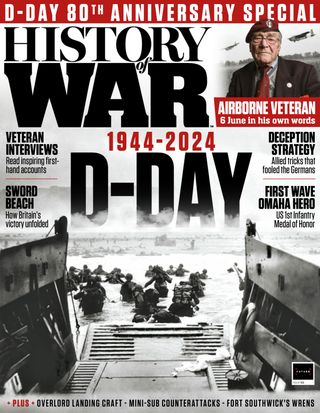

This story is from the Issue 133 edition of History of War.
Subscribe to Magzter GOLD to access thousands of curated premium stories, and 10,000+ magazines and newspapers.
Already a subscriber? Sign In
MORE STORIES FROM History of War
History of War
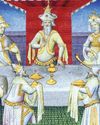
VENICE AND THE MONGOLS
FOR THOSE INTERESTED IN MEDIEVAL TRADE AND HOW IT CHANGED EUROPE, THIS BOOK IS INDISPENSABLE

1 mins
Issue 160
History of War
GLAMORGAN HISTORY WALKS
Graham Loveluck-Edwards limbers up for more of his award-winning walking tours
1 min
Issue 160
History of War
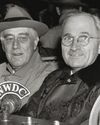
THE VISIONARIES
A PANORAMIC EXPOSÉ OF AMERICA'S SECRET PREPARATIONS FOR WAR AND PEACE TOLD THROUGH THE EYES OF ROOSEVELT AND TRUMAN
1 mins
Issue 160
History of War
ZHUKOV PREPARES FOR THE WORST
How Russia’s foremost soldier planned offensive and defensive operations in a doomed attempt to counter the Nazi threat
7 mins
Issue 160
History of War
CHURCHILL'S PIRATES
HOW A RAG-TAG NAVY SAILED TO WAR IN A FLEET OF CONVERTED FISHING BOATS AND PLEASURE CRAFT
1 mins
Issue 160
History of War
ALBATROS D.VA
The last, but perhaps least successful, of Germany's line of Albatros fighters during the First World War
3 mins
Issue 160
History of War
WAR IN FOCUS
PAGEANT QUEEN 18 June 1949
1 min
Issue 160
History of War
OPERATION BOOTS: INSIDE BRITAIN'S IRANIAN COUP
When Tehran's parliament nationalised its oil industry, the British launched a series of diplomatic and covert actions, to undermine and ultimately topple the government
3 mins
Issue 160
History of War
PURGED TO THE BONE
Robbed of many of its finest officers by Stalin’s paranoia, a weakened Red Army faced the prospect of destruction in 1941
8 mins
Issue 160
History of War
HEROES OF THE VICTORIA CROSS ANTHONY CECIL CAPEL MIERS
Maintaining position in enemy-patrolled waters for 17 hours, this submarine commander coolly waited for dawn before despatching two merchant vessels with torpedoes and making his escape
6 mins
Issue 160
Listen
Translate
Change font size