
Go Unlimited with Magzter GOLD
Get unlimited access to 10,000+ magazines, newspapers and Premium stories for just
CONFEDERATION OF THE RHINE
History of War
|Issue 117
After dissolving the Holy Roman Empire, Napoleon established a pro-French military alliance of German states that loosely resembled a united Germany
-

After Napoleon defeated Austria and Russia at the Battle of Austerlitz on 2 December 1805 he was the ‘Master of Europe’ and could dictate terms on his continental enemies. Upon hearing the news of Austerlitz, British Prime Minister William Pitt referred to a map of Europe and said to an aide “Roll up that map; it will not be wanted these ten years.”
Pitt’s words were prescient, particularly when it came to Germany. In July 1806, 16 German states joined together in a new body called the Confederation of the Rhine. Overseen by Napoleon, the French emperor became the hereditary protector of the new Confederation. There was also a German prince-primate who presided over a quasi-parliamentary body known as the Diet.
The Confederation was designed as a collection of German satellite states that supported the First French Empire. To maintain this disparate group, Napoleon was constitutionally canny. He dissolved the ancient Holy Roman Empire, which meant that the German states no longer held nominal allegiance to Habsburg Austria. Some states were given higher statuses, such as Bavaria and Württemberg, which were upgraded to kingdoms. Others became Model States that were directly ruled by Napoleon’s relatives. The Kingdom of Westphalia was ruled by Napoleon’s youngest brother Jérôme Bonaparte, while the Grand Duchy of Berg was governed by the emperor’s brother-in-law Marshal Joachim Murat.
The Confederation was at its largest in 1808 when it included 36 states of varying sizes. As well as kingdoms and duchies, it consisted of 17 principalities and city-states such as Hamburg, Lübeck and Bremen.

This story is from the Issue 117 edition of History of War.
Subscribe to Magzter GOLD to access thousands of curated premium stories, and 10,000+ magazines and newspapers.
Already a subscriber? Sign In
MORE STORIES FROM History of War

History of War
MORE MISS MONEYPENNY THAN MATA HARI WOMEN SPIES THROUGHOUT THE DECADES
THEY LOOKED LIKE ORDINARY HOUSEWIVES, MOTHERS AND SECRETARIES IN SENSIBLE CLOTHES AND STURDY SHOES. BUT THESE INNOCUOUS WOMEN WERE EMBARKED ON COURAGEOUS AND OFTEN TREACHEROUS MISSIONS AS SECRET AGENTS

4 mins
Issue 153
History of War
THE END OF GREAT POWERS
Full-spectrum analysis of a state's economy, technology, leadership, society and alliances could be a superior way of predicting battlefield performance
3 mins
Issue 153
History of War
THE BATTLE OF JERUSALEM 9 JANUARY - 11 DECEMBER 1917
During a campaign that lasted nearly a year, British and Arab forces defeated the Ottoman Turks and entered the ancient city
7 mins
Issue 153
History of War
QUEEN ELIZABETH CLASS BATTLESHIP
These five super-dreadnoughts set the standard for early 20th century warship design in speed, firepower and protection and were the first fast battleships of the age
4 mins
Issue 153
History of War
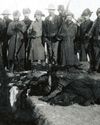
THE MASSACRE AT WOUNDED KNEE
In 1890, US troops killed more than 250 Lakota, at a location that remains the focus of resistance and dark controversy
10 mins
Issue 153
History of War
BORN IN NORTH AFRICA
HOW THE TUNISIA CAMPAIGN FORGED THE 'SPECIAL RELATIONSHIP'
3 mins
Issue 153
History of War
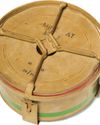
ANTI-TANK MINE
This lightweight General Service Mk V device could immobilise Hitler's heavy tanks and was used during fighting in Northwest Europe
1 mins
Issue 153
History of War
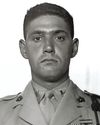
HEROES OF THE MEDAL OF HONOR BALDOMERO LOPEZ
During the daring landings at Inchon in 1950, this first lieutenant sacrificed his life to save his US Marine comrades
6 mins
Issue 153
History of War
NORTH KOREA'S ROCKET REVOLUTION
After the peninsula was divided by a long-term ceasefire, Pyongyang and Seoul raced to build weapons that could obliterate each other
4 mins
Issue 153
History of War
THE GREAT TRAIN RAID THE MOST DARING SAS MISSION OF WWII
DAMIEN LEWIS' LATEST SAS ADVENTURE IS CHARACTERISTICALLY FAST-PACED AND ACTION-PACKED
2 mins
Issue 153
Translate
Change font size