Science

How It Works UK
Scientists pull up riches from the ‘Holy Grail of shipwrecks’
Valuable shipwrecked treasures are seeing the light of day after they sank along with the San José galleon off the coast of Colombia more than 300 years ago. The incredibly well-preserved items that were retrieved, including a cannon, a porcelain cup and three coins, are just a taste of the wreck's vast riches. The galleon is often dubbed 'the Holy Grail of shipwrecks' as it went down with a huge cargo of 180 tonnes of gold, silver and gems that was said to be worth around £13.5 billion ($18.2 billion) in 2018. The recovery is part of an ongoing project by the Colombian government to investigate the wreck and recover the precious artefacts. The recovery of the objects “opens the possibility for citizens to approach, through material testimony, the history of the San José galleon,” said Alhena Caicedo Fernández of the Colombian Institute of Anthropology and History.
1 min |
Issue 211
How It Works UK
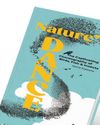
NATURE'S DANCE
DO THE FOXTROT, CRAB STEP, FISH WALK AND BUNNY HUG
1 min |
Issue 211

How It Works UK
LASERS TARGET THETARANTULA NEBULA WITH 'ARTIFICIAL STARS'
In November 2025, the Very Large Telescope (VLT) used its powerful interferometer, the VLTI, as part of its GRAVITY+ upgrade.
1 min |
Issue 211
How It Works UK
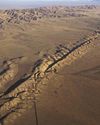
FAULT LINES AROUND THE WORLD
Discover the dangers and benefits of Earth's cracked crust. Is there a fault line beneath your feet?
2 min |
Issue 211
How It Works UK
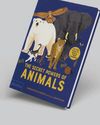
THE SECRET POWERS OF ANIMALS
AN INTERACTIVE INTRODUCTION TO TEN AMAZING ANIMALS AND THEIR SPECIAL ABILITIES
1 min |
Issue 211
How It Works UK
Human refuse is ‘kick-starting’ the domestication of raccoons
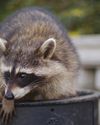
City-dwelling raccoons are showing early signs of domestication. Using photos uploaded to the citizen science platform iNaturalist, researchers found that raccoons in urban environments had shorter snouts than their rural counterparts. The difference could be one of several traits that make up 'domestication syndrome', the scientists wrote in a study published in the journal Frontiers in Zoology. Domesticated animals typically become less aggressive towards humans over time. They gradually develop a relationship in which people provide for them in exchange for resources, such as meat and milk from livestock or labour from herding dogs. That process often involves selectively breeding animals for certain desirable traits, but it doesn't always begin that way. \"I wanted to know if living in a city environment would kick-start domestication processes in animals that are currently not domesticated,\" said Raffaela Lesch, a zoologist at the University of Arkansas at Little Rock.
1 min |
Issue 211

How It Works UK
Most modern dogs have wolf DNA
Most modern dog breeds have small amounts of wolf ancestry from long after dogs were domesticated. The wolf DNA isn't left over from when dogs and wolves diverged; instead, it most likely came from interbreeding in the past few thousand years.
2 min |
Issue 211
How It Works UK
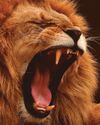
Scientists discover a new type of lion roar
Scientists have discovered a new type of lion roar, the intermediate roar, which is shorter and lower pitched than the animal's iconic full-throated roar. Researchers found that these intermediate roars always follow full-throated roars, revealing that lion vocalisations are more complex than thought. “The full-throated roar is an explosion of sound – it’s loud and complex and arcs in pitch,” said Jonathan Growcott, a doctoral student at the University of Exeter. “The intermediary roar differs by being a flatter sound with less variation.”
1 min |
Issue 211

How It Works UK
HOME DELIVERY FOR ISS RESIDENTS
On 29 October 2025, the HTV-X1 cargo spacecraft reached the International Space Station (ISS). Launched by the Japan Aerospace Exploration Agency (JAXA), in this image the spacecraft is being gripped by the ISS' Canadarm2 robotic arm. It delivered vital equipment for cardiovascular research and spacesuit maintenance. While on board, the ISS astronauts are studying how blood circulates between vessels in the human body in microgravity.
1 min |
Issue 211
How It Works UK
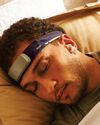
20 WEARABLE HEALTH TRACKERS
Whether you strap a wellness coach to your wrist or weave subtle sensors into your clothes, these devices are revolutionising how we track our health
9 min |
Issue 210
How It Works UK
SUPERPOWERED PLANTS
The world of plants is vibrant and diverse, just like this book.
1 min |
Issue 210
How It Works UK
SECRET STORIES OF LOST BEASTS
We're all aware of the mighty dinosaurs that once roamed Earth, but there are so many weird and wonderful species that have been lost to time.
1 min |
Issue 210

How It Works UK
ALL ABOUT BLIMPS
Is it a bird? Is it a spaceship? No... it's a non-rigid airship
2 min |
Issue 210
How It Works UK
SUPER QUESTERS MISSION: RAINFOREST MAGIC
Join adventurers Leo, Lilli and Bea as they transform into superheroes and journey to the rainforest in the pursuit of knowledge.
1 min |
Issue 210
How It Works UK
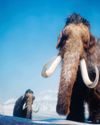
HOW THE MIGHTY MAMMOTH RULED THE ICE AGE
Meet the prehistoric giants that roamed the Arctic Circle thousands of years ago
4 min |
Issue 210
How It Works UK
Have they found LIFE ON MARS?
Although it's by no means certain, scientists are slowly accumulating evidence that life once existed on the Red Planet
2 min |
Issue 210
How It Works UK
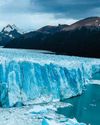
HOW FAST DO GLACIERS MOVE?
The speed at which a glacier flows depends on its mass, the depth and slope of the underlying rock bed and friction.
1 min |
Issue 210

How It Works UK
HOW IN-FLIGHT WI-FI WORKS
This technology allows you to scroll to your heart's content while killing time at cruise altitude
3 min |
Issue 210
How It Works UK
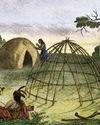
HOW WIGWAMS WERE BUILT
Discover the construction and living conditions inside these traditional domed dwellings
1 min |
Issue 210
How It Works UK
COULD WE BUILD... AVATAR'S LINK UNIT?
Projecting our consciousness into other bodies and walking on alien worlds might not be such a far-flung concept
7 min |
Issue 210
How It Works UK
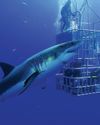
When did we first cage dive with sharks?
The first purposely shark-proof cage was built in the mid-1960s by Rodney Fox, an Australian who had survived a violent shark attack just a few years earlier.
1 min |
Issue 210
How It Works UK
EARTH'S BIGGEST SHOW-OFFS
It's a funny thing to think of the natural wonders of planet Earth as showoffs, but if you're ever lucky enough to witness the awe-inspiring scale of the Grand Canyon, once you've picked your jaw up out of the red dust, the whole mile deep, 18-mile-wide, billions-of-years-old rock schtick starts to feel faintly ridiculous.
1 min |
Issue 210

How It Works UK
What is the Encke Gap?
Saturn's beautiful rings are made up of countless individual ringlets, but the distribution of ringlets is not even, and there are several distinct gaps.
1 min |
Issue 210

How It Works UK
WHAT'S THE MOST DANGEROUS SPORT?
Defining the world's most dangerous sport isn't straightforward, largely due to a lack of statistics and reluctance among sport governing bodies to publicise injuries and deaths.
1 min |
Issue 210

How It Works UK
Fabulous FESTIVE flora
Discover what makes these plants popular around Christmas time
4 min |
Issue 210
How It Works UK
WHY DO MY EARS FEEL FUNNY WHEN I GO THROUGH A TUNNEL ON A TRAIN?
Your ears often 'pop' because the tunnel changes the air pressure around the train.
1 min |
Issue 210

How It Works UK
Antarctic ship Endurance had structural deficiencies
Endurance, which sank in Antarctica in 1915, wasn't as well built for a polar voyage as previously thought, and its owner was likely aware of its shortcomings.
2 min |
Issue 210
How It Works UK
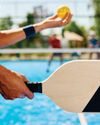
Pickleball-related eye injuries are on the rise
Eye injuries related to pickleball have increased at an “alarming rate” as the sport's popularity has exploded in the US, a new study finds.
2 min |
Issue 210
How It Works UK
THE CURIOUS LIFE OF CECILIA PAYNE
This tells the story of the little girl who grew up to be renowned astronomer and astrophysicist Cecilia Payne.
1 min |
Issue 210

How It Works UK
HOW GROWS
Why do we get hair on certain parts of our bodies, and can we get it back once it's gone?
4 min |