
Mit Magzter GOLD unbegrenztes Potenzial nutzen
Erhalten Sie unbegrenzten Zugriff auf über 9.000 Zeitschriften, Zeitungen und Premium-Artikel für nur
Versuchen GOLD - Frei
SageMath: A First Look at Public-Key Cryptography
Open Source For You
|August 2025
In the last article in this SageMath series (published in the March 2025 issue of Open Source For You), we concluded our discussion on symmetric-key encryption. As promised, this article will focus on public-key cryptography (PKC). However, before diving into that, we will briefly examine some recent developments in the field of quantum computing. We will also introduce the concept of cryptanalysis to understand how these emerging trends could have potentially catastrophic implications for cybersecurity.
-

A few months ago, I had a d éjà vu moment when Microsoft announced the development of a quantum computing chip. It reminded me of an earlier experience: while I was writing a series of articles on artificial intelligence for OSFY, something historic happened. On 30th November 2022, ChatGPT was made publicly available. I started experimenting with it immediately and managed to publish an article featuring ChatGPT in the January 2023 issue of OSFY. I still proudly claim — though I have no concrete proof — that this was the first mention of ChatGPT in a printed magazine in India.
Fast forward to the present: I am now writing a series on SageMath and currently focusing on cybersecurity. And right on cue, along comes an invention that could potentially upend many foundational aspects of cybersecurity as we know it.
Majorana 1: A milestone in quantum computing?
Microsoft’s new quantum chip, named Majorana 1, is being hailed as a breakthrough. The chip is said to support quantum superposition and entanglement at room temperature, making room-temperature qubits a practical reality — something that, until now, seemed decades away.
The chip is named after Ettore Majorana, a brilliant Italian physicist often described as “the next Einstein.” Majorana mysteriously disappeared in 1938 at the age of 31, and his legacy includes the theoretical concept of Majorana fermions — particles that are their own antiparticles. Microsoft’s approach to topological quantum computing is believed to leverage ideas inspired by these fermions, which are thought to provide enhanced stability against quantum decoherence — one of the key challenges in building scalable quantum systems.


Diese Geschichte stammt aus der August 2025-Ausgabe von Open Source For You.
Abonnieren Sie Magzter GOLD, um auf Tausende kuratierter Premium-Geschichten und über 9.000 Zeitschriften und Zeitungen zuzugreifen.
Sie sind bereits Abonnent? Anmelden
WEITERE GESCHICHTEN VON Open Source For You

Open Source For You
Sending IoT Sensor Data to Public or Private Servers
This IoT system shows a simple and effective way to send sensor data using an ESP8266 microchip.

3 mins
March 2026

Open Source For You
Popular FOSS Tools for LLM Observability, Monitoring and Evaluation
This overview of popular tools for monitoring large language models also sheds light on how LLM-as-a-judge enhances their performance.
2 mins
March 2026
Open Source For You
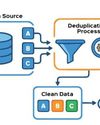
Data Deduplication Done the Right Way
Deduplication helps to save space on Linux-based storage systems. Choose the right platform and check whether it meets your goals.
6 mins
March 2026

Open Source For You
The Relevance of Rubber Duck Debugging in the Age of AI
Discover why rubber duck debugging is a powerful process today. There's also a step-by-step guide on how to use it in the age of artificial intelligence.
4 mins
March 2026

Open Source For You
GitHub weighs turning off pull requests as AĬ slop floods projects
GitHub has formally acknowledged that AI-generated 'slop' is overwhelming open source projects, forcing maintainers to sift through poor pull requests (PRS), abandoned submissions and guideline violations - and is now considering restricting or even disabling pull requests, the core mechanism of open collaboration.
1 min
March 2026

Open Source For You
Global banks are deploying Ethereum's Layer-2 stack
Banks are standardising on Ethereum's open source stack as production financial infrastructure, shifting from experimental pilots and proprietary blockchains to live Layer-2 networks for tokenised deposits, interbank payments, and cross-border settlement.
1 min
March 2026

Open Source For You
OpenClaw's creator joins OpenAl
In a move that reinforces its commitment to open development rather than acquisition, OpenAI has brought Peter Steinberger, founder of OpenClaw, into the company while placing the popular AI agent under a foundation structure to ensure it remains open source.
1 min
March 2026
Open Source For You
LibreOffice 26.2 comes with native Markdown support
LibreOffice 26.2 has been released by The Document Foundation, strengthening its position as a fully free and open source office suite for Windows, macOS, and Linux, with support for more than 120 languages.
1 min
March 2026

Open Source For You
Indian government mandates labelling of Al-generated content and quicker deletion of illegal deepfakes
India has introduced sweeping AI content rules that immediately place pressure on social platforms and open source AI ecosystems to label, trace and rapidly remove AI Open ource synthetic media at scale.
1 min
March 2026
Open Source For You
I2C and I3C: How Modern Devices Communicate
I3C and I2C are both two-wire communication protocols that help exchange data between multiple devices. While I3C preserves the simplicity of I2C, it introduces new features suited for today's sensor-rich devices.
8 mins
March 2026
Listen
Translate
Change font size