Versuchen GOLD - Frei
The Neuroscience of Morality
Scientific American
|November 2025
One immoral act begets anotherbut so does an act of moral courage

IT STARTED WITH AN INNOCENT MISTAKE.
Texas entrepreneur Chris Bentley had founded a company to buy drilling rights for oil and gas. He realized that a batch of letters he'd sent to landowners, offering to lease their rights, had incorrect information, including monetary amounts and other details.
But instead of correcting the errors, Bentley doubled down, not wanting to admit his mistake. When the letters failed to secure enough land leases to generate big profits, Bentley tried to make up the difference by sinking his investors' money into new, risky deals, some of which faltered and drained the coffers of his company, Bellatorum Resources. Then, as the company's cash flow dried up, Bentley started putting bogus transactions on the books to keep his employees paid. He didn't stop until he'd committed $40 million worth of fraud. “I basically did the age-old ‘rob Peter to pay Paul,’” says Bentley, who was recently released from prison into home confinement. “Everything started going downhill.”
Moral death spirals such as Bentley's happen in every sphere of public life, from business to local government to the highest levels of political leadership. The deterioration often begins with a small dishonest act—such as Bentley's decision to bluff his way through what had been an honest error—and mounts until it reaches a point of no return. Some escalating crimes are financial; others progress toward human rights violations or worse.
Brain and psychology researchers are delving into how slides down the moral slope begin and what keeps them going. Initially we may be horrified at the thought of lying, cheating or hurting someone. But as we engage in wrongdoing over and over, our brains tend to grow numb to it. It’s harder to embezzle or kill for the first time than it is for the tenth.

Diese Geschichte stammt aus der November 2025-Ausgabe von Scientific American.
Abonnieren Sie Magzter GOLD, um auf Tausende kuratierter Premium-Geschichten und über 9.000 Zeitschriften und Zeitungen zuzugreifen.
Sie sind bereits Abonnent? Anmelden
WEITERE GESCHICHTEN VON Scientific American

Scientific American
Dirty Little Secrets
Extremophile molds are invading art museums and devouring their collections. Stigma and climate change have fueled their spread

16 mins
February 2026
Scientific American
Archaeology Is Reviving the Smell of History
How reconstructing long-lost smells connects us to the past
6 mins
February 2026

Scientific American
Heal Injuries Faster
Toss out the old advice that rest is the best recovery strategy
4 mins
February 2026

Scientific American
Can a Time Capsule Outlast Geology?
A ridiculous but instructive thought experiment involving deep time, plate tectonics, erosion and the slow death of the sun
17 mins
February 2026
Scientific American
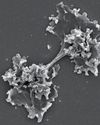
Fiery Amoeba
A newfound organism thrives in record-breaking heat
2 mins
February 2026

Scientific American
50, 100 & 150 Years
GIANT ATOMS
3 mins
February 2026

Scientific American
Nature's Tile Shop
Life keeps evolving these geometric patterns
2 mins
February 2026
Scientific American
Battle of the Breeds
A large dataset shows that some dog stereotypes are based in reality, and others might be unfair characterizations
1 min
February 2026
Scientific American
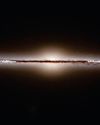
The Milky Way's Disk Keeps Getting Weirder
The disk of our galaxy is not flat but warped and waving
5 mins
February 2026
Scientific American
A Winning Loser
If the cards shown here are rearranged to form four new poker hands of five cards each, what is the low- est possible winning or tying hand?
1 min
February 2026
Listen
Translate
Change font size