يحاول ذهب - حر
The Neuroscience of Morality
November 2025
|Scientific American
One immoral act begets anotherbut so does an act of moral courage
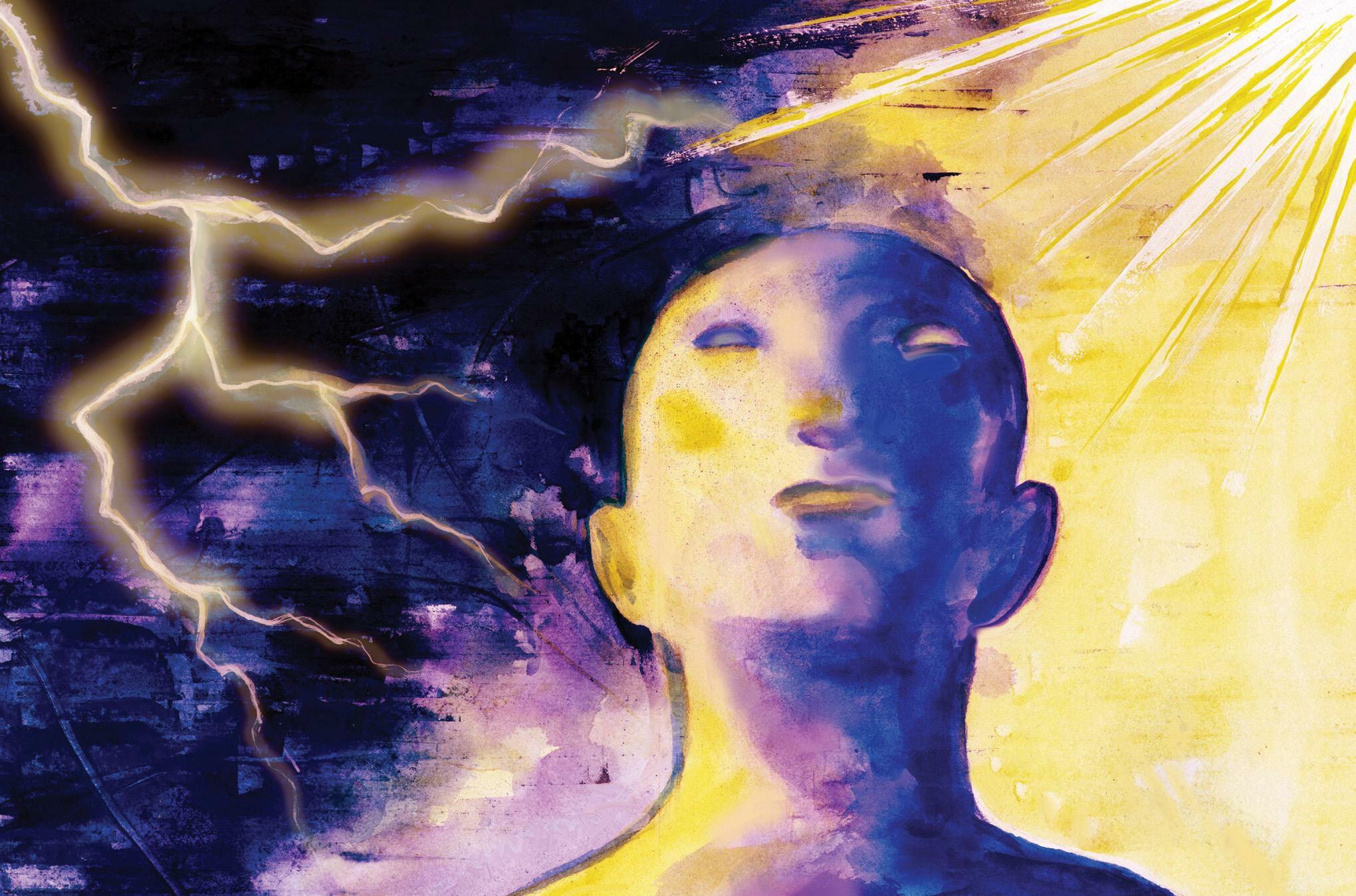
IT STARTED WITH AN INNOCENT MISTAKE.
Texas entrepreneur Chris Bentley had founded a company to buy drilling rights for oil and gas. He realized that a batch of letters he'd sent to landowners, offering to lease their rights, had incorrect information, including monetary amounts and other details.
But instead of correcting the errors, Bentley doubled down, not wanting to admit his mistake. When the letters failed to secure enough land leases to generate big profits, Bentley tried to make up the difference by sinking his investors' money into new, risky deals, some of which faltered and drained the coffers of his company, Bellatorum Resources. Then, as the company's cash flow dried up, Bentley started putting bogus transactions on the books to keep his employees paid. He didn't stop until he'd committed $40 million worth of fraud. “I basically did the age-old ‘rob Peter to pay Paul,’” says Bentley, who was recently released from prison into home confinement. “Everything started going downhill.”
Moral death spirals such as Bentley's happen in every sphere of public life, from business to local government to the highest levels of political leadership. The deterioration often begins with a small dishonest act—such as Bentley's decision to bluff his way through what had been an honest error—and mounts until it reaches a point of no return. Some escalating crimes are financial; others progress toward human rights violations or worse.
Brain and psychology researchers are delving into how slides down the moral slope begin and what keeps them going. Initially we may be horrified at the thought of lying, cheating or hurting someone. But as we engage in wrongdoing over and over, our brains tend to grow numb to it. It’s harder to embezzle or kill for the first time than it is for the tenth.

هذه القصة من طبعة November 2025 من Scientific American.
اشترك في Magzter GOLD للوصول إلى آلاف القصص المتميزة المنسقة، وأكثر من 9000 مجلة وصحيفة.
هل أنت مشترك بالفعل؟ تسجيل الدخول
المزيد من القصص من Scientific American

Scientific American
Sailing the Sun
By designing vertical panels that move in a gale, two Swedish inventors are unlocking a solar future for the windswept north

9 mins
March 2026
Scientific American
Covered in Bees
Ancient bees burrowed deep into discarded mammal jawbones
2 mins
March 2026
Scientific American
Fire Starters
Ancient humans were making fire 350,000 years earlier than thought
3 mins
March 2026
Scientific American
Relativity Revealed
Physicists have observed a bizarre prediction of special relativity for the first time
8 mins
March 2026

Scientific American
Everything You Wanted to Know about Polyamory (but Were Afraid to Ask
The practice is not a faddish excuse to sleep around, research shows. And it has deep roots in American culture
14 mins
March 2026
Scientific American
Let the Rivers Run
An investigation into the rights of nature
4 mins
March 2026

Scientific American
Hidden Proof
\"Effective zero knowledge\" beats long-standing cryptographic impossibilities
2 mins
March 2026
Scientific American
The Universe's Weirdest Optical Illusions
Sometimes the farther away an object is, the bigger it seems to be
4 mins
March 2026
Scientific American
Earthquake Life
Yellowstone quakes spark bursts of microbial growth underground
2 mins
March 2026

Scientific American
Living in the COPILOT SOCIETY
The promise and peril of artificial intelligence everywhere
2 mins
March 2026
Listen
Translate
Change font size