Versuchen GOLD - Frei
The Mother of Depressions
Scientific American
|December 2025
Postpartum depression is a leading cause of death among new mothers. A new type of drug offers better, faster treatment
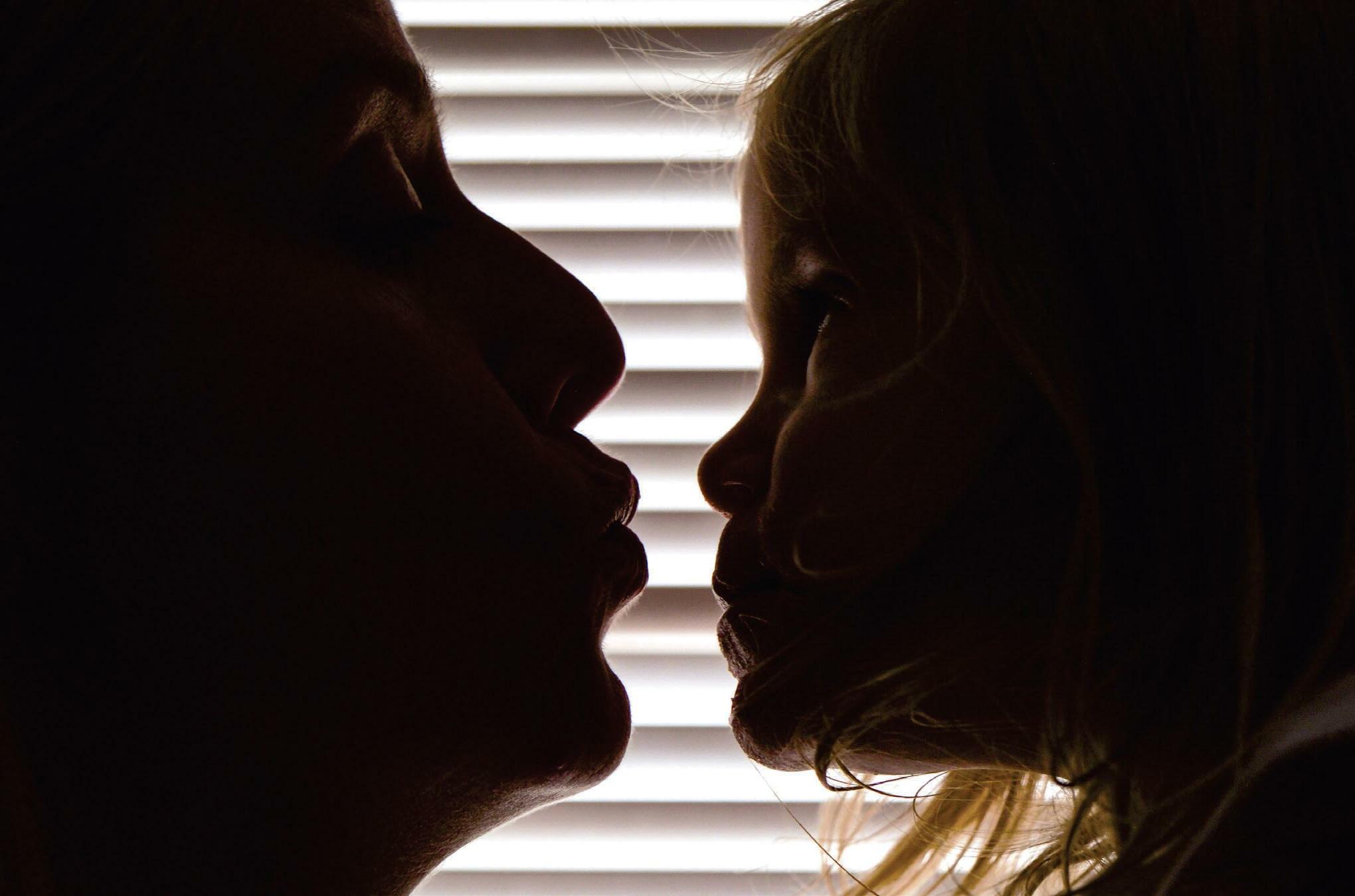
Kristina Leos (left), who went through severe depression after the birth of her daughter Victoria, leans in to kiss her child.
POSTPARTUM DEPRESSION DESCENDED on Kristina Leos like a heavy fog that separated her from everyone she loved. She could see her newborn baby girl, her two older kids and her husband, but she felt like a ghost passing through their world. “I was going through the motions, but it was like I was looking down on my family,” she recalls.
Leos, 40, a nurse who lives in Midlothian, Tex., tried several different antidepressants and doses. None helped. She messaged a friend, anxious that she was unfit to be a mother. She even asked if they would take her new baby, Victoria. Although Leos never considered hurting her kids, there were times when she was driving home from work and wondered what it would be like to drive off a bridge. “I just had no fear of dying,” she says. “I didn’t care what happened.”
In December 2023, nine months after Leos gave birth to Victoria, her doctor told her they were running out of options. She was down to serious choices, including infusions of ketamine (a drug that alters the anatomy and activity of brain cells), electroconvulsive therapy or admission to a psychiatric hospital.
Then Leos remembered seeing something on social media about a new drug specifically for postpartum depression. Unlike older antidepressants such as Prozac, this medication worked on brain chemicals that are particularly affected by pregnancy. She asked her doctor about it, and they decided to give it a try. Leos began the medication on New Year’s Day 2024. Three days later her world shifted. “I was driving on the highway, and I could literally feel this huge cloud lifting over me,” she says. “And every day I got better and better.” The drug, called zuranolone and approved by the U.S. Food and Drug Administration in 2023, has since relieved depression in thousands of women.

Diese Geschichte stammt aus der December 2025-Ausgabe von Scientific American.
Abonnieren Sie Magzter GOLD, um auf Tausende kuratierter Premium-Geschichten und über 9.000 Zeitschriften und Zeitungen zuzugreifen.
Sie sind bereits Abonnent? Anmelden
WEITERE GESCHICHTEN VON Scientific American

Scientific American
Probiotic Hope and Hype
Despite their popularity, supplements with billions of \"good\" microbes help only a few illnesses, research shows

3 mins
January 2026

Scientific American
Mondays Really Are More Stressful
The start of the workweek can be a biologically measurable stressor, with consequences for long-term health that can stretch into retirement
4 mins
January 2026

Scientific American
Tiny Display
An e-paper breakthrough brings extremely high-resolution color
2 mins
January 2026
Scientific American
Fine-Feathered Snack
A bat's tracker documents a dramatic midair hunt
2 mins
January 2026

Scientific American
OUR ROBOTIC PICTURE
Will mechanical helpers ever be commonplace at home, at work and beyond?
11 mins
January 2026

Scientific American
"Use Your Words" Can Be Good for Kids' Health
Writing or expressing feelings can help adults mentally and physically. Kids are no different
5 mins
January 2026

Scientific American
Distant Diplomacy
Unrelated species “talk” and understand one another to avoid threats
2 mins
January 2026

Scientific American
Behind the Nobel
A 2025 winner reflects on the mysterious T cells that won him the prize
5 mins
January 2026

Scientific American
A Suite of Killers
Heart ailments, kidney diseases and type 2 diabetes actually may be part of just one condition. It's called CKM syndrome
10 mins
January 2026

Scientific American
Static Launch
Tiny worms leap toward their fruit fly hosts with an electric “tractor beam”
3 mins
January 2026
Listen
Translate
Change font size