
Mit Magzter GOLD unbegrenztes Potenzial nutzen
Erhalten Sie unbegrenzten Zugriff auf über 9.000 Zeitschriften, Zeitungen und Premium-Artikel für nur
Versuchen GOLD - Frei
A Youthful Illusion Sharpens Memory
Scientific American
|July/August 2026
By making people feel as if their face is a younger version of itself, researchers can bring childhood memories into sharper focus
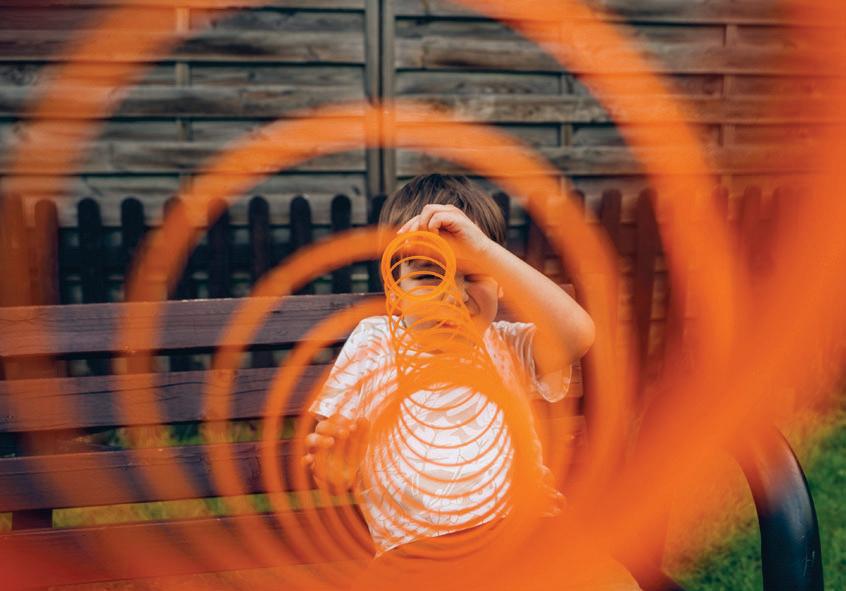
ONE OF THE FRUSTRATIONS of getting older is that some early memories seem to dim and fade with time.
The details of cherished, sun-drenched childhood days spent at the seaside seem to dissolve away like sea-foam on the beach as the years pass. Might there be a way to recover them?
Scientists call these recollections of distinct events and experiences from our own lives “autobiographical episodic memory.” They enable us to mentally time travel to the events of our past, allowing us to experience sensory details of things that we’ve seen, heard, tasted, touched and smelled, as well as the emotions we felt at those times. But what of the body we used to inhabit? In every past (and present) moment, our brain received a rich, continuous set of multisensory signals from our body—including those tied to bodily states. Our memories of the past should encode the type of body we had at different ages, when different memories were laid down—although there has been surprisingly little research on this idea so far.
As neuroscientists, we wondered whether we could use this brain-body connection to jog long-lost memories—by getting people “back inside” the bodies they had at younger ages. In a unique experiment, we found that temporarily changing one’s perceived body affects access to memories from specific periods in life. We showed that a subtle illusion in which participants viewed a childlike version of their own face that moved in synchrony with them, as a mirror reflection does, could enhance their recollection of early memories.
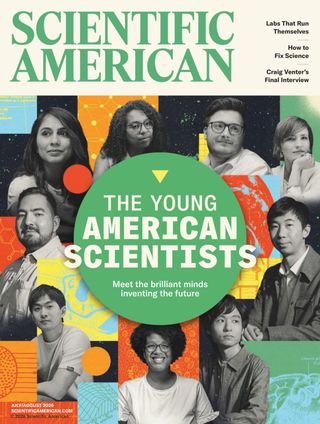

Diese Geschichte stammt aus der July/August 2026-Ausgabe von Scientific American.
Abonnieren Sie Magzter GOLD, um auf Tausende kuratierter Premium-Geschichten und über 9.000 Zeitschriften und Zeitungen zuzugreifen.
Sie sind bereits Abonnent? Anmelden
WEITERE GESCHICHTEN VON Scientific American
Scientific American
50, 100 & 150 Years
NATURAL FISSION REACTOR

3 mins
July/August 2026

Scientific American
A Youthful Illusion Sharpens Memory
By making people feel as if their face is a younger version of itself, researchers can bring childhood memories into sharper focus
4 mins
July/August 2026

Scientific American
BRAIN DRAIN
Dozens of countries are trying to convince disaffected American scientists to move there permanently—and plenty of young researchers are eager to go
10 mins
July/August 2026

Scientific American
The Youth American Scientists - Xiao Yang
Improving brain-machine interfaces to make them more resilient
1 mins
July/August 2026

Scientific American
The Youth American Scientists - Emily Finn
Studying why people interpret the same thing in different ways
1 mins
July/August 2026

Scientific American
The Youth American Scientists - Jaye Gardiner
Learning how the matrix around cells and tissues impacts cancers
1 mins
July/August 2026

Scientific American
The Youth American Scientists - Mikhail Kolmogorov
Developing software to reveal large genetic changes that lead to cancer
1 mins
July/August 2026

Scientific American
How to Fix Science
The federal funding system for scientific research in the U.S. needs reform
9 mins
July/August 2026
Scientific American
On Our Radar
These young scientists are making waves in their own ways. Keep an eye on them—great things are ahead
2 mins
July/August 2026
Scientific American
Journey to Titan
Inside NASA’s Dragonfly mission to Saturn’s largest moon
5 mins
July/August 2026
Listen
Translate
Change font size