
Mit Magzter GOLD unbegrenztes Potenzial nutzen
Erhalten Sie unbegrenzten Zugriff auf über 9.000 Zeitschriften, Zeitungen und Premium-Artikel für nur
Versuchen GOLD - Frei
Frittering away Nehru's momentous legacy
Down To Earth
|August 16, 2023
India initiated production of critical drugs in 1951 with the aid of UN bodies to keep out patent blocks-a model we have forgotten

HISTORY OFFERS many excellent lessons for our science and technology development; but for that we need to know the past. Not the fabled past of mythical times based on folklore and imagined technical prowess, but the more recent history of modern India, when a poor, struggling nation set itself some ambitious targets. One of the more fascinating aspects of this history is the setting up of a penicillin manufacturing factory in the 1950s. Almost anyone with interest in pharmaceuticals knows about Hindustan Antibiotics, the first factory in the Third World to start production of critical drugs in 1954. Few, however, are aware of the ideological battles that were fought as Jawaharlal Nehru pondered the path of development that his newly independent country should pursue, when access to technology was elusive, resources were scarce and drug multinationals were determined to control markets through their know-how and patents. Why is this of any relevance now? Simply because we have not learned the lessons of the past.
What triggered this column's plunge into history was a small news item about the enormous sums the government had spent on procuring vaccines to fight the SARS-COV-2 pandemic. It reflected the concerns that India's first prime minister grappled with while dealing with the question of setting up manufacturing projects in the country and in particular, the penicillin project. The news report of August 4 said the Government of India had spent, till July 31, 2023, a total of ₹36,397 crore on COVID-19 vaccines. The big payout was to the Serum Institute of India, a contract manufacturer for Covishield, the vaccine developed by British multinational AstraZeneca. It received 25,583 crore for 1.3 billion doses, while Bharat Biotech, makers of the indigenously developed Covaxin earned ₹7,301 crore for 35 million doses. These figures reveal how far we are from the goal of self-reliance in pharma that Nehru had hoped for.

Diese Geschichte stammt aus der August 16, 2023-Ausgabe von Down To Earth.
Abonnieren Sie Magzter GOLD, um auf Tausende kuratierter Premium-Geschichten und über 9.000 Zeitschriften und Zeitungen zuzugreifen.
Sie sind bereits Abonnent? Anmelden
WEITERE GESCHICHTEN VON Down To Earth

Down To Earth
Bitter pill
THE WEB SERIES PHARMA EXPOSES HARSH TRUTHS OF THE PHARMACEUTICAL INDUSTRY, WHERE PROFIT OFTEN BECOMES MORE IMPORTANT THAN HUMAN HEALTH

3 mins
January 16, 2026
Down To Earth
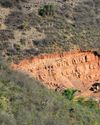
CHAOS IN-DEFINITION
The Aravallis are perhaps India's most litigated hill range. More than 4,000 court cases have failed to arrest their destruction. The latest dispute concerns a narrow legal definition of this geological antiquity, much of which has been obliterated by mining and urban sprawl. While the Supreme Court has stayed its own judgement accepting that definition, it must see the underlying reality and help reconcile development and national security with conservation.
19 mins
January 16, 2026
Down To Earth
BITS: INDIA
Indore has recorded 16 deaths and more than 1,600 hospitalisations between December 24 and January 6.
1 min
January 16, 2026
Down To Earth
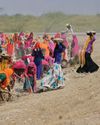
GUARANTEE EXPIRES
India's rural employment guarantee law is replaced with a centrally controlled, budget-capped scheme. Is this an attack on the right to work?
3 mins
January 16, 2026
Down To Earth
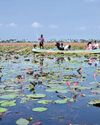
BLOOM OR BANE
Surge of vibrant pink water lilies in Kuttanad, Kerala, provides socio-economic benefits, but the plant's ecological impacts must be understood
4 mins
January 16, 2026
Down To Earth
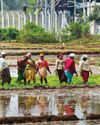
INVISIBLE EMPLOYER
Field and academic evidence shows sharp falls in casual agricultural employment at places where groundwater access declines
3 mins
January 16, 2026

Down To Earth
Schemed for erasure
Does the VB-G RAMG Act address structural weaknesses long observed in MGNREGA's implementation?
10 mins
January 16, 2026

Down To Earth
School of change
An open school in Panagar, Madhya Pradesh, aims to protect children of tribal settlements from falling into the trap of addiction
2 mins
January 16, 2026

Down To Earth
PULSE OF RESILIENCE
As a climate-ready crop, cowpea shows potential for widespread use in India
3 mins
January 16, 2026
Down To Earth
BITS GLOBAL
Britain recorded its hottest and sunniest year ever in 2025, the country's meteorological office said on January 2.
1 min
January 16, 2026
Translate
Change font size