Versuchen GOLD - Frei
ASTROPHOTOGRAPHY GALLERY
BBC Sky at Night Magazine
|October 2022
A huge solar prominence
-
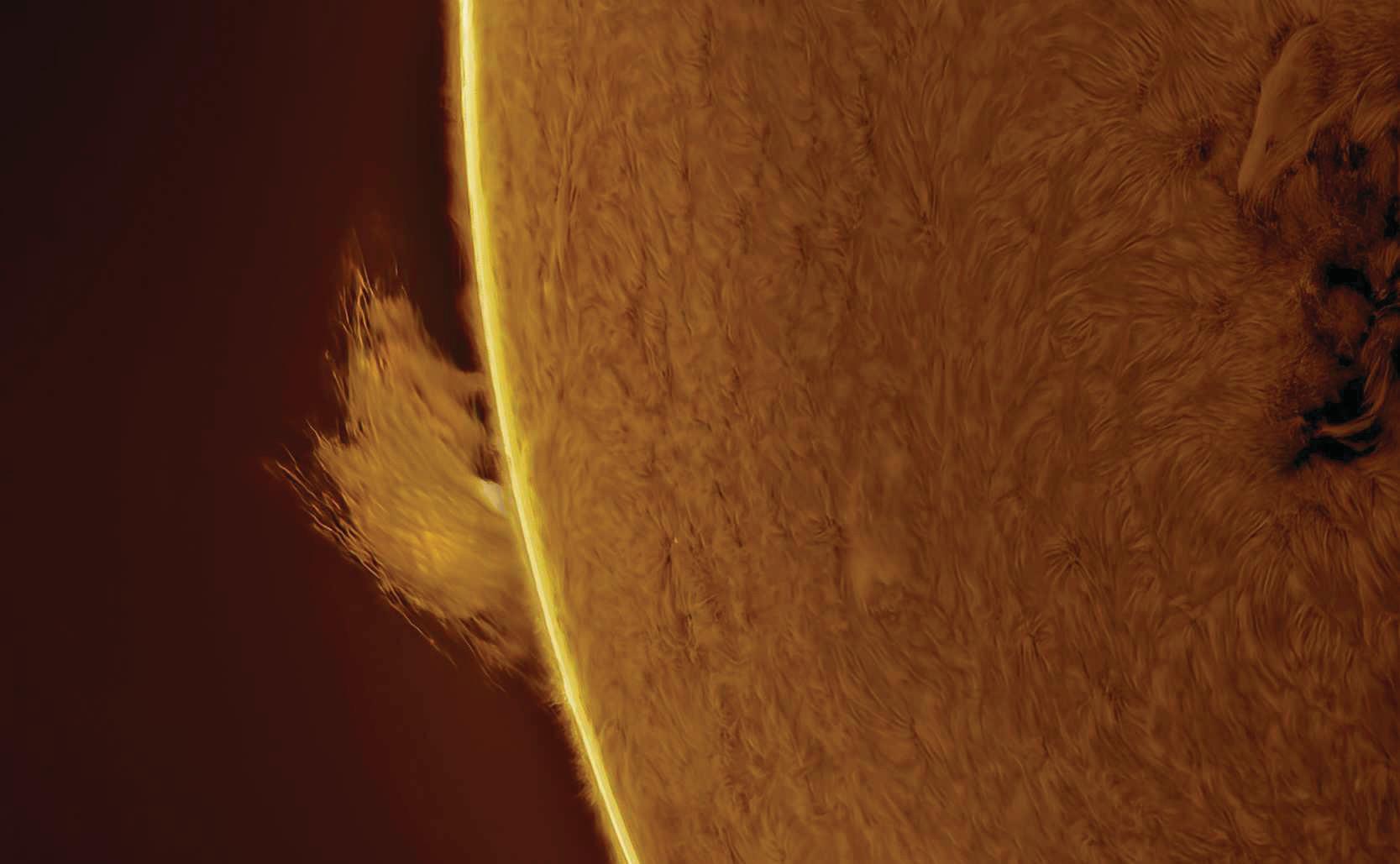
Jay Bolt, Crigglestone, West Yorkshire, 18 July 2022

Jay says: "I had been capturing sunspots when I noticed a huge prominence forming on the Sun's limb. The seeing was unusually good early in the morning, allowing for very precise focusing and capturing of the plasma eruption. Solar activity has been steadily increasing over the last few years, and I am particularly pleased with the magnetic detail that processing has brought out on the chromosphere."
Equipment: Altair Hypercam 174M camera, Explore Scientific AR127mm refractor, Daystar Quark Chromosphere Ha eyepiece filter, Sky-Watcher EQ6-R mount
Exposure: 1,500 frames of SER format video, best 20% selected
Software: AutoStakkert!, Photoshop, Astra Image, Topaz DeNoise, Topaz Sharpen
Jay's top tips: "For solar imaging using a Quark Chromosphere, aim for exposures of 5-10ms for the chromosphere to 'freeze' the effects of seeing. I use gain and the histogram to achieve exposure rates of 5ms on my Altair 174M, and take 2,000 to 3,000 exposures, with the histogram peaking around 60 per cent and taking care that the top end is not clipped. For the prominences, ignore the histogram and increase exposure to bring out the detail. Typically this is around max gain and 20ms on my camera. I then shoot for 20-25 seconds. My image is a composite: the prominences are overlaid onto the chromosphere, then colourised."
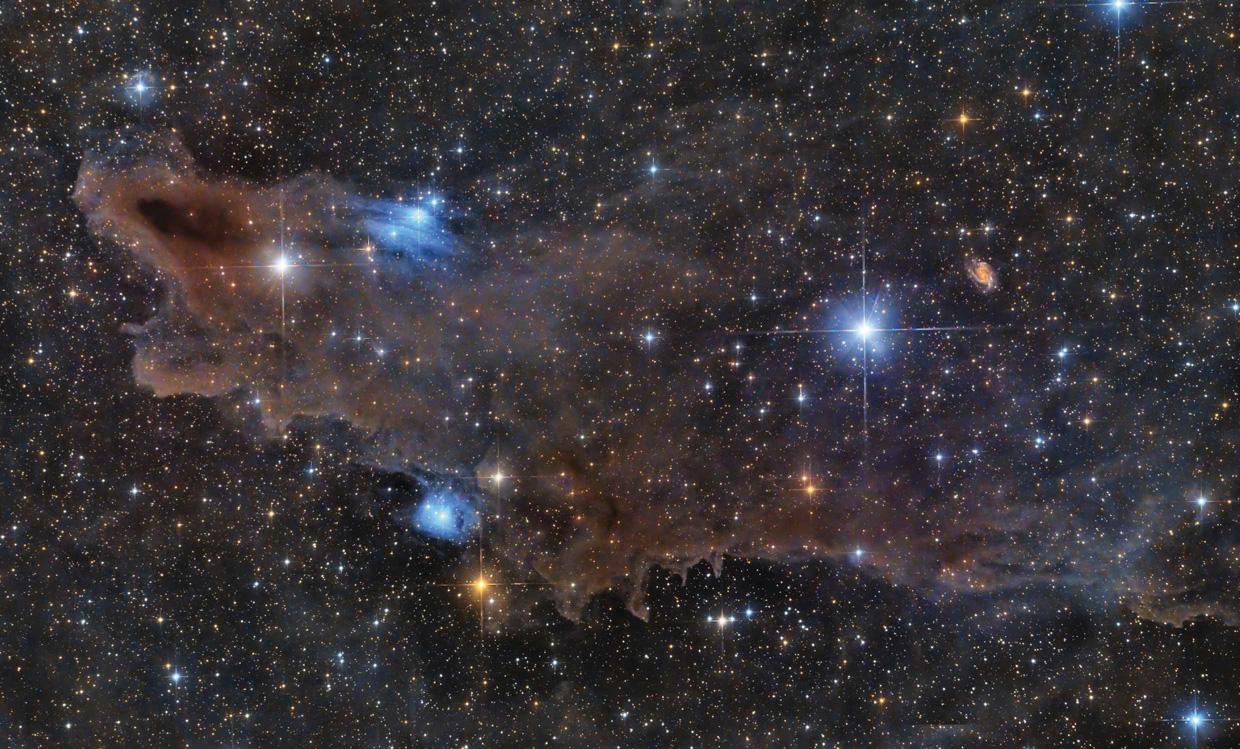
Supermoon over the Needles



Diese Geschichte stammt aus der October 2022-Ausgabe von BBC Sky at Night Magazine.
Abonnieren Sie Magzter GOLD, um auf Tausende kuratierter Premium-Geschichten und über 9.000 Zeitschriften und Zeitungen zuzugreifen.
Sie sind bereits Abonnent? Anmelden
WEITERE GESCHICHTEN VON BBC Sky at Night Magazine
BBC Sky at Night Magazine
The Giant Leap: Why Space is the Next Frontier in the Evolution of Life
“Earth is the cradle of humanity, but one cannot live in the cradle forever,” wrote Konstantin Tsiolkovsky in 1911.

1 mins
February 2026
BBC Sky at Night Magazine
Tele Vue Nagler Type-7 series eyepieces
These premium optics were inspired by Apollo - and deliver a giant leap to your views
4 mins
February 2026
BBC Sky at Night Magazine
Once Upon a Time in Space
While the Space Race of the Cold War years was ultimately a geopolitical contest between the USA and the Soviet Union, the rivalry sparked rapid innovation and inspired multiple generations to look skyward.
1 mins
February 2026
BBC Sky at Night Magazine
The Multiverse: When One Universe Isn't Enough
The concept of a 'multiverse' – the idea that our Universe may be just one of many – is widespread in science fiction and a common thread of online discussions.
1 mins
February 2026
BBC Sky at Night Magazine
Q&A WITH A GAMMA RAY SPECIALIST
In 2025, astronomers detected a blast from space that lasted seven hours. Now they're uncovering the strange processes behind the exceptional outburst
3 mins
February 2026
BBC Sky at Night Magazine
Astronomy Photographer of the Year
The world-leading astrophotography competition returns. Could your image take the top prize of £10,000?
2 mins
February 2026
BBC Sky at Night Magazine
MOONWATCH
February's top lunar feature to observe
2 mins
February 2026
BBC Sky at Night Magazine
NOVAStar Scarlet A62Q 62mm f/8.4 quadruplet achromatic refractor
Well-built and capable, this beginner scope punches well above its bargain price
4 mins
February 2026
BBC Sky at Night Magazine
STAR OF THE MONTH
Rasalas, Leo the Lion's metal-rich crown
1 min
February 2026
BBC Sky at Night Magazine
Comet 24P/Schaumasse
Having reached perihelion on 8 January, comet 24P/ Schaumasse is now fading. Starting the month at a small-telescope-friendly mag. +10.5, it dims throughout February to below 12th magnitude.
1 min
February 2026
Translate
Change font size