Versuchen GOLD - Frei
AIin astrophotography: friend or foe?
BBC Sky at Night Magazine
|February 2025
It makes processing a breeze, but creates very convincing fakes too. Pete Lawrence looks at how AI is changing astro imaging
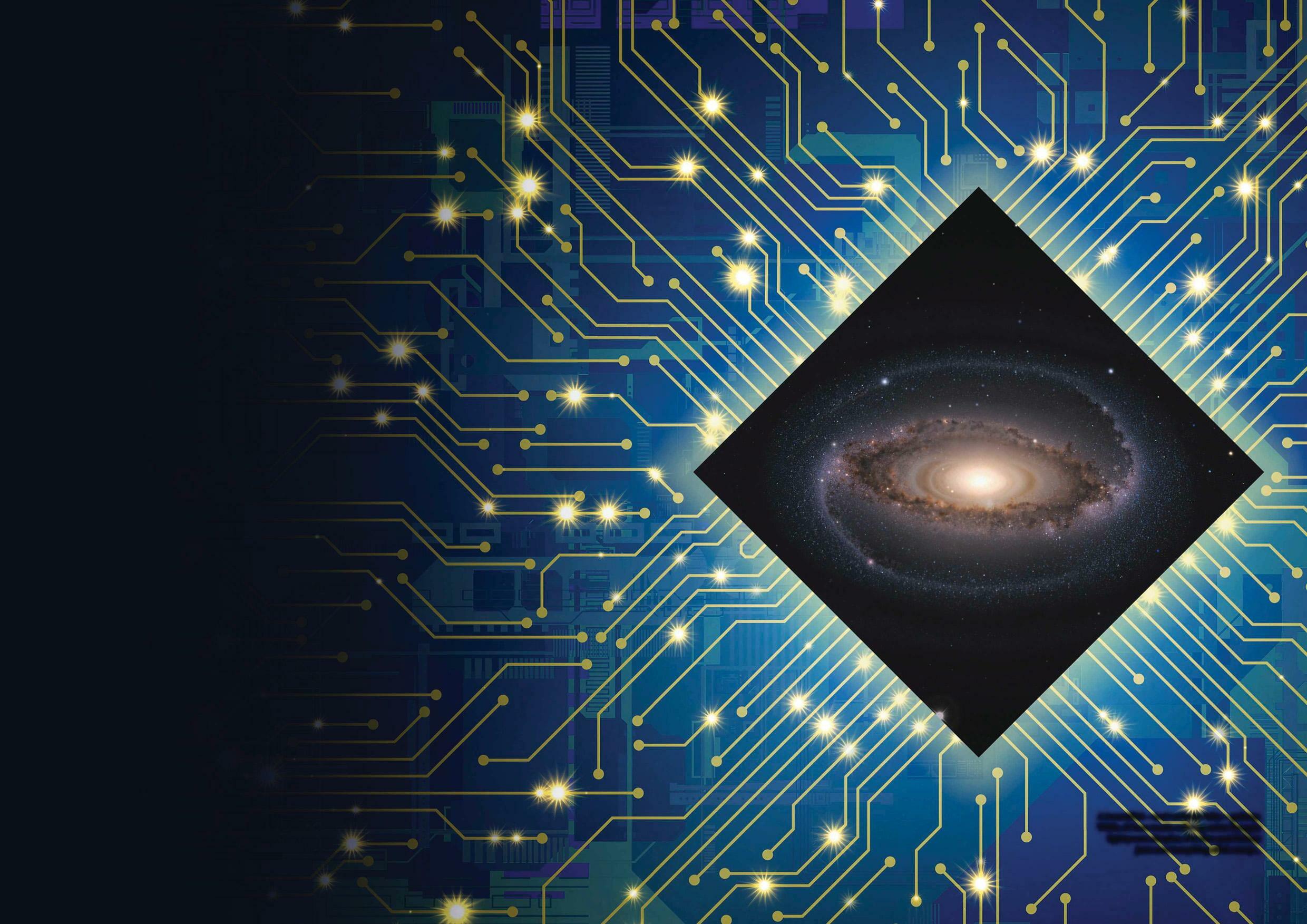
Artificial intelligence or AI is a term heard everywhere these days. Its application is exciting, confusing and very often misunderstood, so let's start by defining exactly what AI is and what it does.
AI is essentially a computer-based tool that has the ability to learn and apply results to data processing. Unlike a conventional computer program, AI can - when given the right guidance - make more considered choices, emulating how a human would approach a task.
But the 'intelligence' in AI doesn't mean that AI systems are self-aware or intelligent in the way we are. An AI system can't operate without direction and this is provided in the form of models or neural networks trained using a dataset relevant to the subject. These models are typically produced by processes known as machine learning or deep learning. The source information is often real-world data pre-categorised by humans, but it can also be virtual data generated by a computer applying known processes to a set of base information.
Terms such as 'artificial intelligence', 'machine learning' and 'deep learning' can sound provocative but are merely references to what are essentially computer tools and systems. What's important to understand is that Al's abilities depend on how well-trained its models are. Poor or inappropriate model data will simply give poor results; the phrase 'garbage in, garbage out' is highly fitting to Al. Despite what Hollywood implies, Al is currently still dependent on humans to feed it the correct information in order for it to work efficiently.
Let's now look at some examples of how Al is being applied in astrophotography. On the internet, the inducement of social media 'Likes' has inevitably led to a rise in fake astronomical images. Many early attempts were poor manually edited examples, but skill levels have now improved, making some fakes hard to call out unless you're a skilled expert.
When algorithms make art

Diese Geschichte stammt aus der February 2025-Ausgabe von BBC Sky at Night Magazine.
Abonnieren Sie Magzter GOLD, um auf Tausende kuratierter Premium-Geschichten und über 9.000 Zeitschriften und Zeitungen zuzugreifen.
Sie sind bereits Abonnent? Anmelden
WEITERE GESCHICHTEN VON BBC Sky at Night Magazine

BBC Sky at Night Magazine
Crush: Close Encounters with Gravity
Gravity is something that we're all innately familiar with. It keeps our feet on the ground, fights against a rocket trying to leave Earth and governs the movement of the planets and stars.

1 mins
April 2026
BBC Sky at Night Magazine
Exploring the Universe
There's no shortage of children's books about astronomy.
2 mins
April 2026
BBC Sky at Night Magazine
Make your Milky Way images pop
Simple, free processing techniques using FastStone Image Viewer
3 mins
April 2026

BBC Sky at Night Magazine
Nightfaring: In Search of the Disappearing Darkness
This book is a manifesto for dark skies, written as a travel memoir.
1 mins
April 2026
BBC Sky at Night Magazine
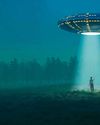
Flying saucers- The making of a modern myth
Our obsession with UFOs goes back further than you might think. Robert Pateman traces how early science fiction, dubious sightings and an alien-mad media led to the 1950s saucer fever
9 mins
April 2026

BBC Sky at Night Magazine
STAR OF THE MONTH
Alphecca, the brightest jewel in the Crown
1 min
April 2026
BBC Sky at Night Magazine
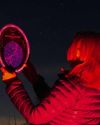
How to use a planisphere
Navigate the sky with the original stargazer's tool. No batteries, apps or Wi-Fi required!
3 mins
April 2026
BBC Sky at Night Magazine
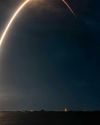
Why rockets don't launch straight up
For a rocket to get its payload into space, it has to follow a curved path. But what would happen if it didn't?
2 mins
April 2026
BBC Sky at Night Magazine
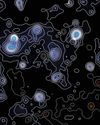
Q&A WITH A DARK MATTER SPECIALIST
Dark matter makes up 27 per cent of all matter in the Universe. So why is it so hard to find? Meet one of the people making a map that leads us to it
3 mins
April 2026

BBC Sky at Night Magazine
Why I want to put a hotel on the Moon
Bored of the beach? Sick of city breaks? Step this way. Space entrepreneur Skyler Chan explains how he'll build a holiday destination on the Moon by 2030
2 mins
April 2026
Listen
Translate
Change font size