Versuchen GOLD - Frei
Assessing the Impact on Human Health of Net Zero Pathways
TerraGreen
|February 2025
A Summary of Ongoing Research and Methodologies
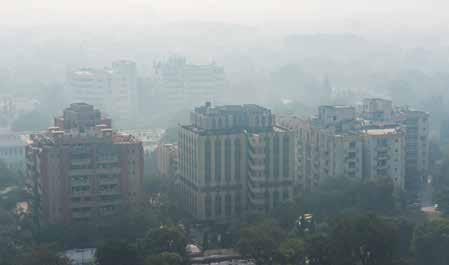
Achieving net zero emissions is vital for limiting global warming to 1.5°C, as outlined in the 2015 Paris Agreement. For India, with its lower-than average per capita emissions but high climate vulnerability, the commitment to achieve net zero by 2070, as announced at COP26, is especially significant.
Emissions mitigation policies improve human health by addressing environmental and behavioural risks, such as reducing air pollution through clean energy, adopting sustainable diets, and promoting active travel and public transport. Health co-benefits, like lower rates of obesity and lung cancer, underscore the localized, immediate advantages of climate action, boosting public and political support for mitigation efforts. These benefits are increasingly vital, as the 2024 Lancet Countdown on Health and Climate Change highlights that delays in the Paris Agreement implementation have exacerbated threats to global health and survival.
Methodology
A scoping review following PRISMA-Scr guidelines was conducted to define research questions, identify relevant studies, and synthesize findings. Peerreviewed articles and gray literature from Web of Science, SCOPUS, and PubMed, along with Google Scholar, were reviewed between September and October 2024. The search, limited to English-language publications, covered all available dates and utilized four keyword sets (Table 1) adapted from a similar review on the global health cobenefits literature by Moutet et al., (2024).
Key variables included publication details, study design, and health impact assessments, which were iteratively charted. The analytical matrix focused on data collection, emissions and health prediction models, and health endpoints. Consistent with scoping review standards, risks of bias and study quality were not assessed. Results were reported using themes, percentages, frequency counts, and visualizations.
Results and Discussion


Diese Geschichte stammt aus der February 2025-Ausgabe von TerraGreen.
Abonnieren Sie Magzter GOLD, um auf Tausende kuratierter Premium-Geschichten und über 9.000 Zeitschriften und Zeitungen zuzugreifen.
Sie sind bereits Abonnent? Anmelden
WEITERE GESCHICHTEN VON TerraGreen

TerraGreen
Motor Efficiency
The Silent Catalyst of India's Green Industrial Revolution

4 mins
January 2026

TerraGreen
Beauty That Betrays!
The Quiet Invasion of An Ornamental Plant
3 mins
January 2026
TerraGreen
Farming Innovation Addresses Food Shortages
Also Halves Methane Emissions
4 mins
January 2026

TerraGreen
Aravalli on the Edge
Saving India's Ancient Green Shield from Collapse
3 mins
January 2026

TerraGreen
From Orchard to Table
Apple Picking, Family Time, and Fall Colours
4 mins
January 2026

TerraGreen
Coral Reefs Could Feed Millions
If We Let Them Rebuild
3 mins
January 2026

TerraGreen
Resting on Deodars
How Fallen Trees are Being Reimagined as Urban Assets in Shimla
3 mins
January 2026

TerraGreen
India's Clean-Air Innovation at Risk
Nationwide Assessment by WeNaturalists
2 mins
January 2026

TerraGreen
CNFF-25
Highlights Environmental Concern Amid India's Cultural Heritage
3 mins
January 2026
TerraGreen
Green Farming through Circular Economy
Sustainable Practices for Waste Reduction
8 mins
January 2026
Listen
Translate
Change font size