Versuchen GOLD - Frei
Aye Mere Pyaare Watan
Outlook
|December 21, 2025
The vision Indian People's Theatre Association offered to Indian cinema continues to remain timeless-a commitment to art that invigorates citizens towards social betterment
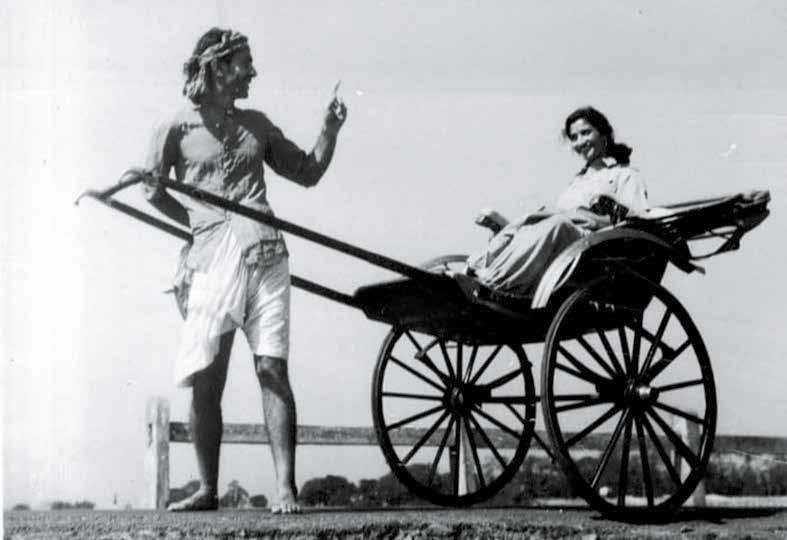
WHAT do the social disillusionment of Guru Dutt, the ache of Partition and collective loss in Ritwik Ghatak and the foundational political consciousness of Salil Chowdhury have in common? Their umbilical cord to a movement that radically transformed the history of Indian cinema.
The stark disparities between the haves and the have-nots would not sear the screen as poignant poetry, if not for Abrar Alvi's writing and Sahir Ludhianvi's lyrics in Pyaasa (1957). Nita's (Supriya Chowdhury) angst would not have echoed the uprooting and homelessness of thousands during Bengal's Partition, if not for Ghatak's cinematic exposition of trauma and the moving score composed by Jyotirindra Moitra for Meghe Dhaka Tara (1960). “Aye Mere Pyaare Watan” from Hemen Gupta’s Kabuliwala (1961), pictured on the longing of an Afghan dry fruit seller for his land and people, would not go on to evoke patriotic fervour for times to come, if not for the yearning notes from Chowdhury.
As the birth centenaries of these three stalwarts coincide with hundred years of the Left movement in 2025, this is an opportune moment to look back at the Indian People’s Theatre Association (IPTA), which gave Indian cinema artists, whose work cemented what is now popularly called the “golden age” of the film industry.
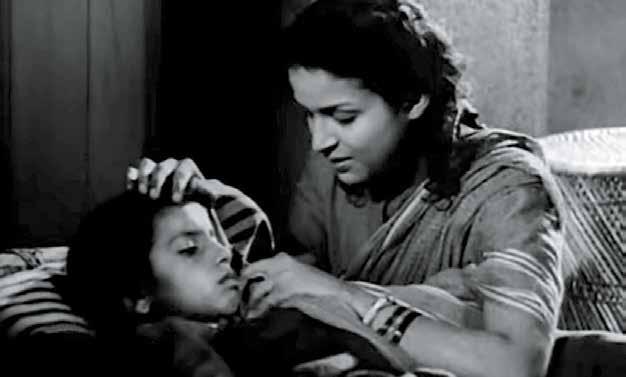 Born in 1943, amidst the roused spirits of the anti-colonial movement in India and the global turmoil of World War II, the roots of IPTA’s inception lay in the Progressive Writers’ Association, which emerged during the 1930s in an attempt to foreground literature that was socio-politically conscious and contributed to the ongoing political struggle against the British.

Diese Geschichte stammt aus der December 21, 2025-Ausgabe von Outlook.
Abonnieren Sie Magzter GOLD, um auf Tausende kuratierter Premium-Geschichten und über 9.000 Zeitschriften und Zeitungen zuzugreifen.
Sie sind bereits Abonnent? Anmelden
WEITERE GESCHICHTEN VON Outlook

Outlook
The Big Blind Spot
Caste boundaries still shape social relations in Tamil Nadu-a state long rooted in self-respect politics

8 mins
December 11, 2025

Outlook
Jat Yamla Pagla Deewana
Dharmendra's tenderness revealed itself without any threats to his masculinity. He adapted himself throughout his 65-year-long career as both a product and creature of the times he lived through
5 mins
December 11, 2025

Outlook
Fairytale of a Fallow Land
Hope Bihar can once again be that impossibly noisy village in Phanishwar Nath Renu's Parti Parikatha-divided, yes, but still capable of insisting that rights are not favours and development is more than a slogan shouted from a stage
14 mins
December 11, 2025

Outlook
The Lesser Daughters of the Goddess
The Dravidian movement waged an ideological war against the devadasi system. As former devadasis lead a new wave of resistance, the practice is quietly sustained by caste, poverty, superstition and inherited ritual
2 mins
December 11, 2025

Outlook
The Meaning of Mariadhai
After a hundred years, what has happened to the idea of self-respect in contemporary Tamil society?
5 mins
December 11, 2025

Outlook
When the State is the Killer
The war on drugs continues to be a war on the poor
5 mins
December 11, 2025

Outlook
We Are Intellectuals
A senior law officer argued in the Supreme Court that \"intellectuals\" could be more dangerous than \"ground-level terrorists\"
5 mins
December 11, 2025

Outlook
An Equal Stage
The Dravidian Movement used novels, plays, films and even politics to spread its ideology
12 mins
December 11, 2025
Outlook
The Dignity in Self-Respect
How Periyar and the Self-Respect Movement took shape in Tamil Nadu and why the state has done better than the rest of the country on many social, civil and public parameters
5 mins
December 11, 2025

Outlook
When Sukumaar Met Elakkiya
Self-respect marriage remains a force of socio-political change even a century later
7 mins
December 11, 2025
Listen
Translate
Change font size